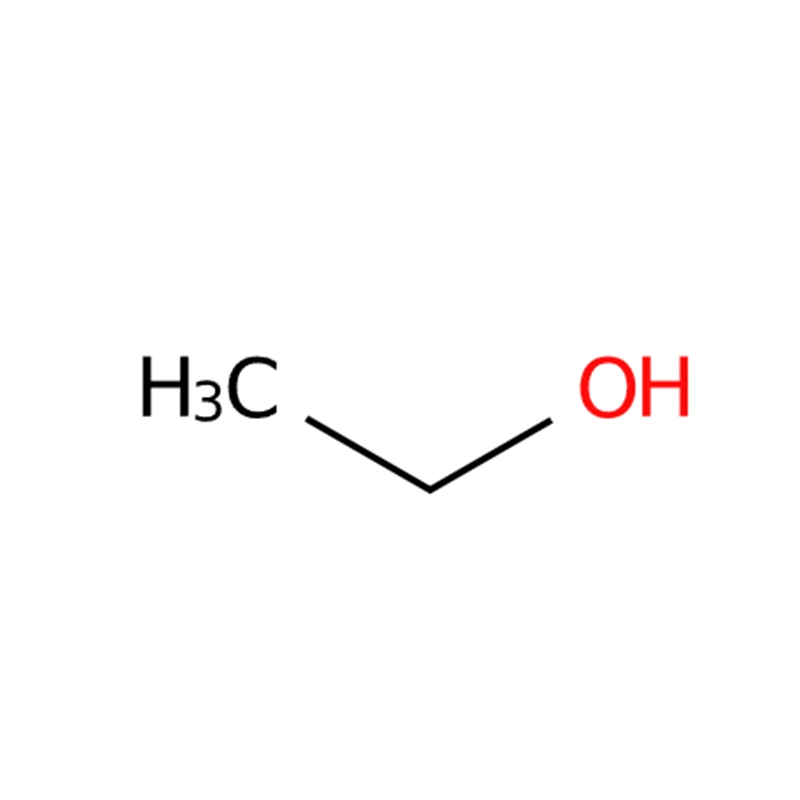
Ethanol CAS#64-17-5
Ethanol, alternatively called ethyl alcohol, grain alcohol or alcohol for short, is a transparent, colourless, volatile and flammable solvent with a distinctive scent. Its boiling point stands at roughly 78.5°C, and it occurs naturally in alcoholic drinks. High-strength ethanol carries a sharp burning flavour, whereas diluted versions deliver a mild sweet taste.
Ethanol is also growing in popularity as a fuel, serving either as a gasoline substitute or blending component. Thanks to its low melting point of about -114.5°C, it works well within antifreeze formulations.
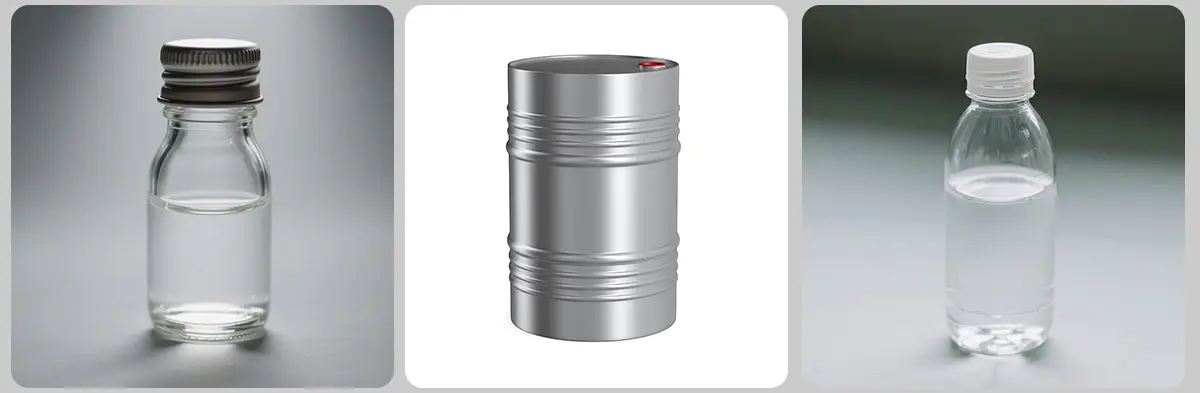
Ethanol Chemical Properties
| Melting point | -114°C |
| Boiling point | 78°C |
| density | 0.789 g/mL at 20 °C |
| vapor density | 1.59 (vs air) |
| vapor pressure | 43 mmHg at 20 °C |
| refractive index | 1.3614 |
| FEMA | 2419 | ETHYL ALCOHOL |
| Fp | 12°C |
| storage temp. | room temp |
| solubility | water: soluble (completely) |
| pka | 16(at 25℃) |
| form | Liquid. Colorless liquid / invisible vapor. |
| color | APHA: ≤10 |
| Specific Gravity | 0.80872~0.81601 |
| Relative polarity | 0.654 |
| PH | 7.0 (10g/l, H2O, 20℃) |
| Odor | Pleasant alcoholic odor detectable at 49 to 716 ppm (mean = 180 ppm) |
| explosive limit | 3.1-27.7%(V)(ethanol) |
| Odor Threshold | 0.52ppm |
| Odor Type | alcoholic |
| Water Solubility | miscible |
| Sensitive | Hygroscopic |
| λmax | λ: 240 nm Amax: 0.40 |
| λ: 250 nm Amax: 0.30 | |
| λ: 260 nm Amax: 0.30 | |
| λ: 270 nm Amax: 0.10 | |
| λ: 340 nm Amax: 0.10 | |
| Merck | 143760 |
| JECFA Number | 41 |
| BRN | 1718733 |
| Exposure limits | TLV-TWA 1900 mg/m3 (1000 ppm) (ACGIH). |
| Dielectric constant | 24.3(25℃) |
| Stability: | Stable. Substances to be avoided include strong oxidizing agents, peroxides, acids, acid chlorides, acid anhydrides, alkali metals, ammonia, moisture. Forms explosive mixtures with air. Hygroscopic. |
| LogP | -0.19 |
| CAS DataBase Reference | 64-17-5(CAS DataBase Reference) |
| IARC | 1 (Vol. 96, 100E) 2012 |
| NIST Chemistry Reference | Ethanol(64-17-5) |
| EPA Substance Registry System | Ethanol (64-17-5) |
| Hazard Codes | F,T,Xn,N |
| Risk Statements | 11-10-36/37/38-39/23/24/25-23/24/25-68/20/21/22-20/21/22-52/53-51/53 |
| Safety Statements | 16-7-36-26-45-36/37-61-24/25-2017/7/16 |
| RIDADR | 1170 |
| OEB | A |
| OEL | TWA: 1000 ppm (1900 mg/m3) |
| WGK Germany | nwg |
| RTECS | KQ6300000 |
| Autoignition Temperature | 363 °C |
| TSCA | Yes |
| HazardClass | 3 |
| PackingGroup | II |
| HS Code | 22071000 |
| Hazardous Substances Data | 64-17-5(Hazardous Substances Data) |
| Toxicity | LD50 in young, old rats (g/kg): 10.6, 7.06 orally (Wiberg) |
| IDLA | 3,300 ppm [10% LEL] |
Product Usage
Medical
Ethanol solutions ranging from 70–85% concentration are widely adopted for disinfection. They exert germicidal effects through protein denaturation and lipid dissolution. Ethanol has diverse applications across medical and pharmaceutical fields; it is incorporated into medicinal preparations, medical wipes, and acts as a preservative in numerous antibacterial hand sanitiser gels. Besides, ethanol competes for alcohol dehydrogenase (ADH) owing to its stronger binding affinity to this enzyme. It blocks the generation of poisonous metabolites after intake of toxic alcohols and thus serves as an antidote.
Fuel
Ethanol is combustible and delivers cleaner combustion compared with many traditional fuels. It can function as cooking fuel and act as a substitute for timber, charcoal, propane, or illuminating fuels including kerosene.
Others
Ethanol deployed as a synthetic intermediate within chemical, pharmaceutical and cosmetic sectors generally needs to satisfy strict high-purity specifications. It can be formulated into deicers and antifreeze mixtures for automotive windshield cleaning. Moreover, ethanol is a typical ingredient in perfumes, deodorants and a broad selection of other cosmetic goods.