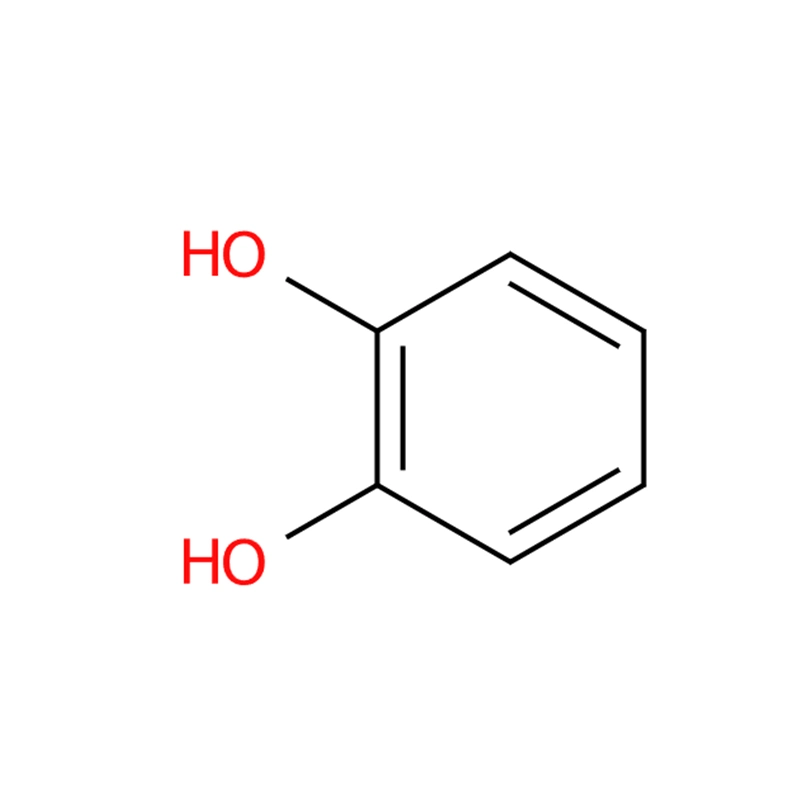
Products Description of Catechol (CAS No. 120‑80‑9)
Catechol takes the form of white crystalline solids, which slowly darken to brown when exposed to illumination and ambient air. It has a molecular weight of 110.12 and a specific gravity of 1.3 relative to water.
This chemical features a melting point of 104 °C and a boiling point of 245.5 °C, and it can sublime smoothly under suitable conditions. Its vapor pressure reaches 10 mmHg at 117 °C, with a flash point of 127 °C and an autoignition temperature of 512 °C.
For mixtures with air, its lower explosive limit (LEL) is 1.4%, whereas the upper explosive limit (UEL) remains undetermined.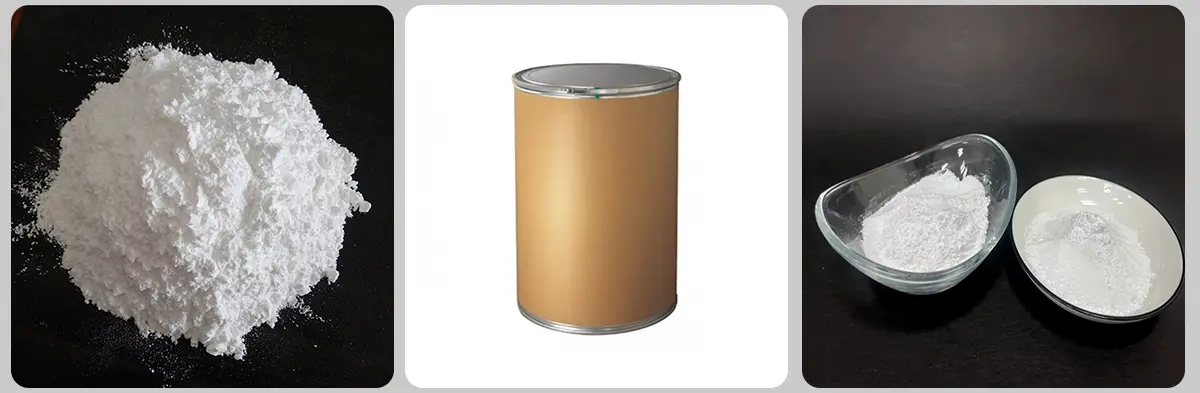
Catechol Basic information
| Product Name: | Catechol |
| Synonyms: | 1,2-Benzenediol (pyrocatechol);1,2-benzenediol[qr];1,2-dihydroxybenzene[qr];2-Hydroxyphenol;2-hydroxyphenol[qr];ai3-03995[qr];Benzene, o-dihydroxy-;benzene,1,2-dihydroxy- |
| CAS: | 120-80-9 |
| MF: | C6H6O2 |
| MW: | 110.11 |
| EINECS: | 204-427-5 |
| Product Categories: | Building Blocks;Chemical Synthesis;Organic Building Blocks;Oxygen Compounds;Polyols;Aromatics;Miscellaneous Reagents;Intermediates;Aromatic Phenols |
| Mol File: | 120-80-9.mol |
Catechol Chemical Properties
| Melting point | 100-103 °C (lit.) |
| Boiling point | 245 °C (lit.) |
| Density | 1,371 g/cm3 |
| Vapor density | 3.8 (vs air) |
| Vapor pressure | 1 mm Hg ( 75 °C) |
| Refractive index | 1.6120 (estimate) |
| Fp | 279 °F |
| Storage temp | Store below +30°C. |
| Solubility | 430g/l |
| Pka | 9.85(at 20℃) |
| Form | Crystalline Flakes |
| Color | white to faintly beige |
| PH | 6 (100g/l, H2O, 20℃) |
| Explosive limit | 1.97%(V) |
| Biological source | synthetic (organic) |
| Water Solubility | 430 g/L (20 ºC) |
| Sensitive | Air & Light Sensitive |
| Merck | 147999 |
| BRN | 471401 |
| Exposure limits | TLV-TWA 5 ppm (~22 mg/m3) (ACGIH). . |
| Stability | Stable. Substances to be avoided include acid chlorides, acid anhydrides, bases, oxidizing agents, nitric acid. Light sensitive; may discolour on exposure to air. Combustible. |
| LogP | 0.93 |
| CAS DataBase Reference | 120-80-9(CAS DataBase Reference) |
| NIST Chemistry Reference | 1,2-Benzenediol(120-80-9) |
| IARC | 2B (Vol. 15, Sup 7, 71) 1999 |
| EPA Substance Registry System | Catechol (120-80-9) |
Product Usage
Catechol (CAS No. 120‑80‑9) finds extensive deployment within organic chemical synthesis, chiefly for manufacturing rubber additives and fragrance intermediates.
Within the pharmaceutical industry, it functions as a pharmaceutical intermediate and constitutes one component for certain local‑anesthetic preparations.
In agricultural scenarios, catechol acts as a building block for synthesizing multiple pesticide varieties.
Moreover, it gains application in electroplating processes as well as analytical‑chemistry workflows, where it supports the detection and quantitative analysis of metal ions.