
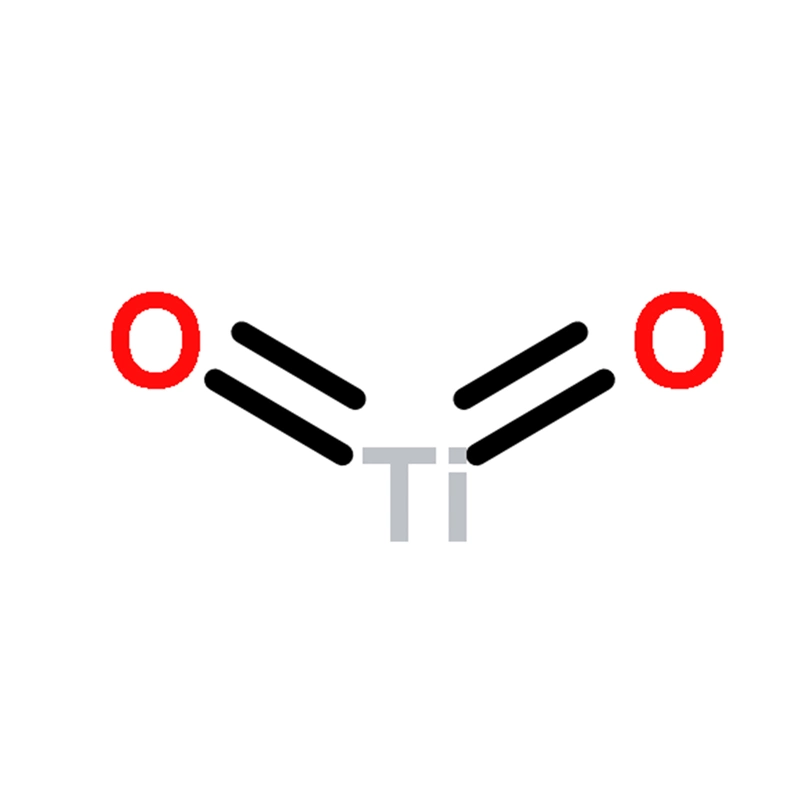
Anatase crystals exhibit lower hardness and refractive indices than rutile due to differences in their crystal lattice structures. Despite being less thermodynamically stable, anatase remains metastable over time. However, above 700°C, it irreversibly converts to rutile. Optically, anatase has higher transparency in the near-UV range.
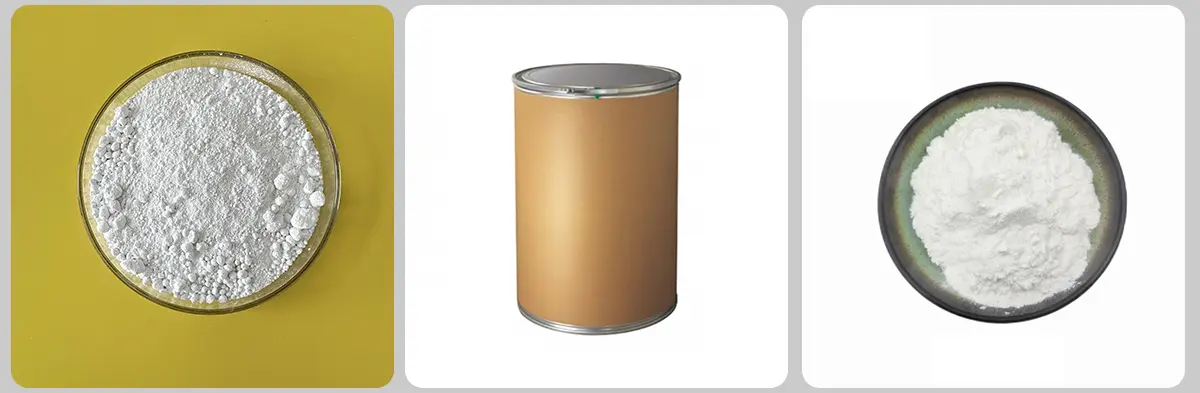
Titanium(IV) oxide is widely used in UV-resistant fabrics, skin creams, and cosmetics. It also serves as a photocatalyst and is essential in self-cleaning glass, ceramics, air purification, and chemical processes. In addition, it improves paper opacity and is crucial in producing titanium and alloy materials in metallurgy.
TITANIUM DIOXIDE Chemical Properties
Melting point | 1840 °C |
Boiling point | 2900 °C |
density | 4.26 g/mL at 25 °C(lit.) |
Fp | 368°C |
form | powder |
color | White |
Specific Gravity | 3.9 |
Water Solubility | Insoluble in water, dilute acids, organic acids, and dilute alkalis. |
Crystal Structure | Tetragonal, P4/mnm |
crystal system | square |
Merck | 14,9472 |
Space group | I41/amd |
Lattice constant | a/nmb/nmc/nmα/oβ/oγ/oV/nm30.378480.378480.951199090900.1363 |
Stability: | Stable. Incompatible with strong acids. |
CAS DataBase Reference | 1317-70-0(CAS DataBase Reference) |
EPA Substance Registry System | Anatase (TiO2) (1317-70-0) |
Safety Information
Hazard Codes | Xn |
Risk Statements | 20-36/37/38 |
Safety Statements | 26-36 |
WGK Germany | - |
RTECS | XR2275000 |
TSCA | Yes |