

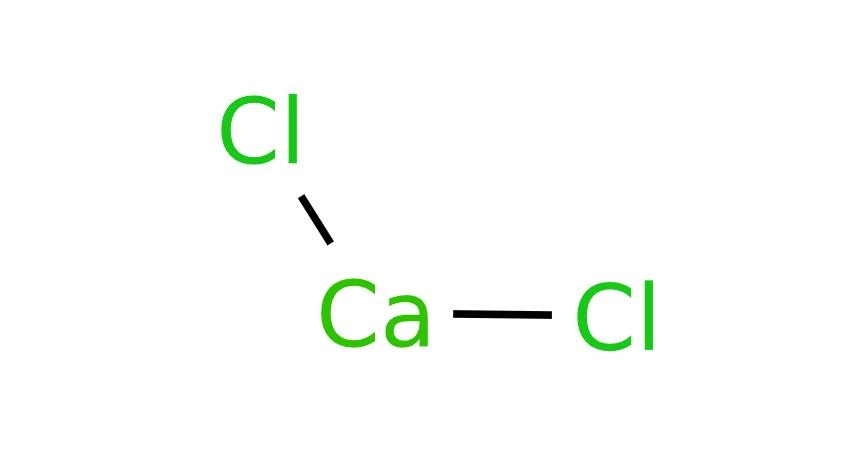
Anhydrous calcium chloride appears as a white, porous crystalline solid or granular material with strong deliquescent properties. It has a melting point of 782°C, a density of 2.15 g/cm³, and a boiling point exceeding 1600°C. This compound readily dissolves in water with significant heat release and is also soluble in ethanol and acetone. The most frequently encountered form is calcium chloride hexahydrate (CaCl₂·6H₂O), which exists as colorless trigonal crystals that are highly hygroscopic and have a bitter-salty taste. This hydrated form has a density of 1.71 g/cm³ and dissolves in its own water of crystallization at 29.92°C. Upon heating to 30°C, it releases four water molecules to produce the dihydrate (CaCl₂·2H₂O), appearing as a white, porous, moisture-absorbing solid. Further heating yields the monohydrate, and temperatures above 200°C result in complete dehydration, forming highly hygroscopic anhydrous calcium chloride. Additionally, calcium chloride reacts with ammonia to form an ammoniate compound (CaCl₂·8NH₃). Anhydrous Calcium Chloride (CaCl₂, CAS 10043-52-4) is a highly versatile inorganic compound appearing as white porous crystals or granules with extreme deliquescence (absorbs >300% its weight in water).
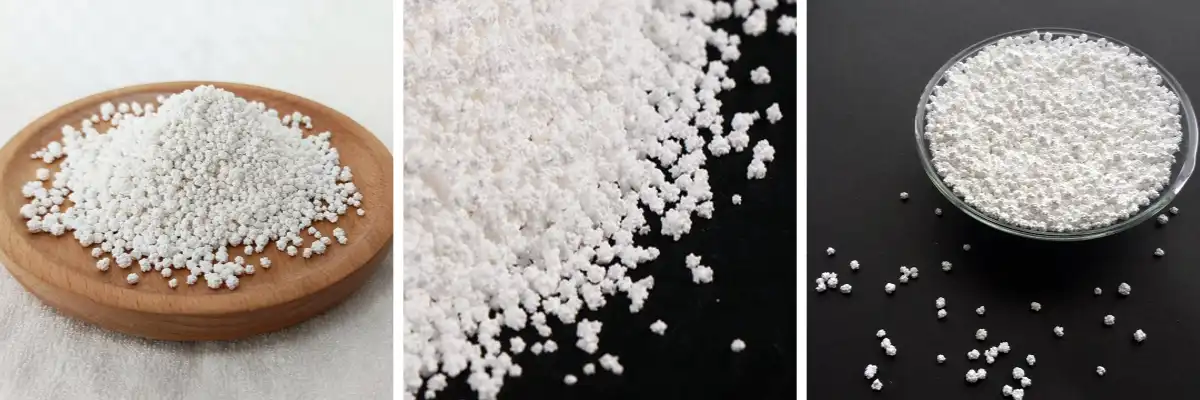
Hydration States & Phase Transitions
| Form | Properties | Transition Behavior |
| Hexahydrate (CaCl₂·6H₂O) | - Colorless trigonal crystals - Density: 1.71 g/cm³ - Hygroscopic, bitter taste | Melts at 29.92°C in own water → Releases 4H₂O at 30°C |
| Dihydrate (CaCl₂·2H₂O) | White porous solid, moisture-absorbing | → Monohydrate at 175°C |
| Monohydrate | Lamellar structure | → Anhydrous at 200°C |
| Anhydrous | Cubic fluorite crystal structure (FCC) | Highly reactive with atmospheric moisture |
Special Reaction:
Forms ammoniate (CaCl₂·8NH₃) with ammonia gas – a reversible reaction used in refrigeration:
CaCl2+8 NH3⇌CaCl2 ⋅ 8 NH3 (ΔH=−88 k J/mol)CaClX2+8NHX3CaClX2⋅8NHX3 (ΔH=−88 kJ/mol)
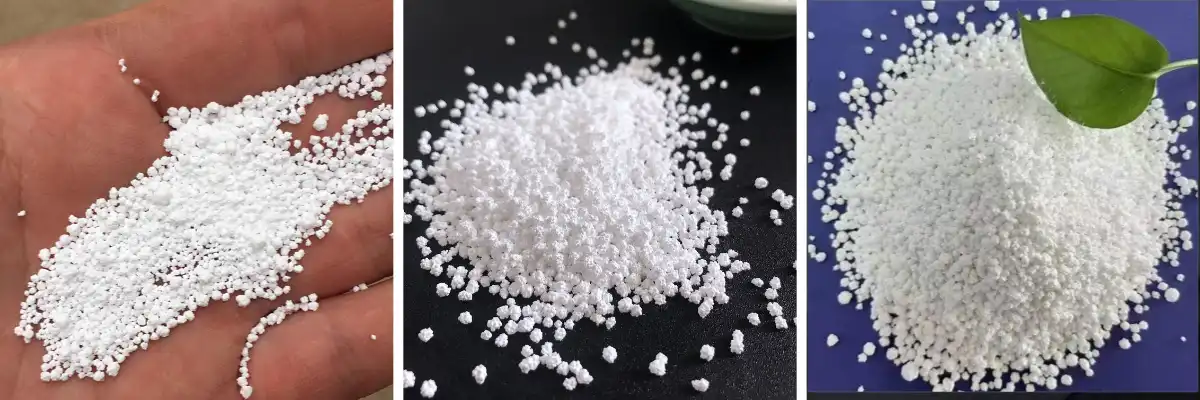
Industrial Specifications
| Grade | Purity | Key Impurities | Form |
| Technical Grade | 94-97% | Alkali chlorides <3% | Flakes/Pellets |
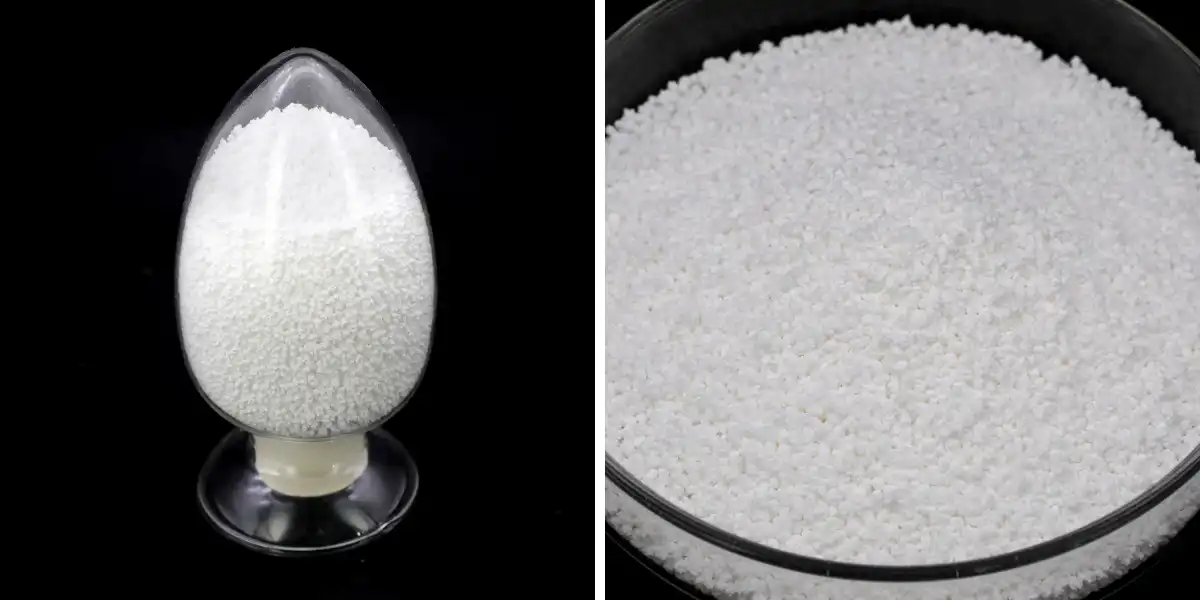
| Food Grade | >99.0% | Heavy metals <10ppm | Prills |
| Pharma Grade | USP/EP | As<1ppm, Pb<0.5ppm | Powder/Granules |
| Reagent Grade | 99.99% | SO₄²⁻<0.001% | Crystalline |
Advanced Applications
Deicing & Dust Control
Road Treatment: Lowers freezing point to -51°C (30% solution)
Unpaved Roads: Binds fine particles (applied as 35% solution)
Industrial Drying
Gas Processing: Dew point suppression to -40°C (in desiccant beds)
Refrigerant Systems: Moisture scavenger in HVAC lines
Concrete Acceleration
Reduces setting time by 200% at 2% dosage (meets ASTM D98)
Anti-freeze for cold-weather pours
Food Processing
Firming Agent: Maintains texture in canned vegetables (FDA 21CFR §184.1193)
Electrolyte: Sports drinks (0.1-0.4% concentration)
Energy Storage
Thermochemical heat storage (energy density: 0.5 GJ/m³)
Phase-change materials for solar plants


