Taurine Powder CAS#107-35-7
Taurine is an organic compound that is widely distributed in animal tissues and belongs to the class of sulfur-containing amino acids. Unlike proteinogenic amino acids, taurine is not involved in protein synthesis but plays a significant role in various biological processes. It is naturally abundant in tissues such as the brain, heart, gallbladder, and kidneys.
Taurine is an essential nutrient for preterm infants and newborns, supporting normal growth and development. It performs multiple physiological functions, including acting as a neurotransmitter in the brain, promoting bile acid binding, providing antioxidant effects, maintaining osmotic balance, stabilizing cell membranes, regulating calcium signaling, supporting cardiovascular health, and contributing to the development and function of skeletal muscle, the retina, and the central nervous system.
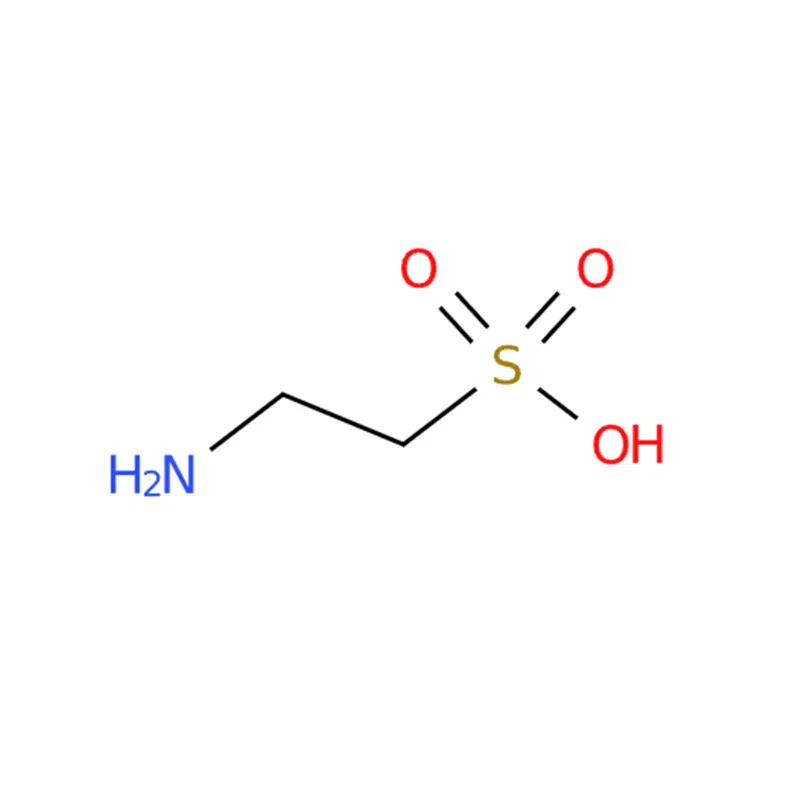
Taurine Chemical Properties
Product Name: | Taurine |
Synonyms: | TAURINE;2-amino-ethanesulfonicaci;2-sulfoethylamine;Aminoethanesulfonic acid;TURIN;2-AMINOETHANESULFONIC ACID 99.3+%;TATU;TAURINE extrapure CHR |
CAS: | 107-35-7 |
MF: | C2H7NO3S |
MW: | 125.15 |
EINECS: | 203-483-8 |
Product Categories: | Inhibitors;food additive;Food & Feed ADDITIVES;pharmacetical;BETALIN-S;amino;Food and Feed Additive;Sulphur Derivatives;Natural Plant Extract;Nutritional fortification substances;Amino Acids;GABA/Glycine receptor;107-35-7 |
Melting point | >300 °C (lit.) |
density | 1.00 g/mL at 20 °C |
refractive index | 1.5130 (estimate) |
FEMA | 3813 | TAURINE |
storage temp. | 2-8°C |
solubility | H2O: 0.5 M at 20 °C, clear, colorless |
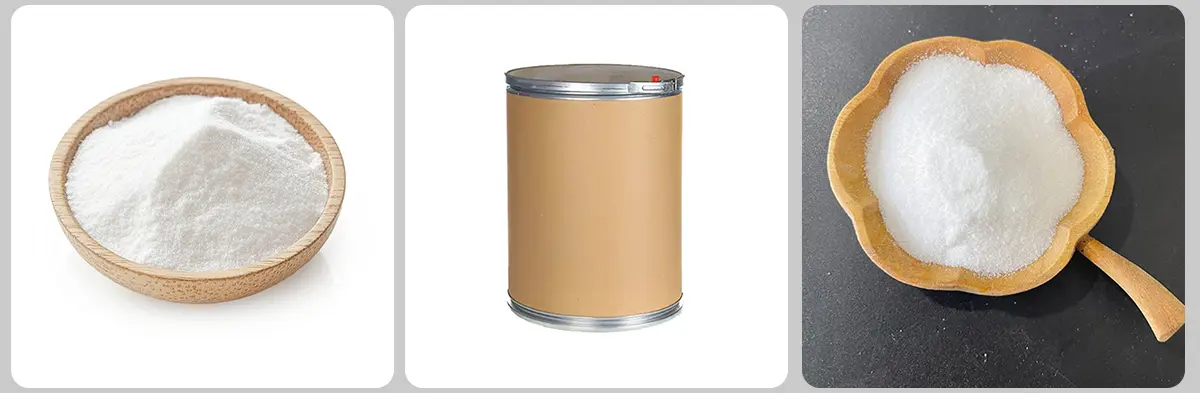
form | Crystals or Crystalline Powder |
pka | 1.5(at 25℃) |
color | White |
PH | 4.5-6.0 (25℃, 0.5M in H2O) |
Odor | bland |
biological source | synthetic |
Water Solubility | 5-10 g/100 mL at 23.5 ºC |
λmax | λ: 260 nm Amax: 0.006 |
λ: 280 nm Amax: 0.005 | |
Merck | 149074 |
JECFA Number | 1435 |
BRN | 1751215 |
Stability: | Stable. Incompatible with strong oxidizing agents. |
InChIKey | XOAAWQZATWQOTB-UHFFFAOYSA-N |
LogP | -3.36--1.2 at 20℃ |
CAS DataBase Reference | 107-35-7(CAS DataBase Reference) |
NIST Chemistry Reference | 2-Aminoethanesulfonic acid(107-35-7) |
EPA Substance Registry System | Taurine (107-35-7) |
Taurine is a naturally occurring organic acid widely present in animal tissues and serves as an important component of bile. It performs various biological functions, including bile acid conjugation, antioxidant activity, osmotic regulation, cell membrane stabilization, and modulation of calcium signaling pathways.
As an amino acid nutritional supplement, taurine is commonly used to support health and treat taurine-deficiency-related conditions, such as dilated cardiomyopathy, a form of heart disease associated with impaired cardiac function.