
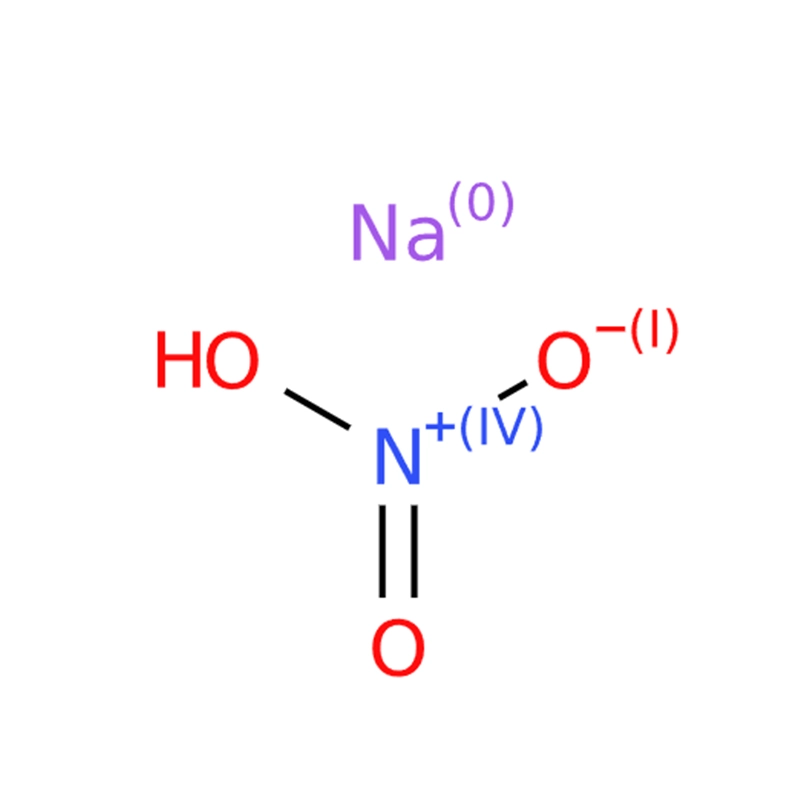
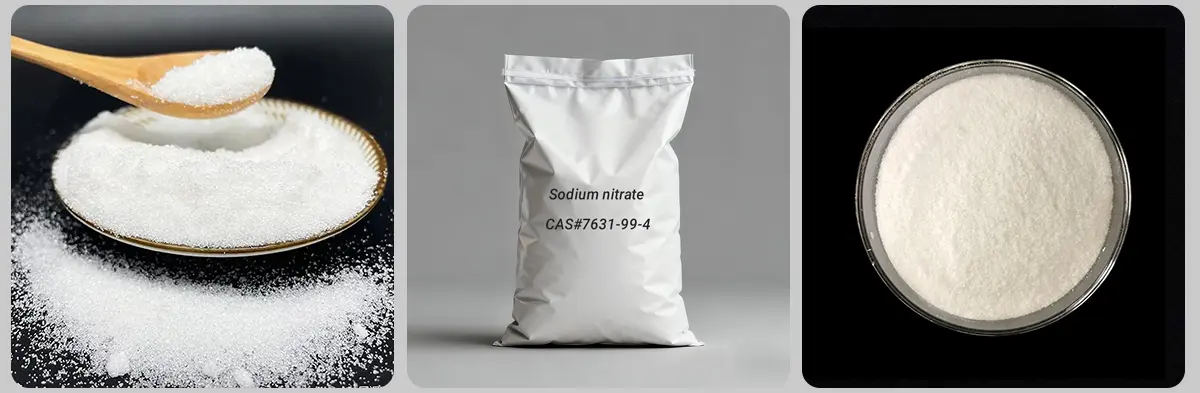
Sodium nitrate is an inorganic chemical bearing the formula NaNO₃. This hygroscopic material normally takes the form of colourless, transparent trigonal crystals or white-to-yellow crystalline powder. Its melting point is 306.8°C, and thermal decomposition occurs at roughly 380°C when heated.
Sodium nitrate demonstrates high solubility in water and liquid ammonia, and it can also dissolve in methanol and ethanol. It exhibits limited solubility in glycerol and trace solubility in acetone. Its dissolution in water absorbs heat and brings down the solution temperature, and the resulting aqueous solution stays neutral.
| Foreign Name | Sodium nitrate |
| Chemical Formula | NaNO3 |
| Molecular Weight | 84.99 |
| CAS Number | 7631-99-4 |
| EINECS | 231-554-3 |
| Melting Point | 306.8 ℃ |
| Boiling point | 380℃ (decomposes) |
| Water solubility | Easily soluble |
| Density | 2.26 g/cm3 |
| Appearance | White to yellow crystalline powder |
| Safety description | S17;S26;S27;S36/37/39;S45 |

Sodium nitrate is a critical feedstock for producing potassium nitrate, mining explosives, picric acid and dyestuffs. It also acts as a nitrating reagent during the synthesis of dye intermediates.
Within the glass sector, sodium nitrate works as an antifoaming additive, decolorizer, fining agent and oxidizing flux for fabricating different glass grades and finished glassware. For enamel manufacturing, it serves as an oxidant and fluxing material to prepare enamel frits.
In mechanical processing, it is applied for metal cleaning and the formulation of black oxide bluing agents for ferrous metals. In metallurgical workflows, sodium nitrate functions as a heat-treatment medium for steel and aluminium alloys. For light industrial applications, it is made into combustion promoters for cigarette products.
The pharmaceutical field employs sodium nitrate as one component of culture media for penicillin fermentation. In agricultural scenarios, it acts as a fast-acting fertilizer for acidic soils, especially suited for root crops including sugar beets and radishes.
Furthermore, sodium nitrate can remove colour from molten caustic soda. High-purity grades are qualified for analytical and spectroscopic testing, and can be deployed as oxidants. It also participates in dye synthesis as well as the manufacturing of explosives and pyrotechnic items.