Product Description of Terephthalaldehyde CAS#623-27-8
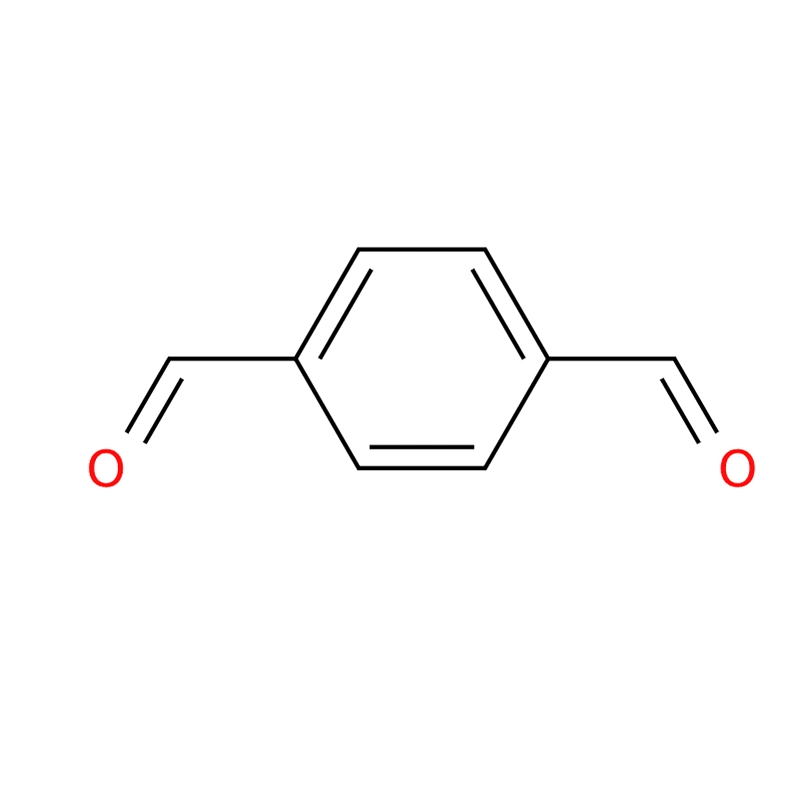
Terephthalaldehyde is an important fine chemical intermediate derived from paraxylene. Its molecular structure contains two active aldehyde groups, enabling it to undergo self-polymerization or copolymerization with other monomers to produce a variety of polymer materials. These polymers are widely used in the synthesis of fluorescent materials, catalyst carriers, and other high-performance macromolecular products.
Traditionally, terephthalaldehyde is produced through the chlorination of p-xylene followed by hydrolysis in the presence of nitric acid or metal oxide catalysts.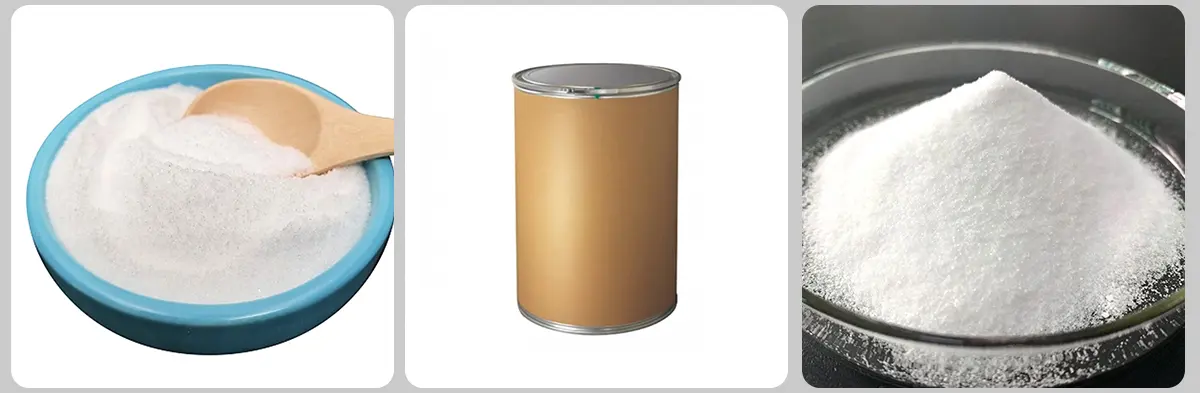
Terephthalaldehyde Chemical Properties
| Melting point | 114-116 °C (lit.) |
| Boiling point | 245-248 °C (lit.) |
| Density | 1,06 g/cm3 |
| Vapor pressure | 0.25-0.46Pa at 20-25℃ |
| Refractive index | 1.4800 (estimate) |
| Fp | 76 °C |
| Storage temp | Store below +30°C. |
| Solubility | 3g/l |
| Form | Crystalline Powder |
| Color | White to light yellow |
| Water Solubility | 3 g/L (50 ºC) |
| Sensitive | Air Sensitive |
| BRN | 385863 |
| InChIKey | KUCOHFSKRZZVRO-UHFFFAOYSA-N |
| LogP | 1 at 20.1℃ and pH6.6-6.8 |
| CAS DataBase Reference | 623-27-8(CAS DataBase Reference) |
| NIST Chemistry Reference | 1,4-Benzenedicarboxaldehyde(623-27-8) |
| EPA Substance Registry System | 1,4-Benzenedicarboxaldehyde (623-27-8) |
| Hazard Codes | Xi |
| Risk Statements | 36/37/38-36/37 |
| Safety Statements | 22-24/25-36-26-37/39 |
| WGK Germany | 1 |
| RTECS | WZ0430000 |
| Hazard Note | Irritant |
| TSCA | Yes |
| HS Code | 29122900 |
| Hazardous Substances Data | 623-27-8(Hazardous Substances Data) |
Product Application of Terephthalaldehyde CAS#623‑27‑8 Terephthalaldehyde serves as a primary raw material for whitening agents, poly(methylstyrene‑co‑indene), plastic goods and pesticide formulations. It also participates in building diverse organic‑molecule frameworks, including synthetic intermediates such as bromocyclopentane.
Moreover, it supports the manufacturing of solid iodophor disinfectants. In these systems, surfactants act as carriers to generate iodine‑containing coordination complexes. Such disinfectant products deliver broad‑spectrum, high‑efficiency bactericidal performance coupled with favorable stability and safe operating profiles. They are suitable for preoperative skin antisepsis as well as sanitary treatment for oral cavities, intestinal tracts, urethral and cervical mucosal tissues.