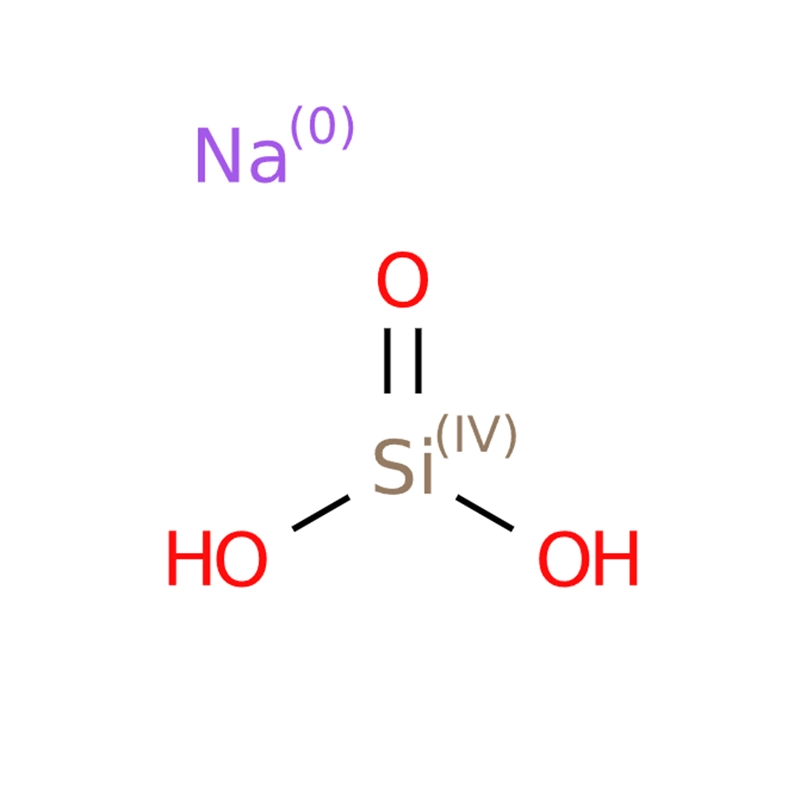
Metasilicates are highly soluble in water but are insoluble in alcohol, acidic, and saline solutions. When heated or acidified, sodium metasilicate solutions undergo hydrolysis, releasing free sodium ions and silicic acid. In the presence of moist air, they can be corrosive to metals like zinc, aluminum, tin, and lead, leading to the formation of hydrogen gas. As strong bases, they react vigorously with acids.
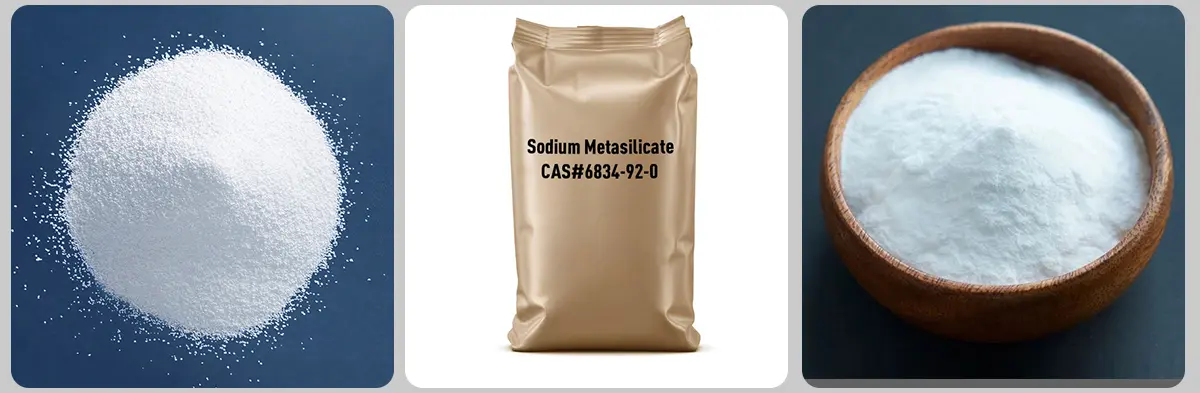
Parameters
Melting point | 1089°C |
density | 2.4 |
refractive index | nD25 (glass) 1.520 |
solubility | soluble in cold H2O; reachot H2O; insoluble in ethanol |
form | powder |
color | White |
Specific Gravity | 2.61 |
PH | 11(1 mM solution);11.91(10 mM solution);12.62(100 mM solution) |
Water Solubility | Soluble in cold water. Hydrolyzes in hot water. Insoluble in acids, alcohol and salt solutions. |
Hydrolytic Sensitivity | 0: forms stable aqueous solutions |
Merck | 14,8642 |
Stability | hygroscopic |
InChIKey | NTHWMYGWWRZVTN-UHFFFAOYSA-N |
CAS DataBase Reference | 6834-92-0(CAS DataBase Reference) |
NIST Chemistry Reference | Sodium silicate(6834-92-0) |
EPA Substance Registry System | Sodium metasilicate (6834-92-0) |
Safety Information
Hazard Codes | C |
Risk Statements | 36/37/38-37-34 |
Safety Statements | 26-45-36/37/39-13-24/25 |
RIDADR | UN 3253 8/PG 3 |
WGK Germany | 1 |
RTECS | VV9275000 |
F | 3 |
TSCA | Yes |
HazardClass | 8 |
PackingGroup | III |
HS Code | 28391910 |
Hazardous Substances Data | 6834-92-0(Hazardous Substances Data) |