
Toluene Diisocyanate CAS#26471-62-5
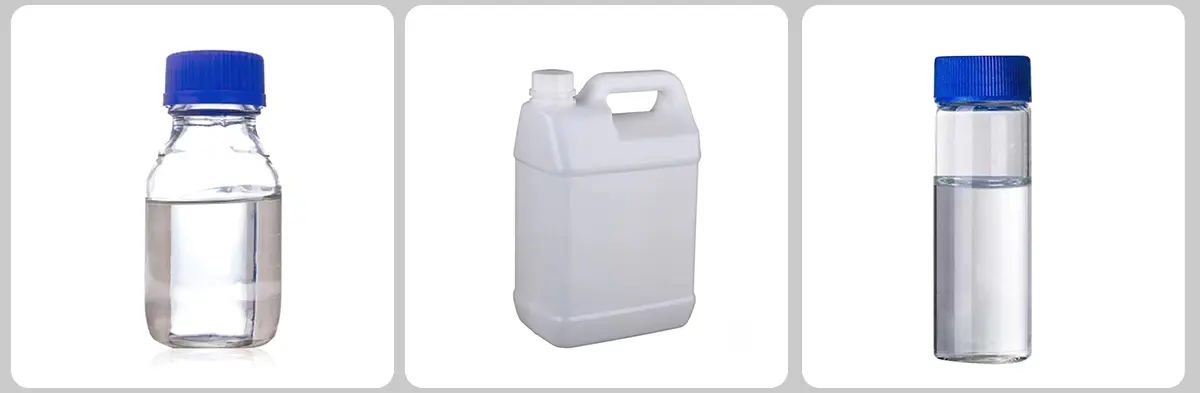
Toluene diisocyanate (TDI) belongs to the family of aromatic diisocyanates. It is a transparent to light yellow liquid with an intense, irritating smell. The substance does not dissolve in water yet mixes freely with most standard organic solvents.
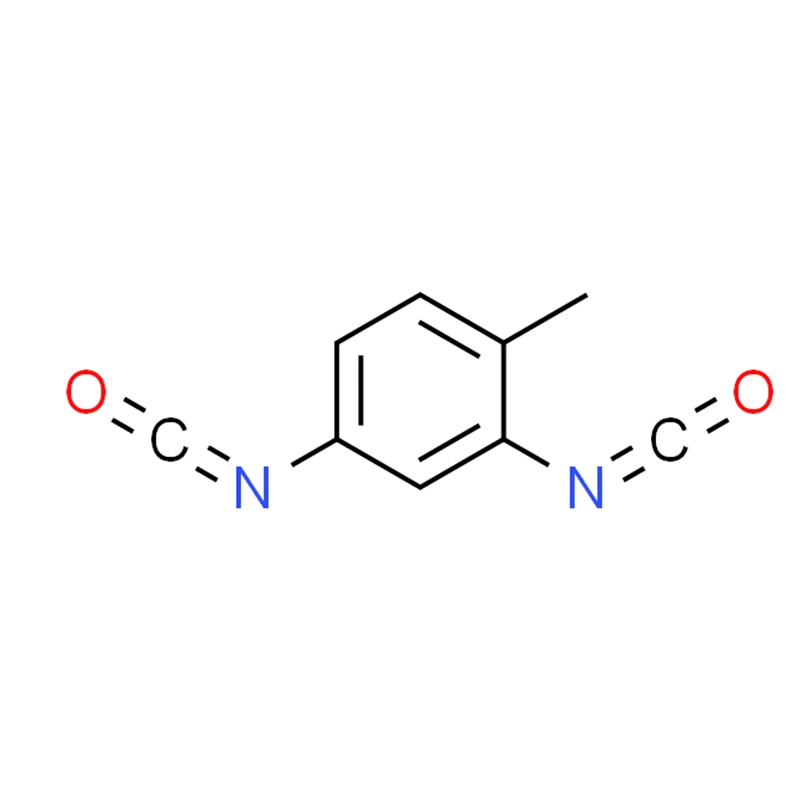
TDI (CAS No. 26471-62-5) consists of two isomeric forms: toluene-2,4-diisocyanate (2,4-TDI, CAS No. 584-84-9) and toluene-2,6-diisocyanate (2,6-TDI, CAS No. 91-08-7). Commercial grades are produced with varied isomer proportions; the most prevalent specification features 80% 2,4-TDI paired with 20% 2,6-TDI. As a staple chemical, TDI enjoys broad application within the chemical sector and has maintained a substantial market share in the worldwide isocyanate business over the years.
Toluene diisocyanate Chemical Properties
| Melting point | 19.5~21.5℃ |
| Boiling point | 247℃ |
| density | 1.22 |
| vapor pressure | 0.03 hPa ( 20 °C) |
| refractive index | 1.5660 to 1.5700 |
| Fp | 137 °C |
| storage temp. | Store below +30°C. |
| solubility | miscible with Ether,Acetone,Benzene |
| form | clear liquid |
| color | Colorless to Light yellow |
| Odor | Sharp, pungent odor |
| explosive limit | 0.9-9.5% (v/v) |
| Water Solubility | 124mg/L at 25℃ |
| InChI | 1S/C9H6N2O2/c1-7-2-3-8(10-5-12)4-9(7)11-6-13/h2-4H,1H3 |
| InChIKey | DVKJHBMWWAPEIU-UHFFFAOYSA-N |
| SMILES | N(=C=O)c1c(ccc(c1)N=C=O)C |
| LogP | 3.43 at 22℃ |
| CAS DataBase Reference | 26471-62-5(CAS DataBase Reference) |
| IARC | 2B (Vol. 39, Sup 7, 71) 1999 |
| EPA Substance Registry System | Toluene diisocyanate (26471-62-5) |
| Risk Statements | 26-36/37/38-40-42/43-52/53 |
| Safety Statements | 23-36/37/39-45-24/25 |
| RIDADR | 2078 |
| WGK Germany | WGK 2 |
| RTECS | NQ9490000 |
| Autoignition Temperature | 620°C |
| TSCA | TSCA listed |
| HazardClass | 6.1(a) |
| PackingGroup | II |
| HS Code | 29291090 |
| Storage Class | 6.1A - Combustible, acute toxic Cat. 1 and 2 |
| very toxic hazardous materials | |
| Hazard Classifications | Acute Tox. 1 Inhalation |
| Aquatic Chronic 3 | |
| Carc. 2 | |
| Eye Irrit. 2 | |
| Resp. Sens. 1 | |
| Skin Irrit. 2 | |
| Skin Sens. 1A | |
| STOT SE 3 | |
| Hazardous Substances Data | 26471-62-5(Hazardous Substances Data) |
| Toxicity | A designated hazardous waste (EPA). It is a colorless to yellow solid, melting at about 20°C. TDI and MDI (diphenylmethane diisocyanate) are used in the manufacture of polyurethane foams by reaction with polyhydroxy compounds. These foams are used for insulation, upholstering, etc. Exposure is commonly by inhalation of the vapor. Both TDI and MDI can cause irritation of eyes and mucous membranes, in severe cases leading to pulmonary edema. Sensitization to TDI is common and frequently rapid, leading to an allergic reaction and some loss of lung function. In the United Kingdom, the threshold limit value is 0.02 ppm for not more than 20 min, or 0.005 ppm for 8 h. |

Product Application of Toluene Diisocyanate CAS#26471-62-5
The isocyanate functional groups of TDI can react with hydroxyl groups to build urethane bonds. This characteristic makes it a key feedstock for flexible polyurethane foam, which is widely adopted for furniture, bedding, automobile seats and seats for commercial transport vehicles.
It is also applied to manufacture polyurethane elastomers for automotive bumper skins, industrial rollers, sports shoes and multiple mechanical components. Besides, TDI acts as a starting material for coating systems, covering metal finishes, wood coatings and high-performance anti-corrosion coatings.
Rigid polyurethane foams derived from TDI are applied in domestic refrigerators, residential building sheathing and commercial roof projects. Spray-type rigid PU foam formulated with TDI works as thermal insulation for truck trailers, railway freight wagons and overseas shipping containers. Furthermore, moisture-curable TDI coatings can function as sealants and floor topcoats for wooden and concrete substrates.