

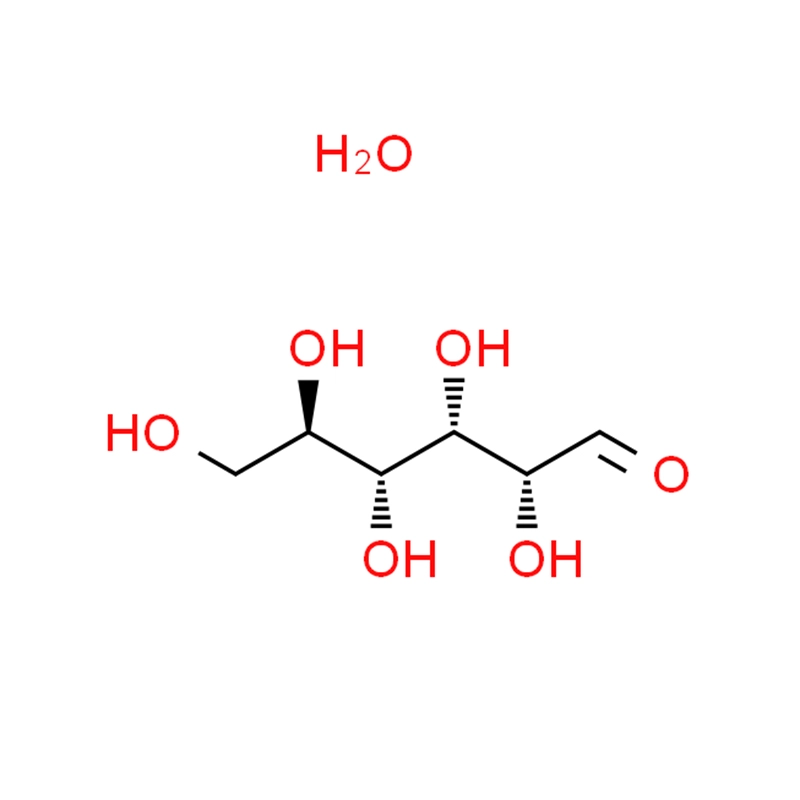
D-(+)-Glucose monohydrate, commonly referred to as glucose or dextrose, has numerous microbiological applications. It serves as a carbon source in microbial culture media, promoting the growth and proliferation of various microorganisms. As a simple sugar, glucose is a primary energy source for bacterial metabolism. It is a naturally occurring sugar involved in energy production, glycosylation, and the formation of glycans that contribute to cellular structure. Additionally, glucose participates in a harmful cellular process known as glycation.
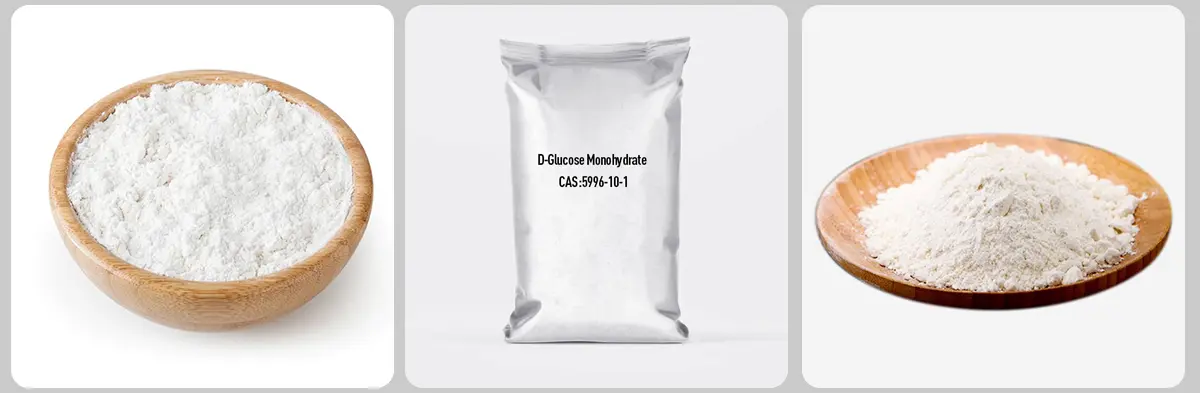
D-Glucose monohydrate Chemical Properties
| Melting point | 83°C |
| Density | 1.54 |
| Solubility | Freely soluble in water, sparingly soluble in ethanol (96 per cent). |
| Form | Solid |
| Color | Colorless crystals |
| Odor | Odorless |
| PH Range | 5.9 |
| Water Solubility | 1 g/1.1 ml water @ 250C |
| InChI | InChI=1/C6H12O6.H2O/c7-1-2-3(8)4(9)5(10)6(11)12-2;/h2-11H,1H2;1H2/t2-,3-,4+,5-,6+;/s3 |
| InChIKey | OSNSWKAZFASRNG-YDLLFKKHNA-N |
| SMILES | [C@H]1(CO)O[C@@H]([C@H](O)[C@@H](O)[C@@H]1O)O.O |&1:0,4,5,7,9,r| |
| CAS DataBase Reference | 5996-10-1(CAS DataBase Reference) |

It can be used as a sweetener and finds wide application in the food, beverage, confectionery, and related industries. In the medical field, it serves as a raw material for glucose injections, sodium glucose oxidate injections, and as a primary or auxiliary material for oral medications. Additionally, it is used in the vegetable preservation industry.