
Product Description of Inositol CAS#87‑89‑8
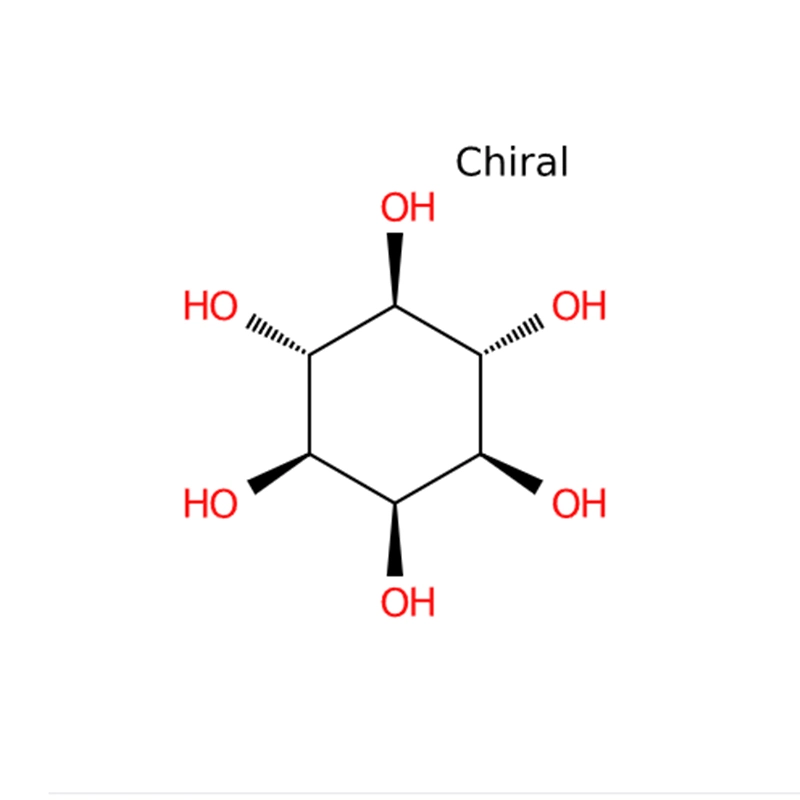
Myo‑Inositol, alternatively named cyclohexanol, hexahydroxycyclohexane and cyclohexitol, belongs to the B‑complex vitamin group. Variations in the orientation of hydroxyl groups relative to the ring plane give rise to nine distinct isomers, covering seven optically inactive isomers together with a pair of enantiomers (levorotatory and dextrorotatory forms).
In nature, Myo‑Inositol is broadly distributed in biological tissues in both free and bound states, serving as a ubiquitous constituent of animal and plant cells. It can be synthesized by microorganisms within the digestive tract and engages in carbohydrate and lipid metabolism. Within animal organisms, it mainly occurs as phosphatidylinositol, accumulating at high levels in tissues including the brain, myocardium and skeletal muscle.
Inositol Chemical Properties
Melting point | 222-227 °C (lit.) |
Boiling point | 232.96°C (rough estimate) |
density | 1.75 |
vapor density | 6.2 (vs air) |
refractive index | 1.6170 (estimate) |
storage temp. | 2-8°C |
solubility | H2O: 0.5 M at 20 °C, clear, colorless |
pka | 12.63±0.70(Predicted) |
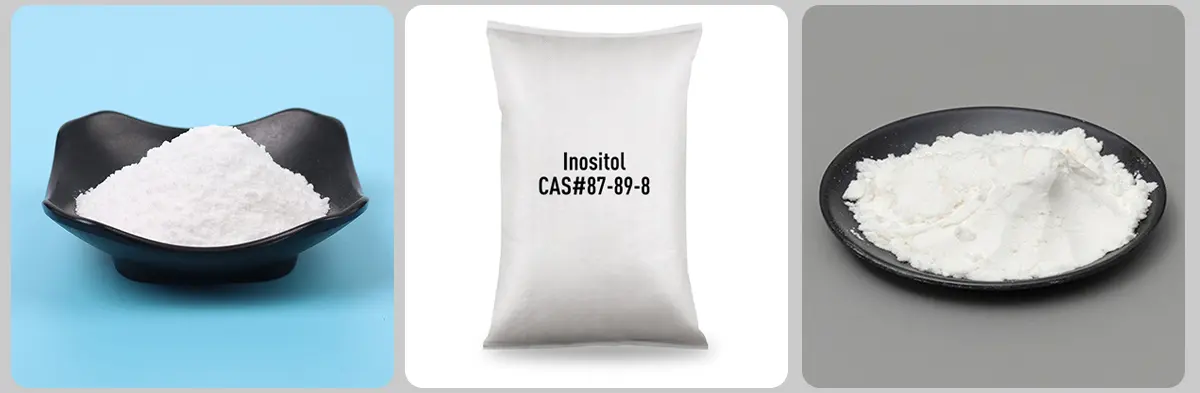
form | Crystalline Powder |
color | White |
PH | 5-7 (100g/l, H2O, 20℃) |
Odor | odorless |
Water Solubility | 14 g/100 mL (25 ºC) |
Merck | 144978 |
BRN | 1907328 |
Stability: | Stable. Combustible. Incompatible with strong oxidizing agents. |
InChIKey | CDAISMWEOUEBRE-GPIVLXJGSA-N |
LogP | -2.08 |
CAS DataBase Reference | 87-89-8(CAS DataBase Reference) |
NIST Chemistry Reference | Hexahydroxycyclohexane(87-89-8) |
EPA Substance Registry System | myo-Inositol (87-89-8) |
Safety Statements | 22-24/25 |
WGK Germany | 2 |
RTECS | NM7520800 |
TSCA | Yes |
HS Code | 29061390 |

Product Application of Inositol CAS#87‑89‑8
Inositol is an indispensable vitamin that participates in lipid metabolism inside organisms. It facilitates the uptake of vitamin supplements and lipid‑lowering agents, boosts fat turnover and cellular proliferation in the liver and other tissues, and is adopted as an adjunct component for managing fatty liver and hyperlipidemia.
Inositol finds extensive use as an additive for food and animal feed, and is routinely incorporated into feeds for fish, shrimp, livestock and poultry, with a suggested addition level of 350–500 mg/kg.
It also enjoys broad utilization across pharmaceutical, chemical and food sectors. Inositol can be applied for the intervention of hepatic ailments, vascular sclerosis and other disorders, and acts as a raw material for premium cosmetics, possessing remarkable economic benefits.