

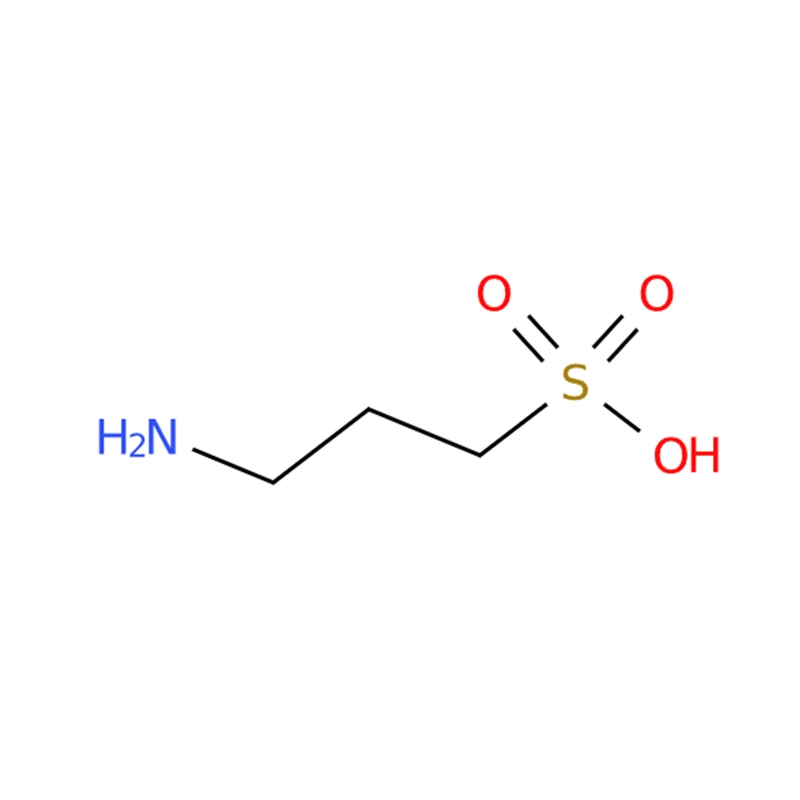
Product Description of 3-Amino-1-propanesulfonic Acid CAS#3687-18-1 3-Amino-1-propanesulfonic Acid stands out as a promising therapeutic agent targeting Alzheimer’s disease (AD). Late-stage Phase III clinical assessments are being carried out in North America and Europe, with relevant trial findings already released to the public. This active substance can attach to soluble Aβ peptides, which helps restrain amyloid clumping, sedimentation and buildup within brain tissue.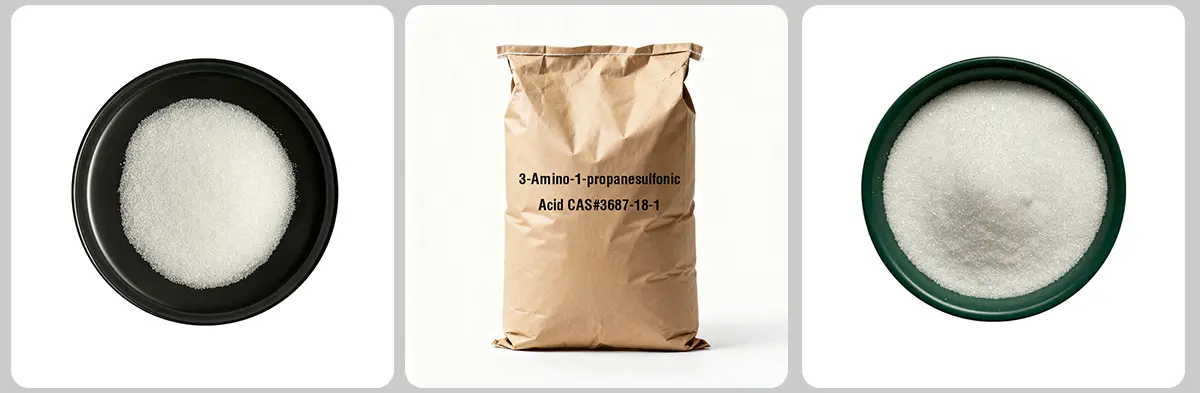
3-Amino-1-propanesulfonic acid Chemical Properties
| Melting point | 293 °C (dec.)(lit.) |
| Density | 1.202 (estimate) |
| Refractive index | 1.5130 (estimate) |
| Storage temp | 2-8°C |
| Solubility | Water (Slightly) |
| Pka | 1.06±0.50(Predicted) |
| Form | Crystalline Powder |
| Color | White to slightly blue |
| LogP | -4.555 |
| CAS DataBase Reference | 3687-18-1(CAS DataBase Reference) |
| Hazard Codes | Xi |
| Risk Statements | 36/37/38 |
| Safety Statements | 26-36 |
| WGK Germany | 1 |
| HS Code | 29049090 |

Product Application of 3-Amino-1-propanesulfonic Acid CAS#3687-18-1
The metabolic route of 3-aminopropanesulfonic acid largely defines its pharmacokinetic profiles and curative outcomes. Creating prodrugs and structural derivatives serves as an efficient approach to lift its therapeutic efficiency and bioavailability, for instance by boosting molecular stability or delaying metabolic degradation. Once administered, these altered variants can liberate the parent compound inside organisms and further raise its clinical application value.