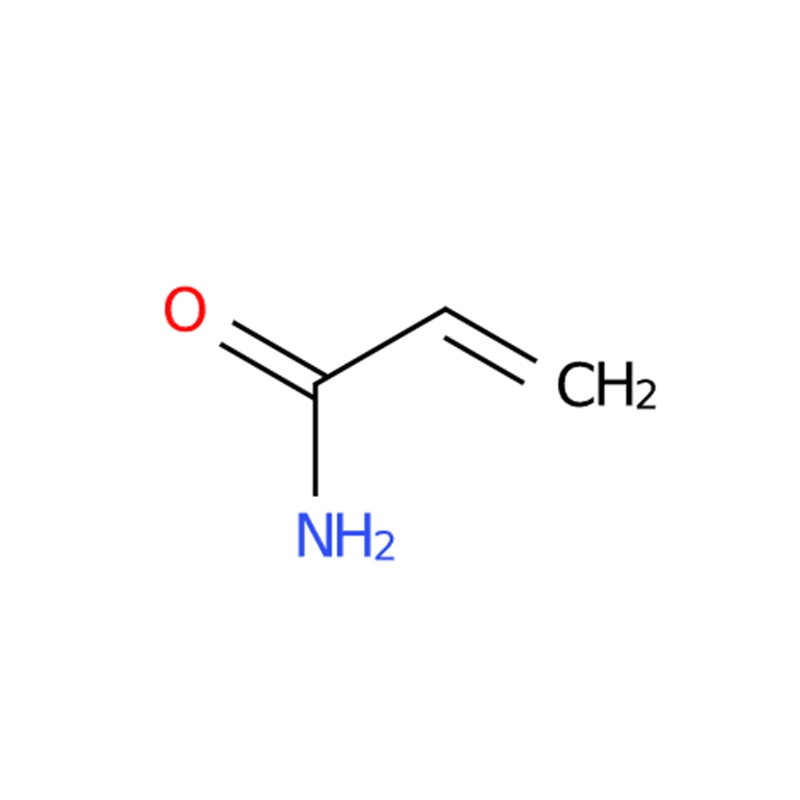
Acrylamide CAS#79-06-1
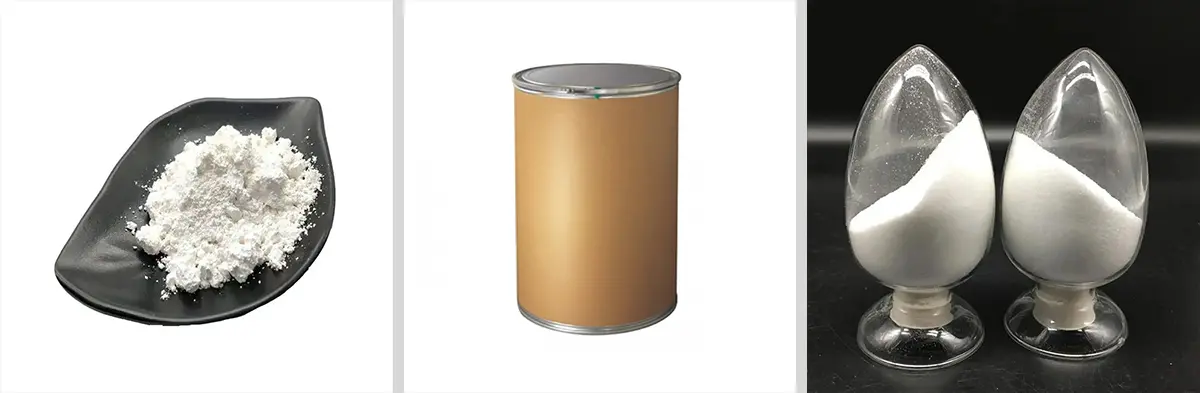
Acrylamide represents a significant organic monomer with broad applications within synthetic chemistry. It features strong chemical reactivity coupled with distinctive physical properties. Under ambient temperature conditions, it presents as white crystalline powder. While high-purity acrylamide carries no smell, commercial industrial grades may show pale yellow discoloration or a mild sharp odour caused by minor impurity contents. Its crystals are hygroscopic, capable of absorbing moisture from ambient air, which will lead to gradual softening or even dissolution after water absorption.
Acrylamide Chemical Properties
Melting point | 82-86 °C(lit.) |
Boiling point | 125 °C25 mm Hg(lit.) |
density | 1,322 g/cm3 |
bulk density | 500kg/m3 |
vapor density | 2.45 (vs air) |
vapor pressure | 0.03 mm Hg ( 40 °C) |
refractive index | 1.46 |
Fp | 138 °C |
storage temp. | 2-8°C |
solubility | 2040 g/L (25°C) |
form | powder |
pka | 15.35±0.50(Predicted) |
color | White |
Odor | Odorless solid |
PH | 5.0-7.0 (50g/l, H2O, 20℃) |
Water Solubility | Acrylamide is routinely tested at 250 mg/mL in water, giving a clear colorless solution. It is soluble at least to 40% (w/v) in water, and reportedly up to 215 g/100 mL in water at 30°C. |
Sensitive | Light Sensitive |
Merck | 14129 |
BRN | 605349 |
Henry's Law Constant | (x 10-9 atm?m3/mol): 3.03 at 20 °C (approximate - calculated from water solubility and vapor pressure) |
Exposure limits | Potential occupational carcinogen. NIOSH REL: TWA 0.03, IDLH: 60; OSHA PEL: TWA 0.3; ACGIH TLV: TWA 0.03. |
Stability: | Unstable. Do not heat above 50C. Explosive. Incompatible with acids, bases, oxidizing agents, reducing agents, iron and iron salts, copper, aluminium, brass, free radical initiators. Air sensitive. Hygroscopic. |
InChIKey | HRPVXLWXLXDGHG-UHFFFAOYSA-N |
LogP | -0.9 at 20℃ and pH7 |
CAS DataBase Reference | 79-06-1(CAS DataBase Reference) |
NIST Chemistry Reference | Acrylamide(79-06-1) |
IARC | 2A (Vol. 60, Sup 7) 1994 |
EPA Substance Registry System | Acrylamide (79-06-1) |
Product Application of Acrylamide
Acrylamide mainly functions as a critical monomer to synthesize polyacrylamide (PAM) and multiple copolymer products. Its derived substances find broad deployment in water treatment, enhanced oil recovery, paper production, polymer fabrication and biological research. Besides these fields, they are also commonly adopted for soil improvement, textile printing and dyeing, mineral beneficiation and many other industrial scenarios.