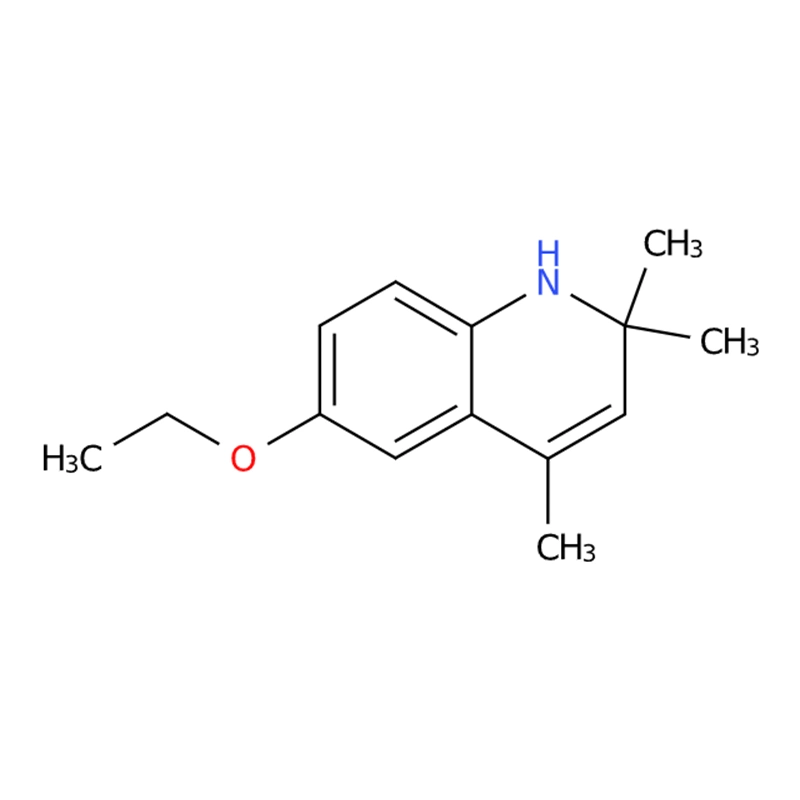
roduct Description of Ethoxyquin CAS#91-53-2 Ethoxyquin, often abbreviated as EQ or EMQ, is also sold under brand names including Sandoquin and Hupiling. It is a viscous liquid ranging from yellow to tan and carries a distinctive smell. This substance cannot dissolve in water yet mixes freely with many organic solvents such as benzene, gasoline, ether, alcohols, carbon tetrachloride, acetone and alkyl dichlorides.
The chemical tends to oxidize when exposed to natural light. Contact with air and oxygen will gradually turn its color deeper brown and raise its viscosity. To preserve its stability, it needs to be sealed in light‑proof packaging. It is worth noting that this color shift will not weaken its antioxidative effect. With a standard purity of 97.5%, ethoxyquin is a synthetic antioxidant mainly deployed for food and feed preservation.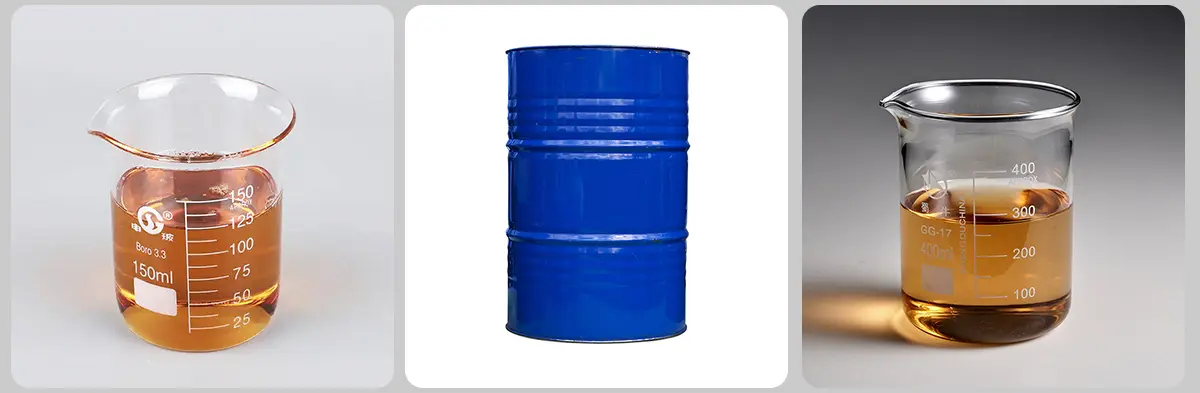
Ethoxyquin Chemical Properties
| Melting point | <0°C |
| Boiling point | 123-125°C |
| Density | 1.03 g/mL at 20 °C (lit.) |
| Vapor pressure | 0.035Pa at 25℃ |
| Refractive index | 1.569~1.571 |
| Fp | 137 °C |
| Storage temp | 2-8°C |
| Solubility | ethanol: 50 mL/L, clear, brown |
| Pka | 5.02±0.70(Predicted) |
| Color | Yellow to Very Dark Brown |
| Water Solubility | <0.1 g/100 mL at 20 ºC |
| Merck | 143753 |
| BRN | 158223 |
| Stability | Stable. Combustible. Incompatible with oxidizing agents, strong acids. Polymerizes if heated. May polymerize upon exposure to light and air. |
| InChIKey | DECIPOUIJURFOJ-UHFFFAOYSA-N |
| LogP | 3.39 |
| CAS DataBase Reference | 91-53-2(CAS DataBase Reference) |
| NIST Chemistry Reference | Quinoline, 6-ethoxy-1,2-dihydro-2,2,4-trimethyl-(91-53-2) |
| EPA Substance Registry System | Ethoxyquin (91-53-2) |
Safety Information
| Hazard Codes | Xn |
| Risk Statements | 22 |
| Safety Statements | 24 |
| RIDADR | 3082 |
| WGK Germany | 1 |
| RTECS | VB8225000 |
| F | 37478 |
| HazardClass | 9 |
| PackingGroup | III |
| HS Code | 29334900 |
| Hazardous Substances Data | 91-53-2(Hazardous Substances Data) |
| Toxicity | LD50 orally in rats, mice: 1920, 1730 mg/kg (Piul'skaya) |
roduct Application of Ethoxyquin CAS#91‑53‑2 Ethoxyquin is commonly applied by surface spraying onto feed materials. It effectively retards oil rancidity and protein oxidation, inhibits vitamin decomposition, and delivers comprehensive antioxidative protection. Its recommended dosage within feed formulations ranges from 100‑150 g/kg. Excess addition above 0.1 % may trigger darkening or yellow discoloration of pork fat, which impairs carcass quality.
Commercial ethoxyquin products exist in two main formulations. The first is a magnesium‑sulfate‑based premix containing 10 %‑70 % ethoxyquin. It features stable physical performance, favorable flow properties and homogeneous distribution, enabling convenient and uniform blending with feed raw materials. The second variant is liquid ethoxyquin, which is generally formulated with water or glycerol as the solvent medium.