
Products Description of IPHO (CAS#78-59-1)
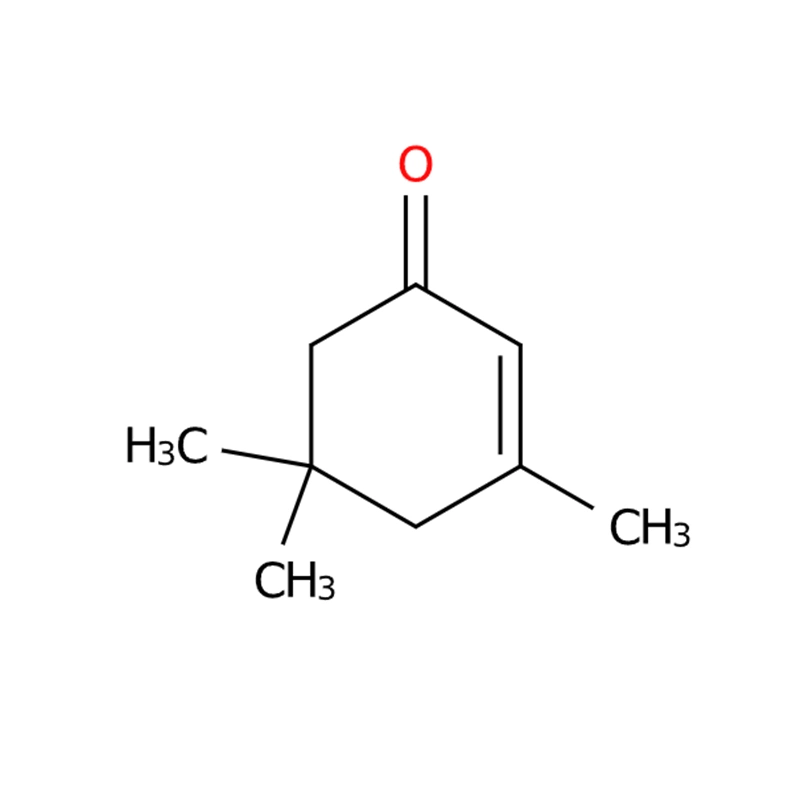
Isophorone, alternatively named 1,1,3-trimethylcyclohexenone, carries the IUPAC designation 3,5,5-trimethyl-2-cyclohexen-1-one. This six-membered cyclic α,β-unsaturated ketone has a molecular formula of C₉H₁₄O.
This substance takes the form of a volatile liquid ranging from colorless to pale yellow, featuring a distinctive aroma resembling camphor and mint. It can be naturally extracted from cranberries. It shows negligible solubility in water yet mixes well with a wide array of organic solvents including ethanol, diethyl ether and acetone. Under light exposure, dimerization may occur; when kept in contact with air, it undergoes oxidation to generate 4,4,6-trimethyl-1,2-cyclohexanedione.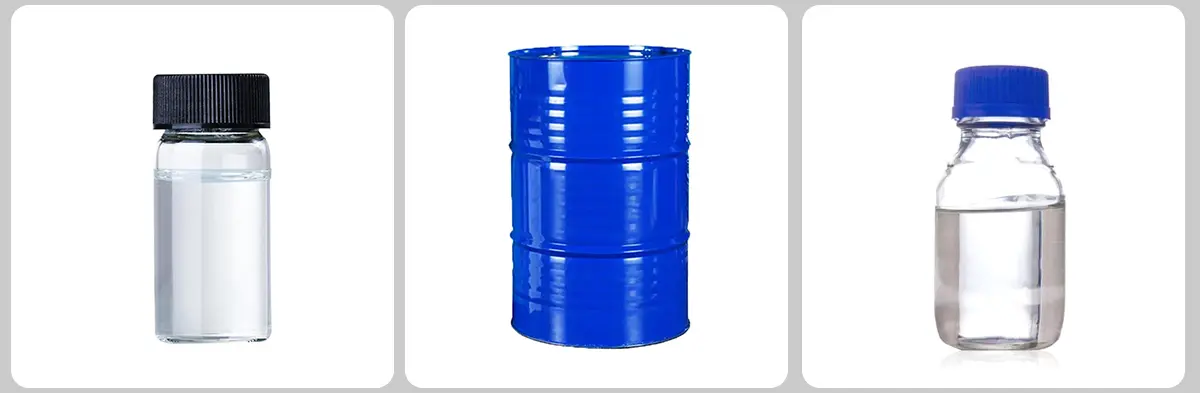
Isophorone Chemical Properties
| Melting point | -8 °C (lit.) |
| Boiling point | 213-214 °C (lit.) |
| Density | 0.923 g/mL at 25 °C (lit.) |
| Vapor density | 4.77 (vs air) |
| Vapor pressure | 0.2 mm Hg ( 20 °C) |
| Refractive index | n20/D 1.476(lit.) |
| FEMA | 3553 | ISOPHORONE |
| Fp | 184 °F |
| Storage temp | Store below +30°C. |
| Solubility | 14.5g/l |
| Form | Liquid |
| Color | Clear colorless to yellow |
| Odor | Like camphor. |
| Odor Type | woody |
| Explosive limit | 0.8-3.8%(V) |
| Water Solubility | Soluble in water (12g/L). |
| Merck | 145196 |
| JECFA Number | 1112 |
| BRN | 1280721 |
| Henry's Law Constant | (x 10-6 atm?m3/mol): 5.8 (calculated, U.S. EPA, 1980a) |
| Exposure limits | TLV-TWA 25 mg/m3 (5 ppm); IDLH 800 ppm. |
| Stability | Stable. Substances to be avoided include strong bases, strong acids and strong oxidizing agents. |
| LogP | 1.67-1.7 at 20℃ |
| CAS DataBase Reference | 78-59-1(CAS DataBase Reference) |
| NIST Chemistry Reference | 2-Cyclohexen-1-one, 3,5,5-trimethyl-(78-59-1) |
| EPA Substance Registry System | Isophorone (78-59-1) |
Safety Information
| Hazard Codes | Xn |
| Risk Statements | 21/22-36/37-40 |
| Safety Statements | 13-23-36/37/39-46 |
| RIDADR | UN 3082 9 / PGIII |
| WGK Germany | 1 |
| RTECS | GW7700000 |
| Autoignition Temperature | 864 °F |
| TSCA | Yes |
| HS Code | 2914 29 00 |
| Hazardous Substances Data | 78-59-1(Hazardous Substances Data) |
| Toxicity | LD50 in male, female rats and male mice (mg/kg): 2700 ±200, 2100 ±200, 2200 ±200 orally (PB90-180225) |
| IDLA | 200 ppm |
Product Application of IPHO (CAS#78‑59‑1)
Functioning as a high‑boiling solvent agent, this chemical finds broad industrial deployment within pesticide formulations, paint manufacturing and internal can‑coating sectors.
It delivers powerful dissolving capacity for grease substances, natural gums and poly(methylstyrene‑co‑indene). It exhibits particularly favorable compatibility for processing workflows built around vinyl‑based resin materials.