
Products Description of Poly(methyl methacrylate) (PMMA)
Poly(methyl methacrylate), abbreviated as PMMA and widely referred to as acrylic or plexiglass, is a high molecular weight polymer with the formula (C₅H₈O₂)ₙ. It gains recognition for exceptional light transmittance, favorable economic efficiency and superior processability.
PMMA is synthesized by polymerizing methyl methacrylate monomers. Under the effect of initiators, the carbon-carbon double bonds undergo reactions to build extended polymer chains. Its production workflow is relatively simple, and the molecular weight as well as polymer architecture can be modulated via distinct synthesis approaches to fulfill the performance criteria of various application scenarios.
English Name | POLY(METHYL METHACRYLATE) ISOTACTIC |
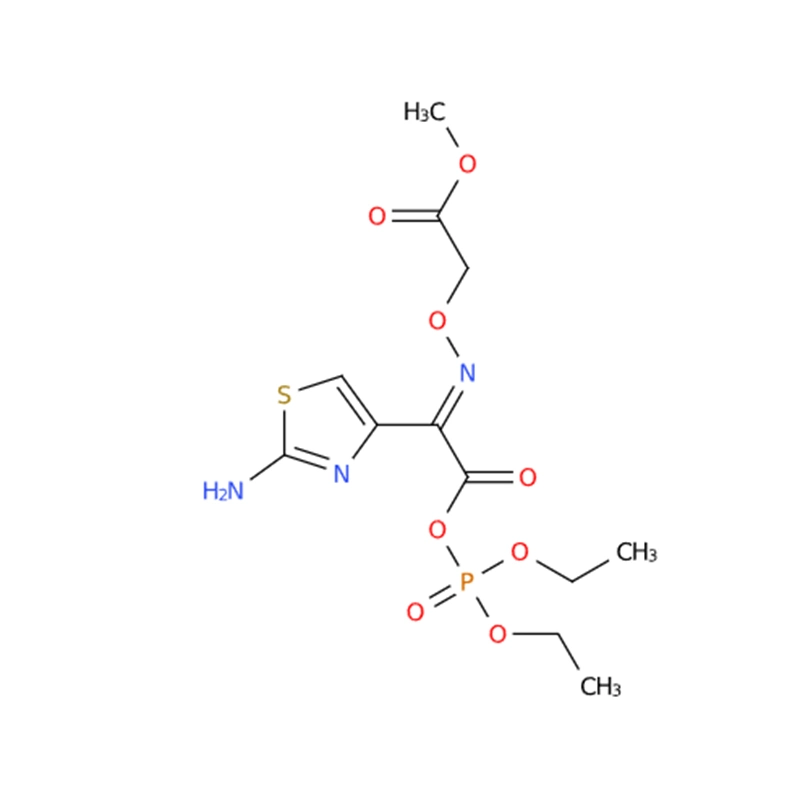
English Synonyms | O,O-DIETHYLPHOSPHORYL (Z)-2-(2-AMINOTHIAZOL-4-YL)-2-METHOXYCARBONYLMETHOXYIMINOACETA TE;PMMA;POLY(METHYL METHACRYLATE), ISOTACTIC, AV ERAGE MW CA. 300,000 (GPC);PMMA:O,O-DIETH YLPHOSPHORYL (Z)-2-(2-AMINOTHIAZOL-4-YL)-2-METHOXYCARBONYLMETHOXYIMINOACETATE;Poly(m ethyl methacrylate), isotactic >80% isotactic;PMMA(8N);PMMA(ZK5BR);PMMA(ZK6HF) |
CAS Number | 25188-98-1 |
Molecular Formula | C12H18N3O8PS |
Molecular Weight | 395.325381 |
Melting point | 140-160 °C |
Density | 1.2 g/mL at 25 °C(lit.) |
Form | solid |
InChI | 1S/C12H18N3O8PS/c1-4-21-24(18,22-5-2)23-11(17)10(8-7-25-12(13)14-8)15-20-6-9(16)19-3/h7H,4-6H2,1 -3H3,(H2,13,14)/b15-10 |
InChIKey | DOXUHDDTLHKPOE-GDNBJRDFSA-N |
Smiles | [P](=O)(OCC)(OCC)OC(=O)\C(=N/OCC(=O)OC)\c1nc([s]c1)N |
Product Application of Poly(methyl methacrylate) (PMMA)
PMMA serves as a popular glass substitute and is broadly utilized for fabricating transparent components, medical apparatus, building materials and decorative artworks.


