
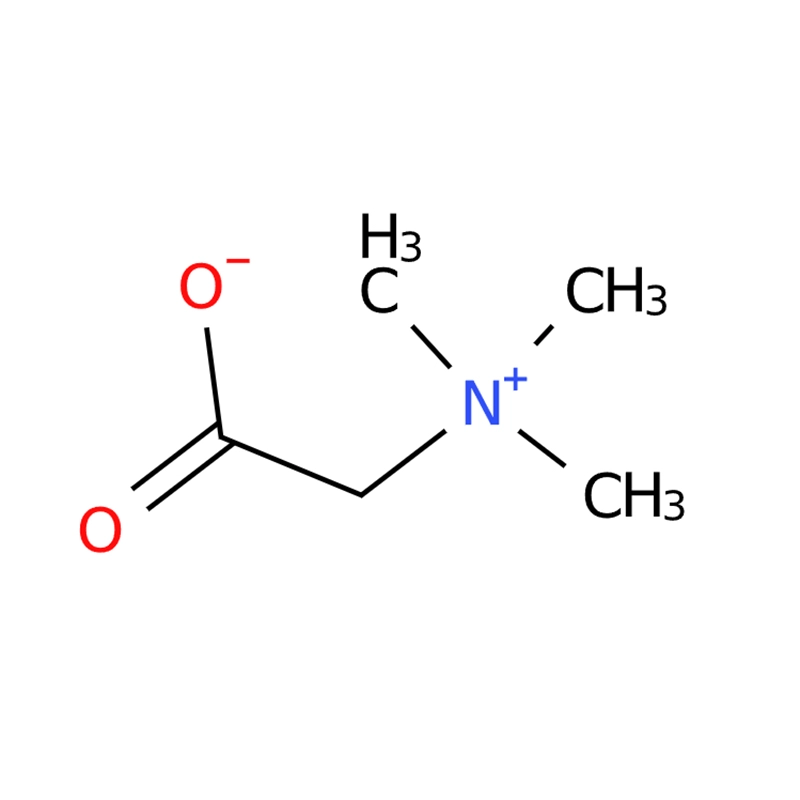
Betaine, also known as betaine anhydrous or trimethylglycine (TMG), is a methyl group donor that supports liver function, cellular reproduction, and the synthesis of carnitine. It is an amino acid betaine and a derivative of glycine, playing an important role in regulating cellular hydration and maintaining proper cell function.
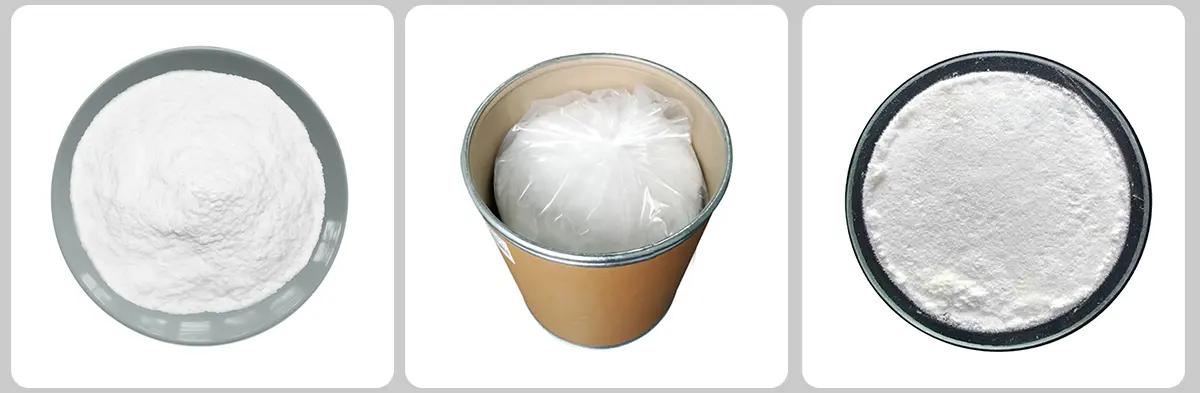
Betaine Chemical Properties
| Melting point | 310 °C (dec.) |
| Boiling point | 218.95°C (rough estimate) |
| Density | 1.00 g/mL at 20 °C |
| vapor pressure | 0.05Pa at 25℃ |
| Refractive index | 1.4206 (estimate) |
| FEMA | 4223 | BETAINE |
| storage temp | 2-8°C |
| solubility | Methanol: 0.1 g/mL, clear |
| Form | Crystals or Crystalline Powder |
| pka | 1.83(at 0℃) |
| color | Colorless |
| Odor | Bland |
| biological source | Sugar beets |
| Water Solubility | 160 g/100 mL |
| Sensitive | Hygroscopic |
| Merck | 14,1179 |
| BRN | 3537113 |
| Stability | Stable. Hygroscopic. Incompatible with strong oxidizing agents. |
| InChIKey | KWIUHFFTVRNATP-UHFFFAOYSA-N |
| LogP | -3.1 at 20℃ |
| CAS DataBase Reference | 107-43-7(CAS DataBase Reference) |
| NIST Chemistry Reference | Methanaminium, 1-carboxy-n,n,n-trimethyl-, hydroxide, inner salt(107-43-7) |
| EPA Substance Registry System | Betaine (107-43-7) |
| Absorption | ≤0.05 at 280nm in methanol at 1M ≤0.09 at 260nm in methanol at 1M |
Safety Information
| Hazard Codes | Xn |
| Risk Statements | 20/21/22-36/37/38 |
| Safety Statements | 24/25-36-26 |
| WGK Germany | 3 |
| RTECS | DS5900000 |
| F | 3-10 |
| TSCA | Yes |
| HS Code | 29239000 |
| Hazardous Substances Data | 107-43-7(Hazardous Substances Data) |
Betaine is an active ingredient in toothpaste for alleviating dry mouth symptoms. It is used to treat homocystinuria, a disorder affecting the primary pathway of methionine metabolism. Additionally, it supports immune system function, enhances athletic performance, and may help prevent noncancerous colon tumors (colorectal adenomas).