Product Description of Phenol CAS#108-95-2
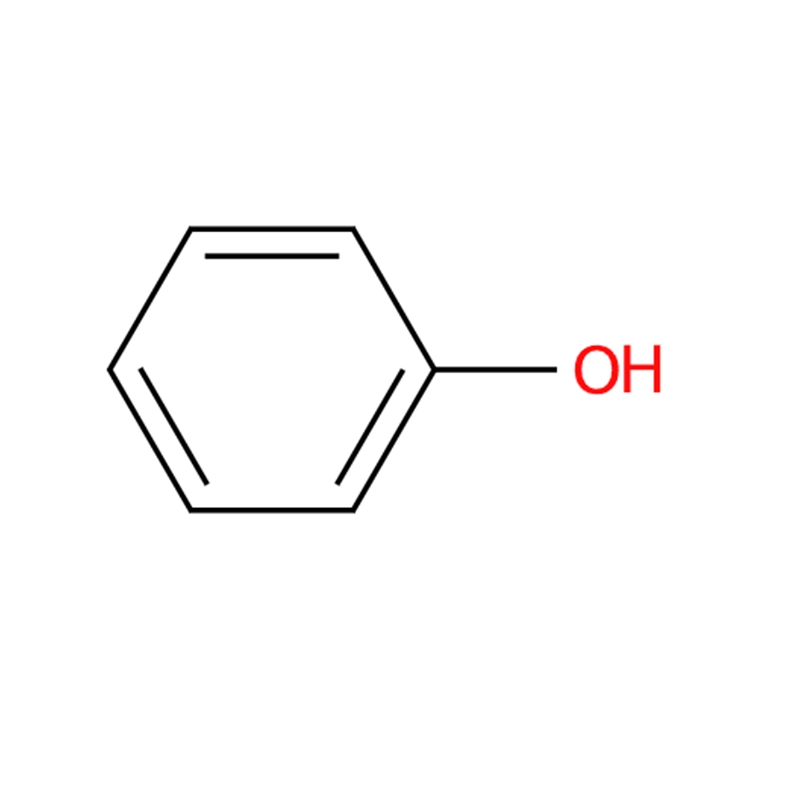
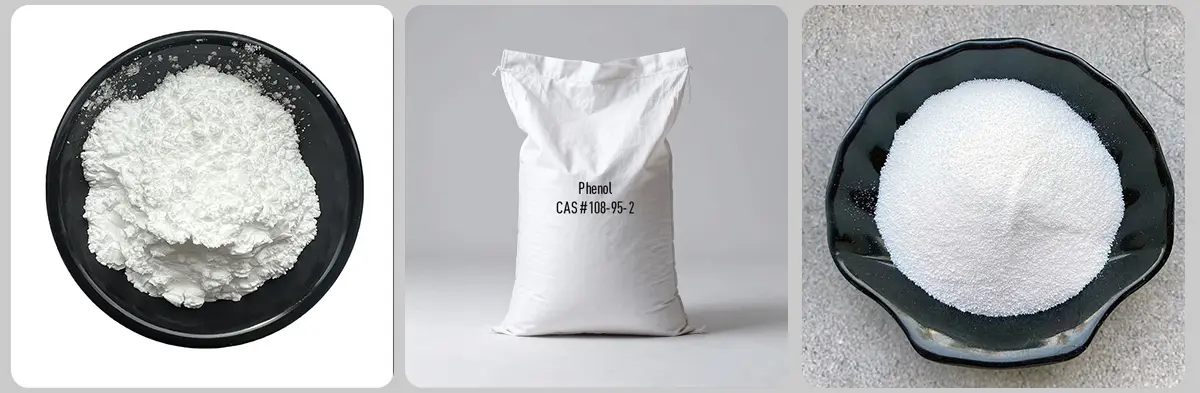
Phenol has the molecular formula C₆H₅OH, also written as C₆H₆O. It is a white crystalline substance. The hydroxyl group linked to its benzene ring grants the compound great versatility and outstanding chemical reactivity.
It functions as a key intermediate for manufacturing pharmaceuticals such as aspirin, and occupies an important position in the production of resins, plastics and synthetic fibers including nylon. In earlier applications, phenol was adopted as a disinfectant, because it can denature proteins and destroy cell membranes.
Moreover, phenol finds uses in detergent manufacturing and analytical chemistry. Given its high reactivity and toxic nature, strict operational rules and safety measures must be followed during handling. Although phenol is biodegradable, suitable waste treatment is still necessary to reduce its environmental footprint. Thanks to its distinctive chemical features and broad application scope, it stands as an indispensable raw material for many industrial workflows.
Phenol Chemical Properties
Melting point | 40-42 °C(lit.) |
Boiling point | 182 °C(lit.) |
density | 1.071 g/mL at 25 °C(lit.) |
vapor density | 3.24 (vs air) |
vapor pressure | 0.09 psi ( 55 °C) |
refractive index | n20/D 1.53 |
FEMA | 3223 | PHENOL |
Fp | 175 °F |
storage temp. | 2-8°C |
solubility | H2O: 50 mg/mL at 20 °C, clear, colorless |
form | liquid |
pka | 9.89(at 20℃) |
Specific Gravity | 1.071 |
color | faintly yellow |
PH | 6.47(1 mM solution);5.99(10 mM solution);5.49(100 mM solution); |
Odor | Sweet, medicinal odor detectable at 0.06 ppm |
explosive limit | 1.3-9.5%(V) |
Odor Threshold | 0.0056ppm |
Odor Type | phenolic |
Water Solubility | 8 g/100 mL |
FreezingPoint | 41℃ |
Sensitive | Air & Light Sensitive |
Merck | 147241 |
JECFA Number | 690 |
BRN | 969616 |
Henry's Law Constant | 1.09 at 5 °C (average derived from six field experiments, Lüttke and Levsen, 1997) |
Dielectric constant | 4.3(10℃) |
Exposure limits | TLV-TWA skin 5 ppm (~19 mg/m3 ) (ACGIH, MSHA, and OSHA); 10-hour TWA 5.2 ppm (~20 mg/m3 ) (NIOSH); ceiling 60 mg (15 minutes) (NIOSH); IDLH 250 ppm (NIOSH). |
Stability: | Hygroscopic |
InChIKey | ISWSIDIOOBJBQZ-UHFFFAOYSA-N |
LogP | 1.47 at 30℃ |
CAS DataBase Reference | 108-95-2(CAS DataBase Reference) |
IARC | 3 (Vol. 47, 71) 1999 |
NIST Chemistry Reference | Phenol(108-95-2) |
EPA Substance Registry System | Phenol (108-95-2) |
Safety Information
Hazard Codes | T,C,F,Xn |
Risk Statements | 23/24/25-34-48/20/21/22-68-40-39/23/24/25-11-36-20/21/22-24/25 |
Safety Statements | 26-36/37/39-45-36/37-28A-28-24/25-1/2-36-16-7 |
RIDADR | UN 2821 6.1/PG 2 |
OEB | A |
OEL | TWA: 5 ppm (19 mg/m3), Ceiling: 15.6 ppm (60 mg/m3) [15-minute] [skin] |
WGK Germany | 2 |
RTECS | SJ3325000 |
F | 46257 |
Autoignition Temperature | 715 °C |
TSCA | Yes |
HazardClass | 6.1 |
PackingGroup | II |
HS Code | 29071100 |
Hazardous Substances Data | 108-95-2(Hazardous Substances Data) |
Toxicity | LD50 orally in rats: 530 mg/kg (Deichmann, Witherup) |
IDLA | 250 ppm |