
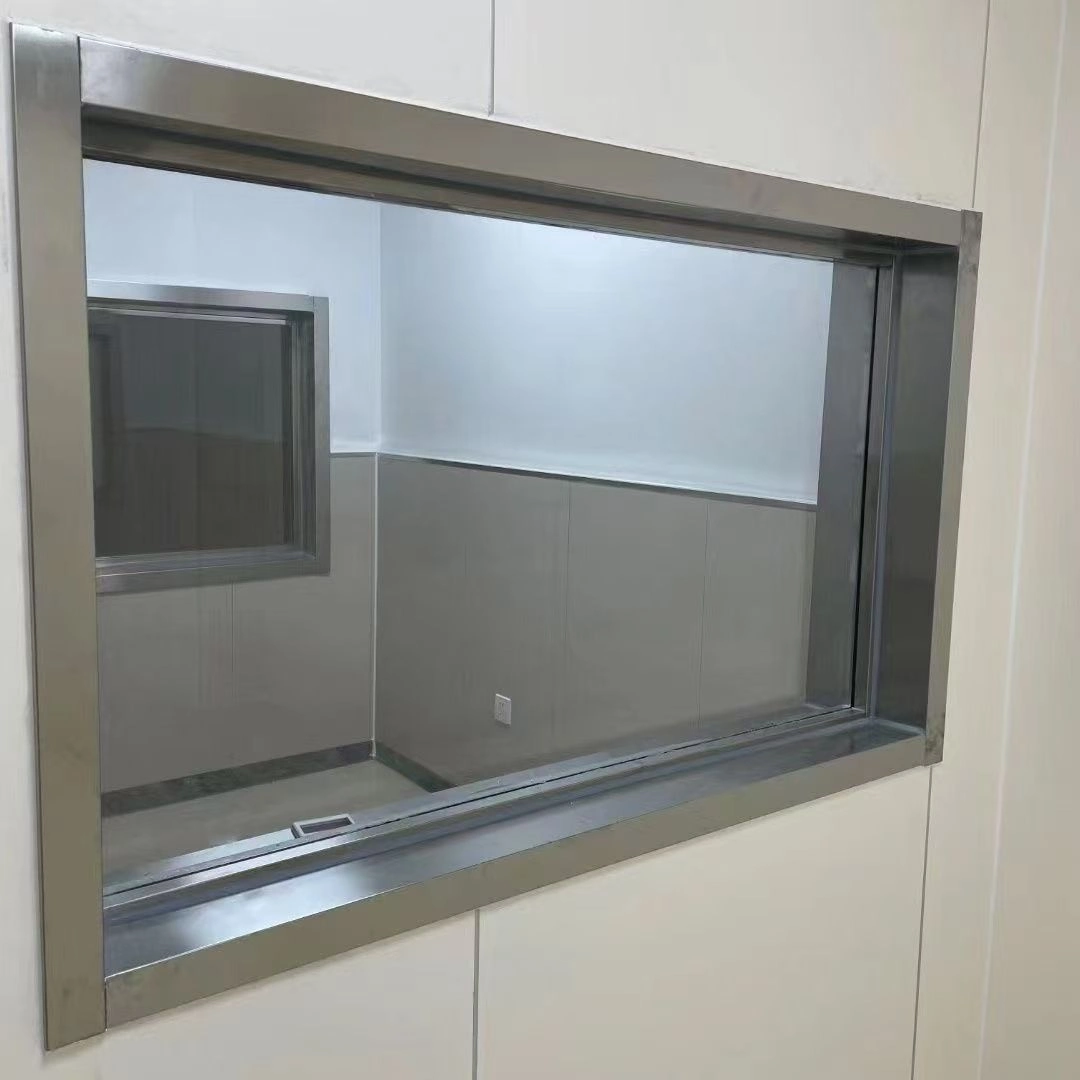
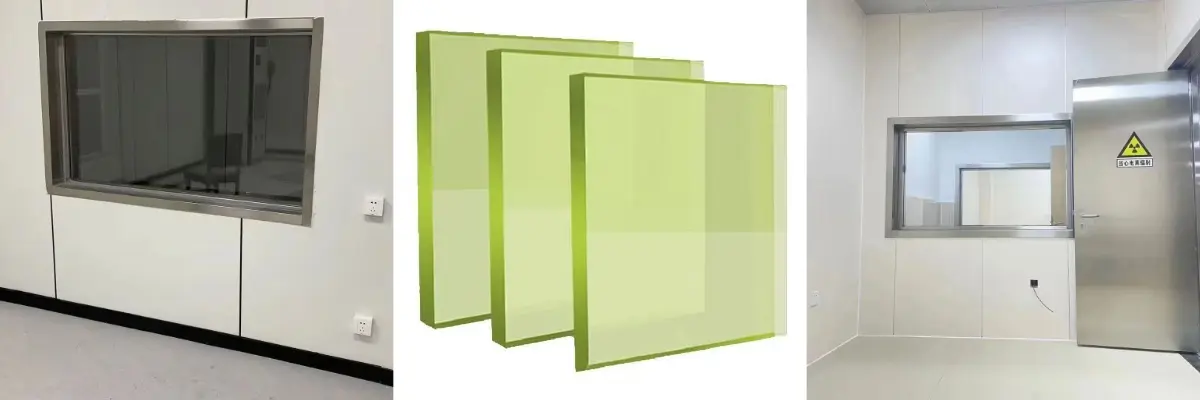
Lead glass windows are a type of functional special glass with lead oxide (PbO) as the main component. With its unique physical and chemical properties, they are widely used in radiation protection, industrial detection and special environment fields. The following is an analysis of its core characteristics and applications:
1. Material characteristics
Radiation shielding ability
Lead glass features a lead content ranging from 20% to 80%. Its high density of 3.8–6.2 g/cm³ enables efficient absorption and scattering of X-rays, gamma rays and other ionizing radiation, delivering shielding performance dozens to hundreds of times higher than standard glass. It is widely adopted for observation windows in hospital CT rooms, nuclear power facilities and professional radiation laboratories.
Excellent optical properties
The lead component increases the refractive index of the glass (up to 1.6-2.0), and the transmittance remains above 80%. It meets both protection and observationneeds and is often used in precision instrument windows or operating room protective screens.
Corrosion resistance and stability
Acid and alkali resistance, high temperature resistance (softening point of about 600℃), can be used for a long time in corrosive environments such as chemical and electroplating workshops.
2. Structure and process
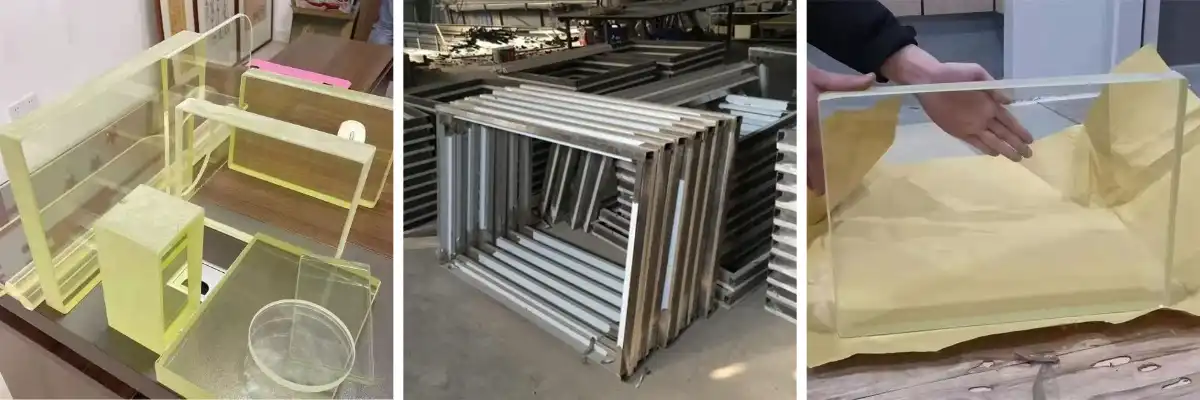
Lead shielding glass is high-temperature fused and molded from a premium formula of silicon dioxide, lead oxide and trace stabilizers such as potassium oxide. Available in customizable thicknesses ranging from 5mm to 50mm and lead equivalents of 0.5mmPb to 5.0mmPb, it can be precisely tailored according to on-site radiation intensity. Optional surface coating further enhances overall wear resistance and long-term durability.

3. Application scenarios
Medical field: radiology, interventional operating room, dental X-ray room, etc., to protect medical staff from radiation damage.
Industrial detection: observation window of industrial CT and non-destructive testing equipment to ensure safe operation.
Scientific research and nuclear energy: protective barriers in nuclear reactor control rooms and particle accelerator laboratories.
Special buildings: UV-proof display cabinets in museums and jewelry stores, or soundproof windows in acoustic laboratories.
4. Precautions for use
Installation specifications: The edges need to be sealed to prevent radiation leakage, and lead plates are used to reinforce the joints.
Maintenance requirements: Avoid scratches with hard objects, use neutral solvents when cleaning to prevent surface oxidation.
Environmentally friendly recycling: Waste lead glass needs to be handled professionally to avoid lead pollution in the environment.
Lead glass windows achieve an efficient balance between safety protection and functionality, and are an indispensable key material in high-risk environments.


