
Abstract
As core facilities for medical radiation shielding, medical lead doors require full-process strict control over radiation leakage prevention, covering structural design, raw material selection, on-site installation, quality inspection and routine maintenance. Below are core anti-leakage technical points and operating standards:
1. Optimized Structural Design: Multi-layer Shielding Barriers
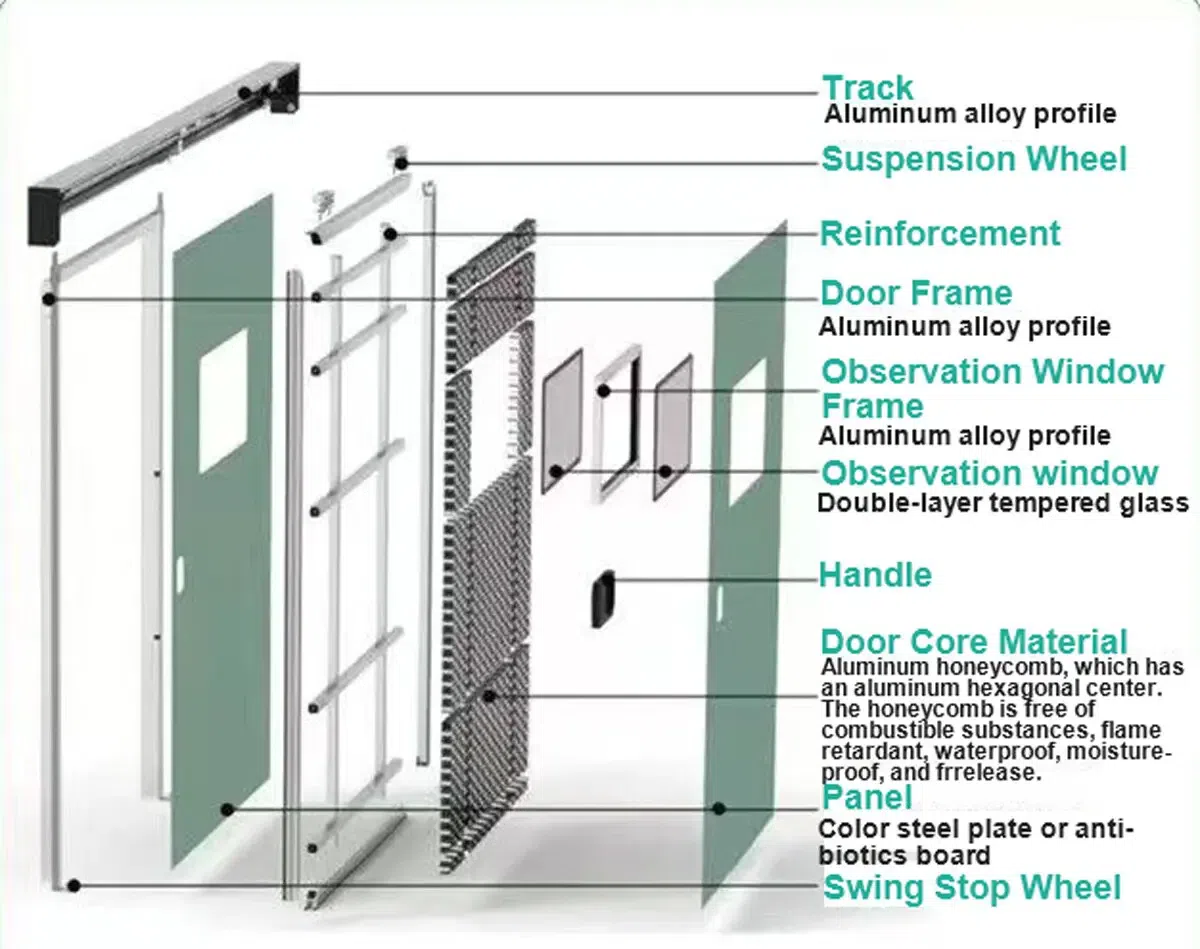
Composite shielding structure
Three-layer composite structure: steel frame + pure lead sheet + protective coating. The lead sheet thickness ranges from 1 mm to 2 mm, providing lead equivalent of 3 mmpb to 5 mmpb (customized based on radiation intensity), which effectively blocks X-ray and gamma-ray.
Sliding lead doors are equipped with overhead or floor tracks for smooth operation; hinged swing lead doors adopt heavy-duty hinges with service life over 200,000 opening-closing cycles.
Enhanced sealing performance
The gap between door leaf and door frame is strictly controlled below 2 mm, adopting labyrinth sealing or detachable high-elastic sealing strips to prevent radiation leakage through slits.
8K mirror stainless steel is embedded around the door perimeter for both aesthetic appearance and structural stability.
2. Premium Raw Material Selection for Durable Shielding Performance
Outer surface material
1.2 mm thick 304 stainless steel or hot-dip galvanized steel plate is used, featuring moisture-proof, rust-proof and corrosion-resistant properties. The surface is treated with high-voltage electrostatic powder coating to resist chemical erosion.
Internal lead sheet requirements
High-purity electrolytic lead with purity ≥99.997% is mandatory for lining lead sheets, featuring uniform thickness, no oxide inclusions or air bubbles. Uneven thickness or impurities in lead sheets will reduce shielding efficiency by 30%–50%.
Auxiliary materials
Door frames are made of 1.5 mm galvanized steel with grooves for sealing strips, filled with polyurethane foam to improve sound insulation and shock absorption.
3. Standardized Installation & Construction Details
Pre-installation preparation
Verify doorway dimensions to ensure full coverage of the radiation channel; check door quantity, style and color to avoid installation errors.
Isolate with moisture-proof materials if the wall is damp to prevent door deformation.
Fixing and leveling
Door frames are fixed with expansion bolts or welding for stable mounting. Door leaves are installed horizontally and vertically with uniform gaps.
Adjust door running track to avoid friction and reduce leakage risks.
Gap filling treatment
After installation, fill gaps between door frame and wall with foam adhesive or cement mortar to eliminate radiation penetration paths.
4. Strict Quality Inspection & Acceptance Standards for Anti-leakage
Visual inspection
No deformation, scratches or cracks on door surface; smooth cutting edges without sharp corners.
Lead sheet thickness test
Measure lead sheet thickness with vernier caliper, allowable thickness error ≤0.05 mm to meet specified lead equivalent.
Radiation shielding test
Radiation detector is used to test leakage rate at door slits, which shall comply with national standard GBZ 130-2020 (limit ≤1 μSv/h).
Smoke test is conducted to verify sealing performance: release smoke around door gaps to check for air/radiation penetration.
5. Daily Maintenance to Extend Service Life
Cleaning & anti-corrosion care
Wipe door surface regularly with soft cloth; avoid strong acid/alkali detergents. Neutral detergent is allowed for stubborn stains.
Track & sealing strip inspection
Clear debris on tracks weekly to prevent jamming; inspect sealing strips monthly for aging or falling off, replace damaged parts timely.
Periodic performance testing
Test radiation shielding performance with detector every 6 months; contact professional maintenance staff if leakage exceeds standard limits.
6. Emergency Handling Protocols
Stop use and isolate the radiation area immediately once door deformation or broken sealing strips are found, contact manufacturer for accessory replacement.
Provide regular operation training for staff to avoid violent opening/closing or hard impact on lead doors.
With the above full-process control, medical lead doors can maintain radiation leakage rate ≤0.5 μSv/h, far lower than national regulatory limits, creating a safe and reliable radiation shielding environment for medical staff and patients.


