
Basic Technical Specifications
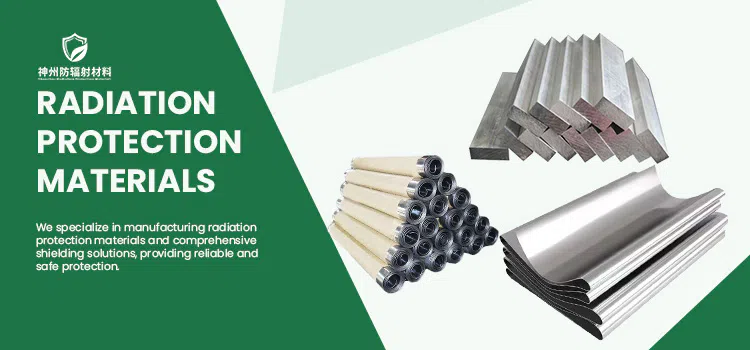
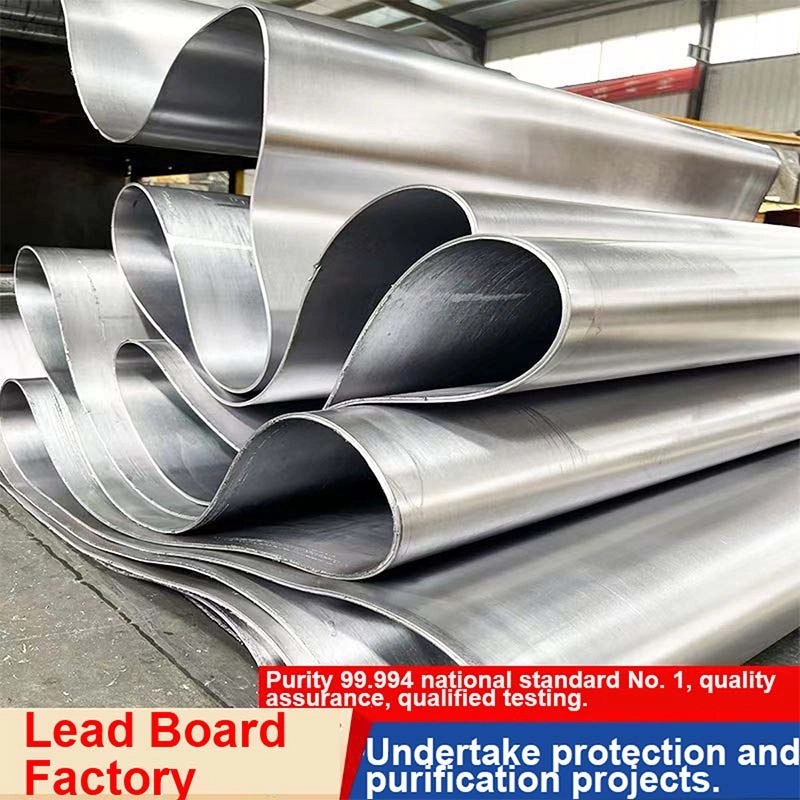
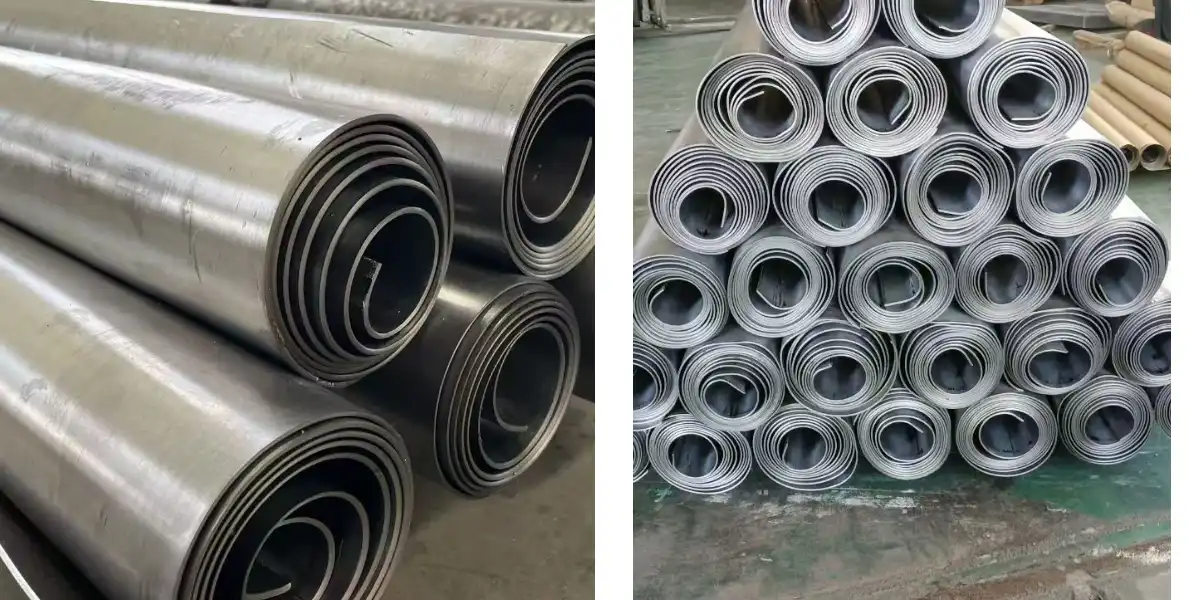
Our pure lead plates are manufactured in strict accordance with GB/T 1470-2020 Grade 1 lead standards, featuring a high lead purity of ≥99.994%. The total content of key impurities including antimony, copper and bismuth is controlled within ≤0.006%. Adopting professional cold rolling technology to eliminate internal pores, the product maintains a stable high density of 11.34 g/cm³.
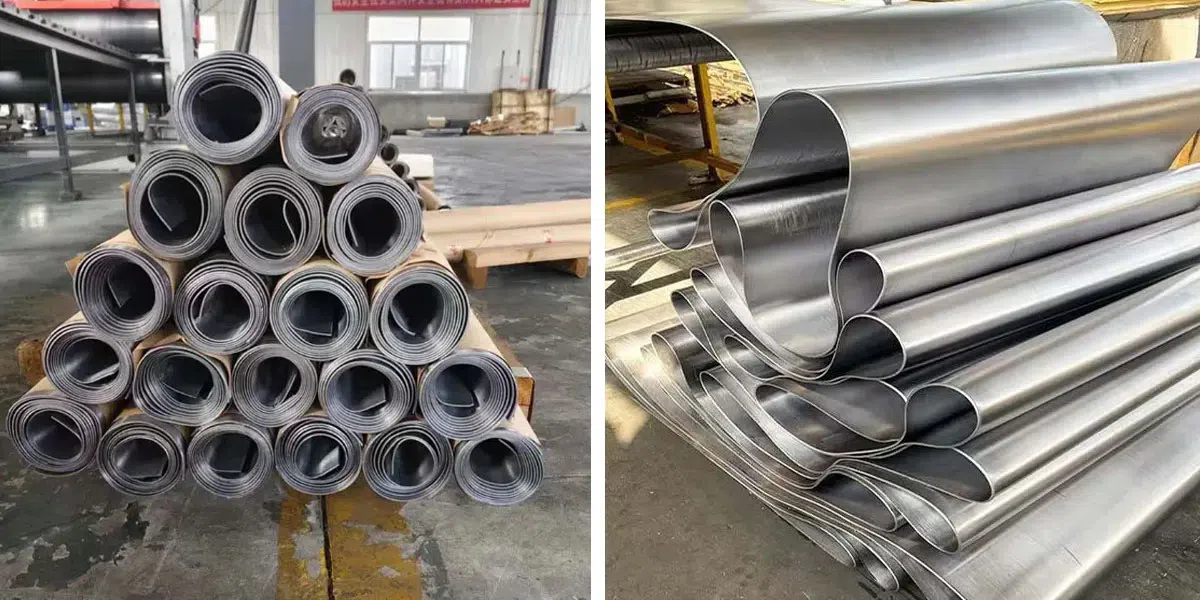
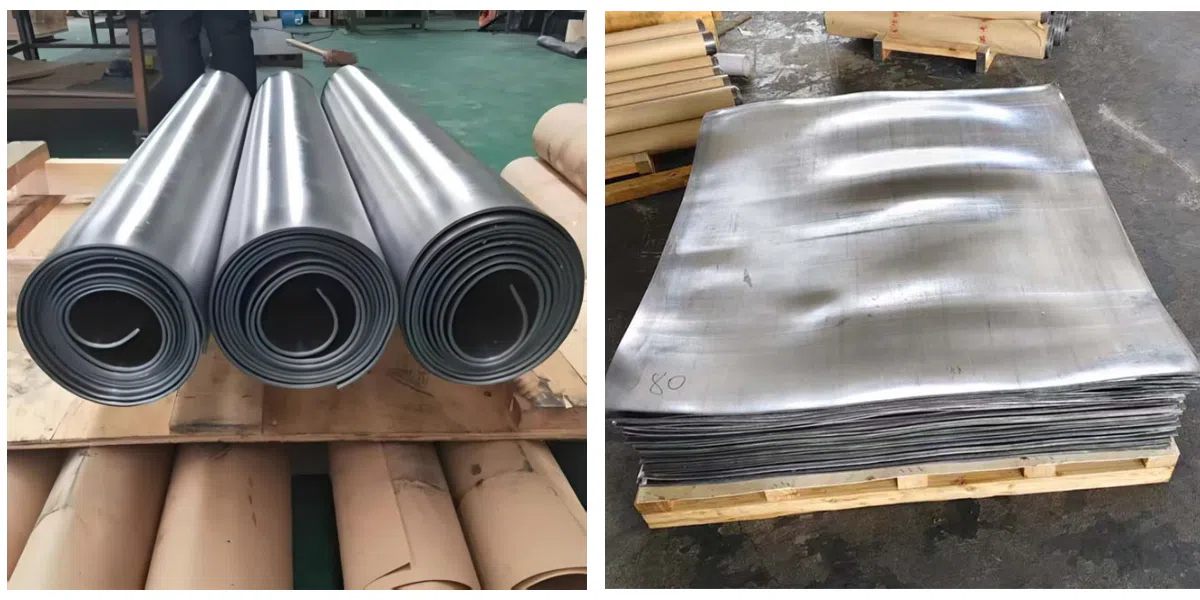
The product covers a thickness range from 0.5mm to 200mm. Thin specifications of 1–3mm are widely applied in medical radiation protection, while thick plates of 50–150mm are tailored for nuclear industry shielding scenarios. The standard dimension is 1m×2m, with customized sizes up to 1.5m×6m available, and the thickness tolerance is strictly controlled at ±0.1mm.
In terms of mechanical performance, the soft-state lead plate delivers a tensile strength of 10–15 MPa and an elongation rate of ≥40%. It supports 180° bending without cracking, featuring excellent ductility and easy on-site processing.
Five Core Advantages
Superior Radiation Shielding Performance
With an atomic number of 82, lead delivers efficient radiation absorption via the photoelectric effect. A 1mm-thick pure lead plate achieves over 99.5% attenuation for 120kV medical X-rays, and a 150mm-thick plate can shield 99% of cobalt-60 gamma rays at 1.25MeV, providing reliable high-energy radiation protection.
Remarkable Cost-Effectiveness
The raw material cost is only 1/3 of tungsten alloy and 1/2 of lead-boron polyethylene. For large-scale radiation protection projects, pure lead plates can reduce the overall comprehensive engineering cost by more than 40%, with outstanding economic advantages.
High Construction Flexibility & Adaptability
With a low Mohs hardness of 1.5 (equivalent to human nail hardness), the lead plate can be freely cold-cut, rolled and stamped. It fits perfectly with curved walls, special-shaped pipelines and irregular structural surfaces, adapting to diverse complex engineering layouts.
Ultra-Long Service Lifespan
A dense natural PbO₂ passivation film forms on the plate surface, effectively isolating air and moisture. The product maintains stable shielding performance for more than 30 years in indoor environments with no aging, failure or radiation leakage risks.
100% Recyclable & Eco-Friendly
The remelting and recycling energy consumption of waste lead plates is less than 5% of that required for original lead production. The recycled waste lead retains up to 80% of the value of new lead materials, realizing full lifecycle resource utilization.
Core Application Scenarios
Medical Radiation Protection
CT Room Shielding Wall: Adopts lead plates with ≥2.5mm lead equivalent for 140kV operating conditions. Joints are sealed by professional lead welding and strictly tested to eliminate radiation leakage.
Mobile Protective Screen: Constructed with 3mm lead plates and rigid steel frames (weight: 70kg/m²), equipped with universal brake casters for flexible movement and positioning.
Nuclear Industry Heavy-Duty Shielding
Spent Fuel Storage Pool: Features a composite shielding structure of 100mm double-layer lead plates paired with high-density concrete, effectively shielding mixed neutron and gamma radiation.
Isotope Production Hot Cell: Walls built with 99.99% high-purity lead plates prevent radiation activation and secondary radiation generation, ensuring operational safety in high-radiation nuclear environments.
Precision Instrument Environment Protection
Electron microscope laboratories adopt full-wall 1mm lead plate coverage, reducing ambient background radiation to below 0.1μSv/h and meeting the ultra-high environmental stability requirements of precision testing equipment.

Engineering Construction & Acceptance Specifications
Structural Support Requirements
The load-bearing limit of lead plate shielding structures is ≤200kg/m². A welded angle steel frame with a spacing of ≤400mm is required for uniform load dispersion and structural stability.
Joint Seam Treatment
Adopt step-type lap jointing with a lap width of ≥20mm. Sealed with Sn63/Pb37 lead-tin solder (melting point: 183℃), controlling the assembly gap within 1.5mm to avoid radiation leakage.
Surface Protection Measures
The plate surface can be covered with 0.5mm food-grade PVC film for daily protection. For nuclear industry applications, an epoxy resin coating with a thickness of ≥80μm is mandatory to prevent lead oxide dust overflow.
Project Acceptance Standard
Annual shielding inspection adopts a ⁶⁰Co radioactive source with 1.33MeV gamma rays, and the overall radiation attenuation rate must exceed 99.9% to meet acceptance criteria.
Scientific Selection Guidelines
Professional lead equivalent calculation by CMA-qualified institutions is required based on actual working conditions, including radiation types (α/β/γ/X-ray), energy intensity (kV/MeV) and on-site space constraints. Typical selection references: ≥4mm lead plates for 150kV industrial X-ray flaw detection scenarios; ≥80mm lead equivalent for nuclear power plant gamma ray shielding.


