
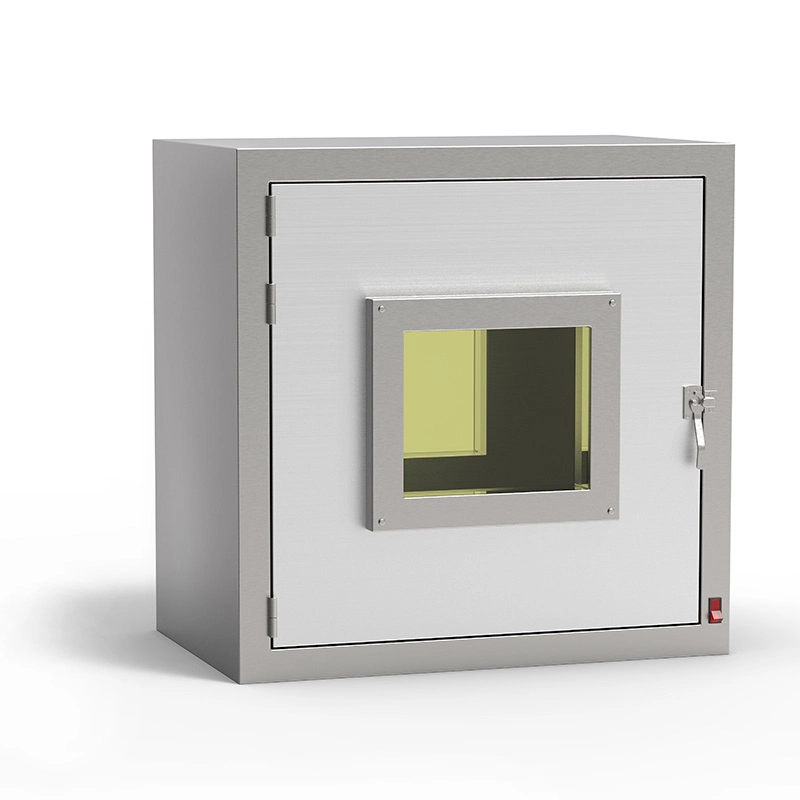
The lead transfer window is a dedicated protective device designed for the safe delivery and handover of radioactive materials. Widely deployed in hospital radiology departments, nuclear medicine units, and professional laboratories, it provides reliable radiation shielding during material transfer, effectively protecting on-site personnel from radiation exposure risks.
Structure and material
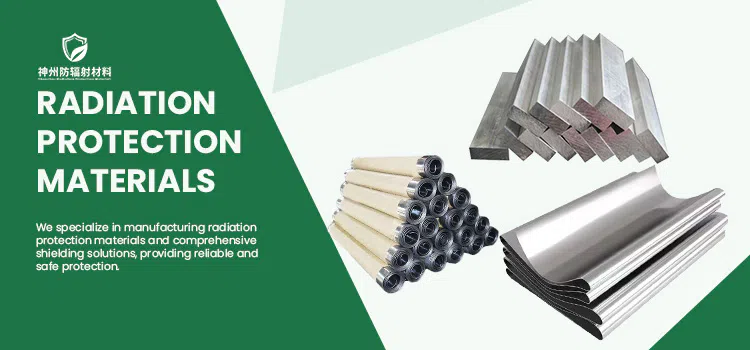
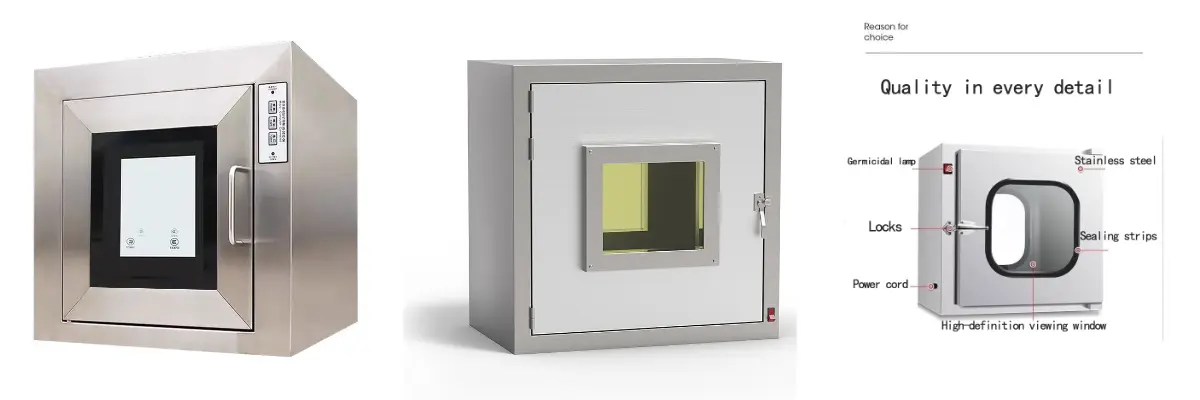
Lead shielding layer: The core part adopts high-purity lead plate (usually 3-10mm thick, customized according to radiation intensity), which effectively blocks gamma rays and X-rays.
Double-layer design: Usually a "double door interlock" structure to ensure that the doors on both sides cannot be opened at the same time to prevent radiation leakage.
Shell material: The outer layer is mostly stainless steel or steel plate, lined with lead layer, taking into account durability and protection.
Observation window: Some models are equipped with lead glass windows (lead equivalent matches the overall shielding requirements) for easy observation of items.
Functional features
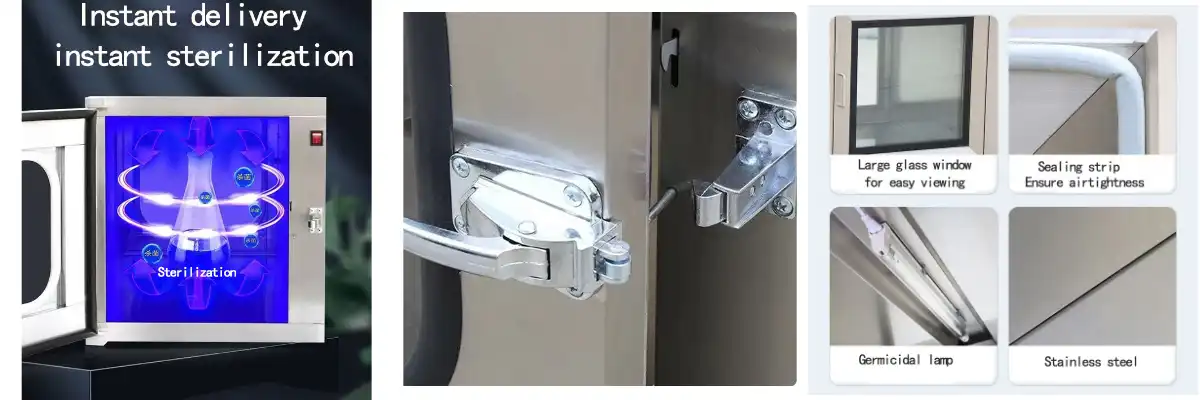
Safety interlock: Electronic or mechanical interlocking device to ensure that one side of the door is closed before the other side can be opened.
Automation options: It can be equipped with electric doors, induction control or card swiping systems to improve the convenience of operation.
Customized size: Different volumes (such as 30×30×30cm to 50×50×50cm) and lead equivalents are available according to needs.
Easy to clean: The inner wall is smooth and easy to disinfect, suitable for sterile environments.
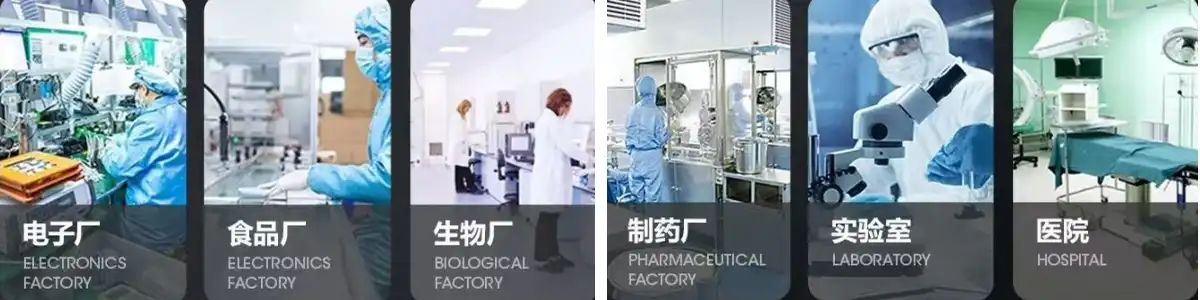
Application scenarios
Hospital: Transfer of radioactive drugs, samples or instruments.
Laboratory: Material transfer in radionuclide research.
Industry: Radiation protection of non-destructive testing (NDT) equipment.
Precautions
Regularly check the integrity of the lead layer to avoid radiation leakage caused by gaps.
Wear a personal dosimeter during operation to ensure compliance with radiation safety standards.Lead transfer windows play a key role in radiation protection through rigorous design and material selection, and are an indispensable safety equipment in radioactive workplaces.


