
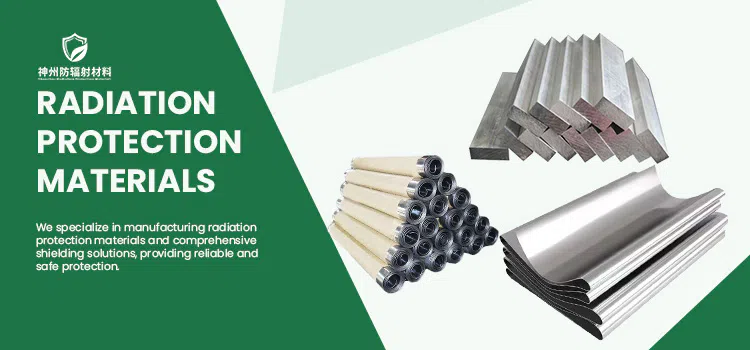
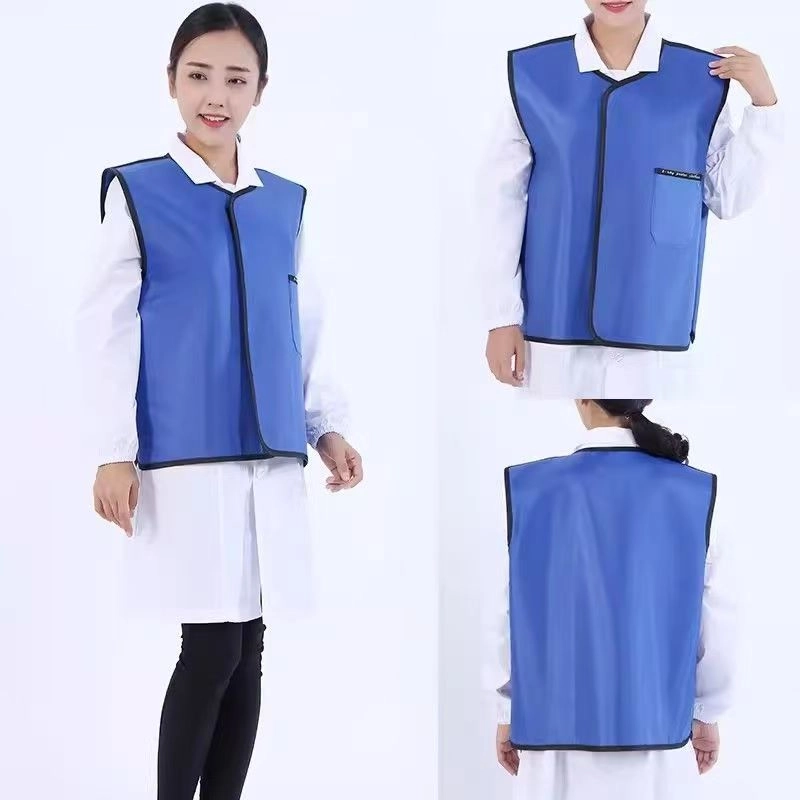
Lead aprons are professional radiation protective gear widely applied in medical, industrial and scientific research fields. Utilizing high-density lead materials, they effectively block ionizing radiation including X-rays and gamma rays to prevent the human body from radiation damage. Primarily designed for staff with long-term or frequent radiation exposure such as radiologists, dentists and industrial inspectors, the aprons efficiently reduce personal radiation exposure doses and minimize potential radiation-related health risks.

Structure and materials
Traditional lead aprons are manufactured from lead rubber or lead-plastic composites, with a standard lead equivalent of 0.25–0.5mm, which represents the shielding capacity equivalent to pure lead of the same thickness. Most modern alternatives adopt lead-free shielding materials like tungsten, bismuth and antimony compounds. They maintain reliable protection while cutting down overall weight: traditional aprons weigh 4–8kg, and new material models achieve a weight reduction of over 30%.
These aprons are tailored to shield vital organs across the torso and pelvis. Available styles include front-protection type, full-body type and split type (vest plus apron). Many are fitted with adjustable shoulder straps and waist supports to enhance wearing comfort.

Application scenarios
Medical field: Protect medical staff and sensitive parts of patients in radiology, interventional surgery, and dental X-ray examinations;
Industrial field: Protect against gamma rays or neutron radiation in scenarios such as non-destructive testing (NDT) and nuclear power plant maintenance;
Laboratory: Nuclear physics research, individual protection during radioactive material operation.
Use and maintenance
Wearing specifications: The protective area must be fully covered to avoid uneven protection caused by wrinkles, and it should be used with lead glasses, thyroid protective gear, etc.;
Life management: Normal use is about 5-8 years, and the lead equivalent needs to be tested regularly (once a year), and it should be replaced immediately if it is damaged or hardened;
Cleaning and maintenance: Avoid high temperature exposure or strong acid corrosion, wipe the surface stains with neutral detergent, and it is strictly forbidden to machine wash or fold for storage.
Development trend
Lightweight and intelligentization have become new directions. Some products integrate sensors to monitor radiation dose in real time, and use flexible materials to improve wearing flexibility. As radiation safety standards become stricter, lead aprons, as basic protective equipment, continue to play an irreplaceable role in precision medicine and nuclear technology applications.


