
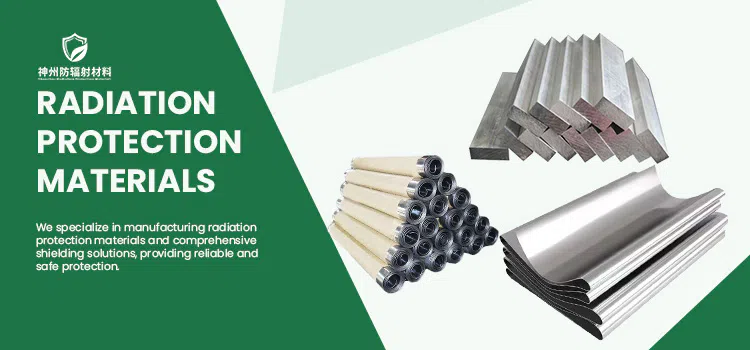
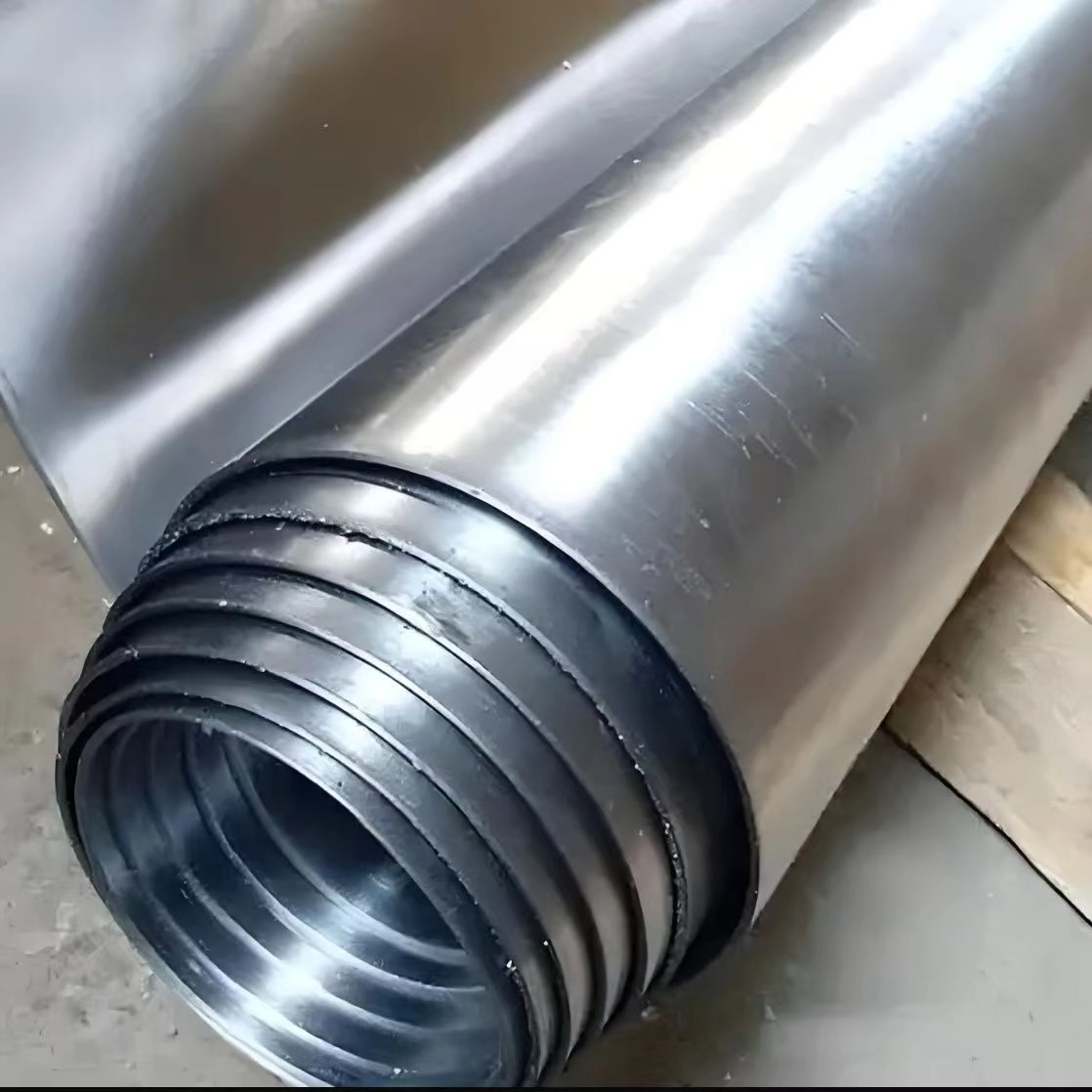
X-ray lead lining serves as a core functional material for professional radiation protection. It is specially engineered to absorb and scatter X-ray radiation, effectively safeguarding operational personnel and surrounding environments from ray exposure. Below is a detailed introduction to its material properties, structural features, core advantages and practical applications.
Material Characteristics & Structural Design
Manufactured from high-purity lead (purity ≥99.9%) with a density of 11.34 g/cm³ and an atomic number of 82, the lead lining delivers outstanding X-ray attenuation capacity via physical mechanisms including the photoelectric effect and Compton scattering. It is commonly available in lead equivalents ranging from 0.5mm to 5mm, and a 1mm lead equivalent layer can block approximately 90% of low-energy X-rays. To meet diverse on-site demands, multiple structural forms are developed for different application scenarios:
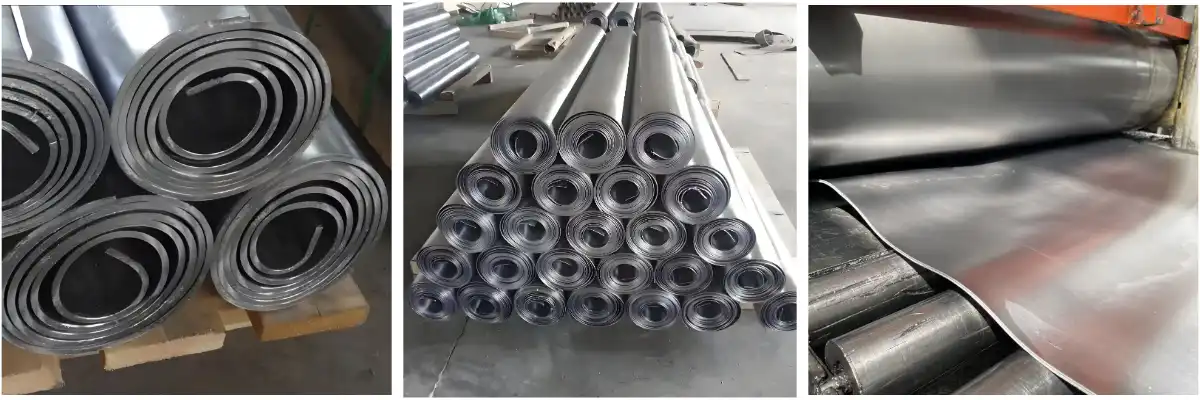
Pure Lead Plate: Available in 0.5–10mm thickness, designed for fixed radiation protection for walls, floors and other building structural surfaces.
Flexible Lead Lining: Including lead rubber (lead powder blended with rubber) and lead polyethylene materials. Featuring excellent bendability, it can closely fit equipment gaps and irregular structural surfaces.
Composite Structure: Lead-steel composite plates enhance overall structural strength for protective door fabrication; lead plates coated with PVC or stainless steel effectively prevent lead oxidation and extend service life.
Core Product Advantages
Superior Shielding Efficiency: Achieves over 90% shielding rate for X-rays within the 50–150 keV energy range. Its required thickness is only one-tenth of ordinary concrete, realizing lightweight and high-efficiency radiation protection.
Cost-Effective & Long-Lasting: Features lower material cost than tungsten alloy. Equipped with excellent corrosion resistance, it maintains stable performance with a service life of more than 20 years.
Strong Scenario Adaptability: Supports customized shaping and processing, perfectly adapting to complex structural environments in medical diagnosis and industrial inspection fields.
Recyclable & Eco-Friendly: Boasts a lead recycling rate of over 95%, which greatly reduces resource waste and lowers comprehensive project costs
Wide Application Scenarios
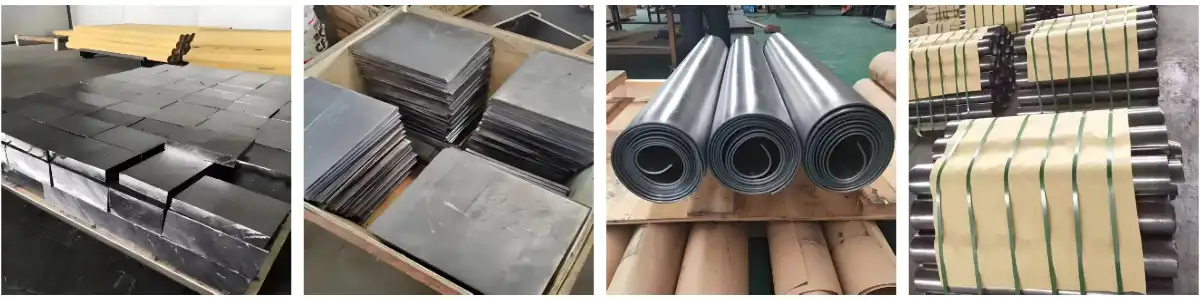
Medical Radiation Protection: 1–3mm lead equivalent shielding for CT and DR room walls; radiation-proof lead doors, lead glass and mobile lead screens for interventional operating rooms.
Industrial Non-Destructive Testing: Shielding layer for X-ray flaw detection rooms and internal radiation protection lining for container security inspection equipment.
Nuclear Energy & Scientific Research: Protective lining for radioactive waste storage containers; can be used with boron polyethylene materials to achieve dual shielding of X-rays and neutrons.

Installation & Daily Maintenance
Installation Guidelines: Adopt a 20% overlapping splicing method for all joints to eliminate radiation leakage gaps. Fix the plates stably with specialized lead screws or professional adhesives. A surface protective layer such as PVC coating is recommended to prevent lead oxidation and surface damage.
Maintenance Requirements: Conduct regular routine inspections to check for plate deformation, cracking and aging. All waste lead materials must be recycled and disposed of by professional institutions to avoid lead dust pollution and environmental hazards.
Product Limitations & Alternative Materials
Existing Limitations: Pure lead plates have relatively heavy weight, which increases building load and may require structural reinforcement for high-rise construction projects. Processing produces lead dust risks, requiring strict dust prevention and full surface sealing after installation. In addition, single lead lining cannot independently shield gamma rays above 1 MeV, which requires combined use with concrete or tungsten alloy materials.
Comparison with Alternative Materials: Tungsten alloy is lighter and thinner with excellent shielding performance but entails significantly higher costs. Boron-containing polyethylene performs well in neutron shielding but has low attenuation efficiency for X-rays. Depleted uranium delivers superior radiation shielding capacity but is restricted due to radioactive controversy.
Product Summary
Thanks to its high cost performance, mature manufacturing technology and stable shielding performance, X-ray lead lined plates remain the mainstream and preferred material for medium and low-energy X-ray protection. It is highly applicable for medical and industrial scenarios that balance cost control and protective effects. For high-energy radiation environments and special extreme working conditions, optimized composite matching with other shielding materials is required to achieve comprehensive and compliant radiation protection effects.


