
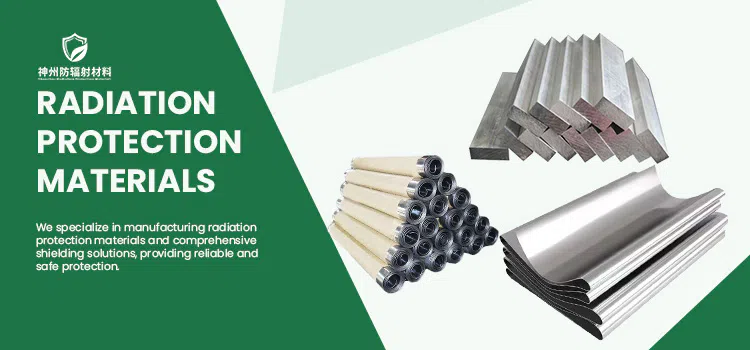
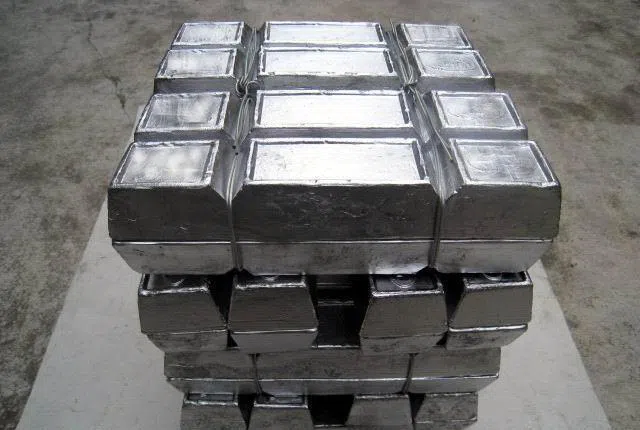
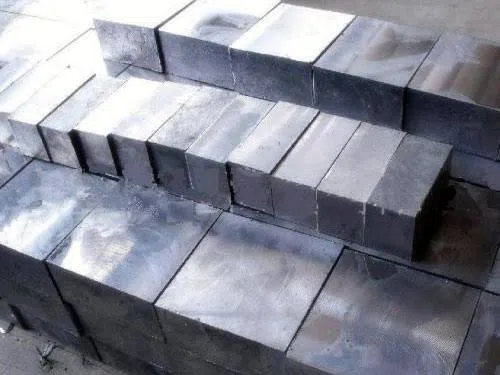
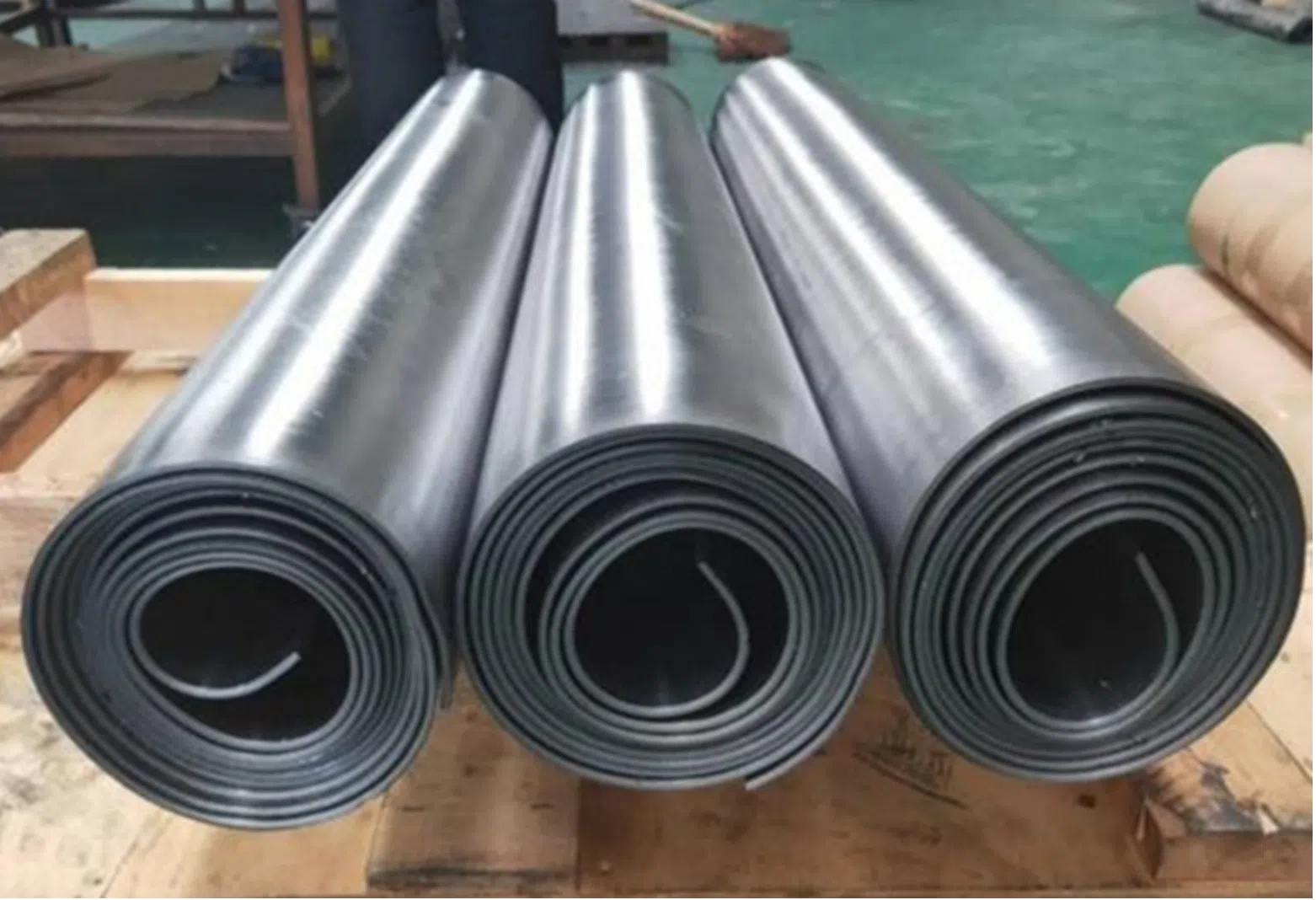
Lead remains the global benchmark material for radiation shielding, and for good reason: it combines a density of 11.34 g/cm³ with an atomic number of 82 and a melting point of only 327.5 °C, which makes it easy to cast, roll and extrude into sheet, plate, brick and custom shapes at relatively low cost. It is used everywhere from medical imaging rooms and nuclear medicine hot labs to nuclear power plants and industrial radiography bays. Yet not all shielding lead is the same. Alongside pure lead, antimonial lead — a lead alloy with a controlled antimony addition — is widely used in practical installations, and the choice between the two directly affects shielding performance, mechanical strength, fabrication method, handling safety and long-term reliability. Both material families are routinely supplied in the product forms most often specified for shielding projects: lead sheet and lead plate for wall, door and enclosure linings; chevron (interlocking), flat and circular lead bricks in standard 51 × 102 × 204 mm (2 × 4 × 8 in) format at roughly 26 lb per brick as well as custom sizes; lead-lined doors, lead glass viewing windows and lead-lined wall panels; and cast or machined shielding components produced to project drawings.
Shielding effectiveness is defined by how strongly a material attenuates radiation, and in practice engineers work with the Half Value Layer (HVL) and Tenth Value Layer (TVL) — the thickness needed to reduce intensity by 50 percent and by 90 percent respectively. For lead, published values show how strongly performance depends on energy: at 200 kVp X-ray energy the HVL is only about 0.52 mm, while for Cs-137 gamma rays at 662 keV the HVL is approximately 6.5 mm (TVL 21 mm) and for Co-60 at 1.17 and 1.33 MeV it rises to about 12 mm (TVL 40 mm). Two material properties dominate these values: atomic number, which governs how strongly the material interacts with photons, and density, which determines how many atoms sit in a given thickness. Because a small antimony addition changes neither property in any meaningful way, the required shielding thickness for pure lead and for antimonial lead is nearly identical in most real-world applications. In other words, alloy selection is driven far more by mechanical, fabrication and handling requirements than by attenuation — a point worth remembering when a specification is being written.
Pure lead is the traditional choice and remains the right one for a large share of fixed installations. Its shielding behaviour is thoroughly documented and predictable, it is soft enough to be rolled into thin sheet and worked over irregular surfaces, and it is therefore well suited to lining walls, doors, enclosures and duct penetrations where the material carries little or no mechanical load. The limitation is that pure lead is exceptionally soft — around 5 HB Brinell — and highly ductile, with a recrystallization temperature close to room temperature, which means it cannot be work-hardened and will creep or deform under sustained stress. In components that must support their own weight, hold precise alignment or survive repeated handling, this can open gaps in the shielding or compromise structural integrity if the lead is not properly supported. For that reason, pure lead is generally preferred in lead sheet and plate linings, lead-lined doors and static enclosures, while modular shielding systems, movable barriers and frequently handled components are usually better served by an alloy.
Antimonial lead is produced by adding a controlled percentage of antimony — typically in the 1 to 6 percent range, with around 4 percent antimony a common specification for interlocking chevron bricks — to improve hardness, strength and dimensional stability while preserving the shielding performance of lead. Antimony itself is a brittle metal with a density of 6.68 g/cm³ and a melting point of 630.5 °C, and in lead it produces solid-solution and age hardening: in one reported test, a lead alloy with 2 percent antimony more than doubled its Brinell hardness, from 56 to 130 N/mm², over 100 days at room temperature. The practical result is a material far less prone to creep, chipping and mechanical damage, which is why antimonial lead is favoured for cast lead bricks and blocks, modular shielding units, movable barriers and any installation exposed to vibration or repeated handling — the tongue-and-groove interlocking brick, in particular, benefits from an alloy that keeps its edges intact and maintains gap-free stacking over time. Fabrication does change: antimonial lead is harder and more rigid, so cutting, machining and drilling require appropriate tools, and both pure and alloyed lead demand strict dust and fume control, ventilation and personal protective equipment, with particular care during any cutting, welding or melting because antimony compounds are hazardous if inhaled. On the compliance side, material should be specified against recognized standards — refined lead grades under ASTM B29 (99.94 percent and 99.97 percent lead minimum), sheet lead under ASTM B749, and lead and lead alloys under EN 12659, ISO 1144 and GB/T 469 — with chemical analysis reports, density measurements and safety data sheets retained for audit and inspection.
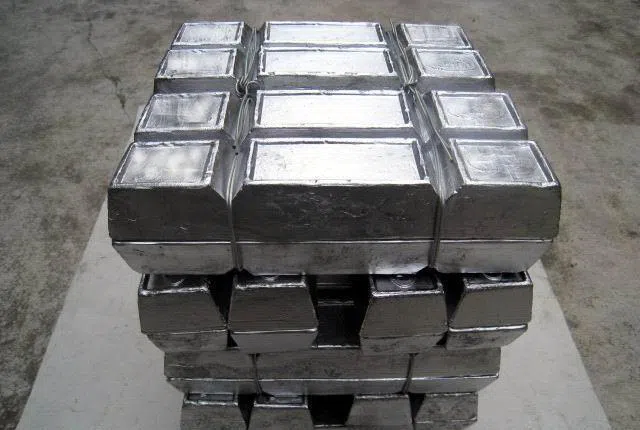
Cost and quality assurance complete the picture. Pure lead generally carries a lower upfront material price because it contains no alloying element, whereas antimonial lead commands a modest premium — but in many projects that premium is recovered through easier installation, less deformation, fewer replacements and lower maintenance over the service life, so procurement teams should weigh total cost of ownership rather than unit price alone. Whichever grade is chosen, verification matters: density measurement, chemical composition analysis (X-ray fluorescence testing is commonly used to confirm that antimony content falls within the specified range), dimensional inspection before installation, and a radiation survey with dose measurement after installation to confirm the shielding performs as designed. As a working rule, pure lead is sufficient for fixed wall linings, door leaves and static enclosures where mechanical stress is minimal and the lead is properly supported, while antimonial lead is the better choice where dimensional stability, wear resistance and repeated handling matter — modular brick walls, movable barriers, transport and storage containers, and any installation subject to vibration. Because required thickness always depends on radiation energy, workload, occupancy and room geometry, the final shielding specification should be confirmed by a qualified medical physicist or radiation protection adviser. Ordering documents should state the required grade and antimony content explicitly, and material certification — including chemical analysis, density measurement and safety data — should be requested from the supplier with each shipment.


