
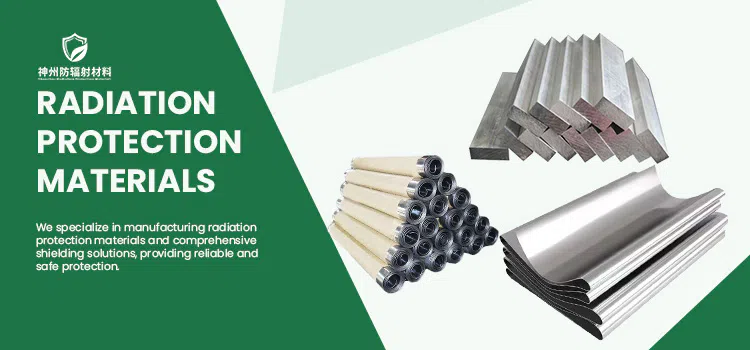
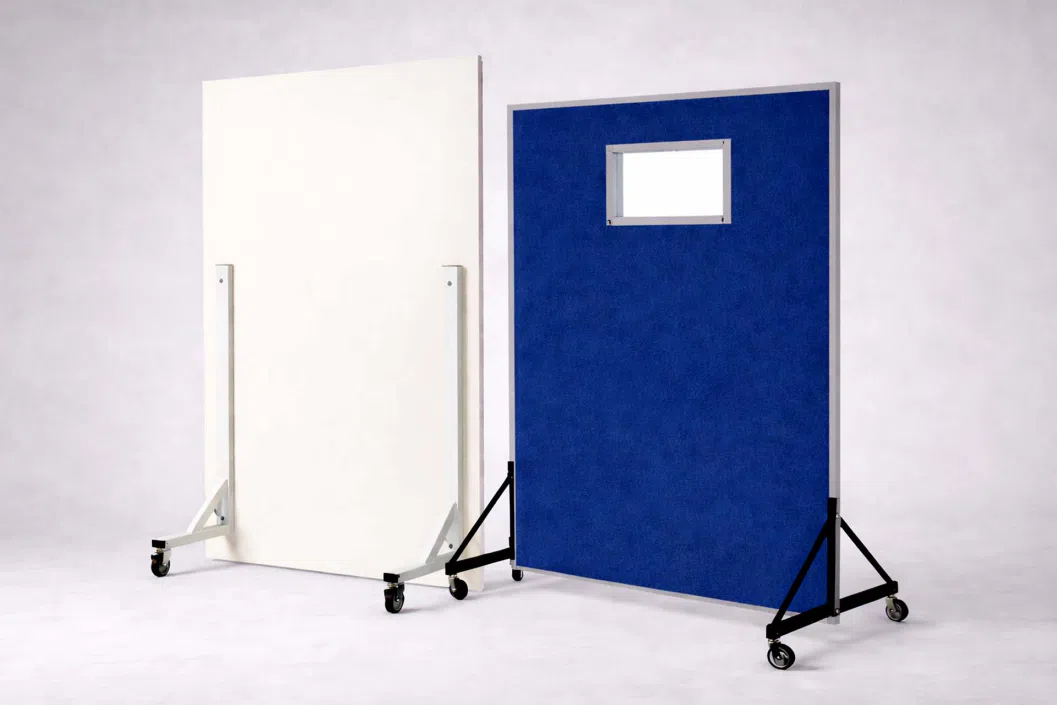
In modern medical imaging and interventional environments, personal protective equipment such as lead aprons and thyroid collars is no longer sufficient on its own. As procedure complexity increases and fluoroscopy time grows longer, room-level shielding has become the decisive factor in controlling occupational exposure—interventional cardiologists remain among the most heavily exposed medical professionals, and EU guidelines have reduced the annual eye-lens dose limit from 150 mSv to 20 mSv per year. This is where two product families come in: flexible radiation curtains (bedside multifold lead curtains, three-fold and height-adjustable mobile lead curtains, ceiling-suspended lead rubber curtains) and rigid or semi-rigid radiation barriers (mobile lead screens, lead-lined walls and doors, lead glass viewing windows, structural partitions). Both are built to block scatter radiation, but they differ fundamentally in structural logic, installation method, workflow impact and long-term cost—so choosing the wrong one can mean ineffective protection, disrupted workflow or unnecessary construction expense.
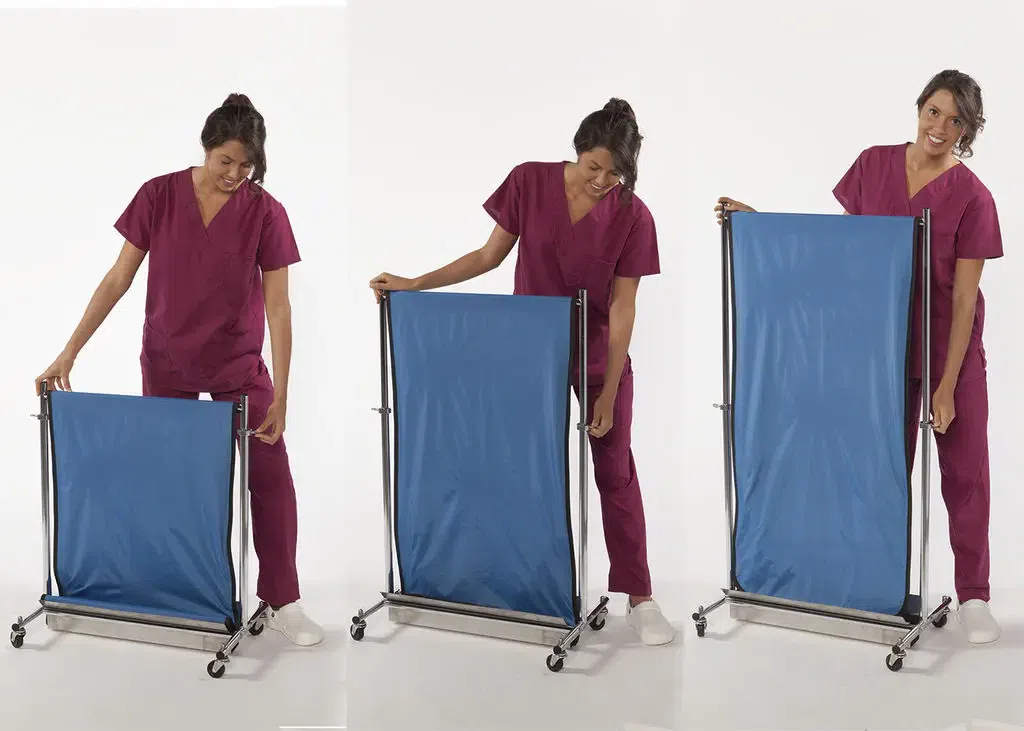
The essential difference lies in the shielding philosophy each product is built around. Radiation curtains follow a dynamic concept: they assume scatter patterns and staff positions are constantly changing as the X-ray tube angle, patient position and operator distance vary, so protection is achieved by moving the attenuation material close to the patient and repositioning it in real time. Curtains are typically specified at 0.25 mmPb to 1.0 mmPb, with 0.5 mmPb the most widely used standard—and at that thickness, measured transmission in the diagnostic range is only about 0.1% at 50 kVp, 0.9% at 70 kVp, 3.2% at 90 kVp and 4.8% at 110 kVp (Korean Journal of Medical Physics, 2010). Radiation barriers, by contrast, follow a static concept: they assume exposure zones can be defined in advance and, once installed, permanently separate controlled areas from staff and public zones. Barriers are commonly built from lead sheet or lead-lined panels and can be specified at 0.25 mmPb up to 2.0 mmPb or more, with lead glass and lead-lined doors matched to the shielding value of the surrounding wall.
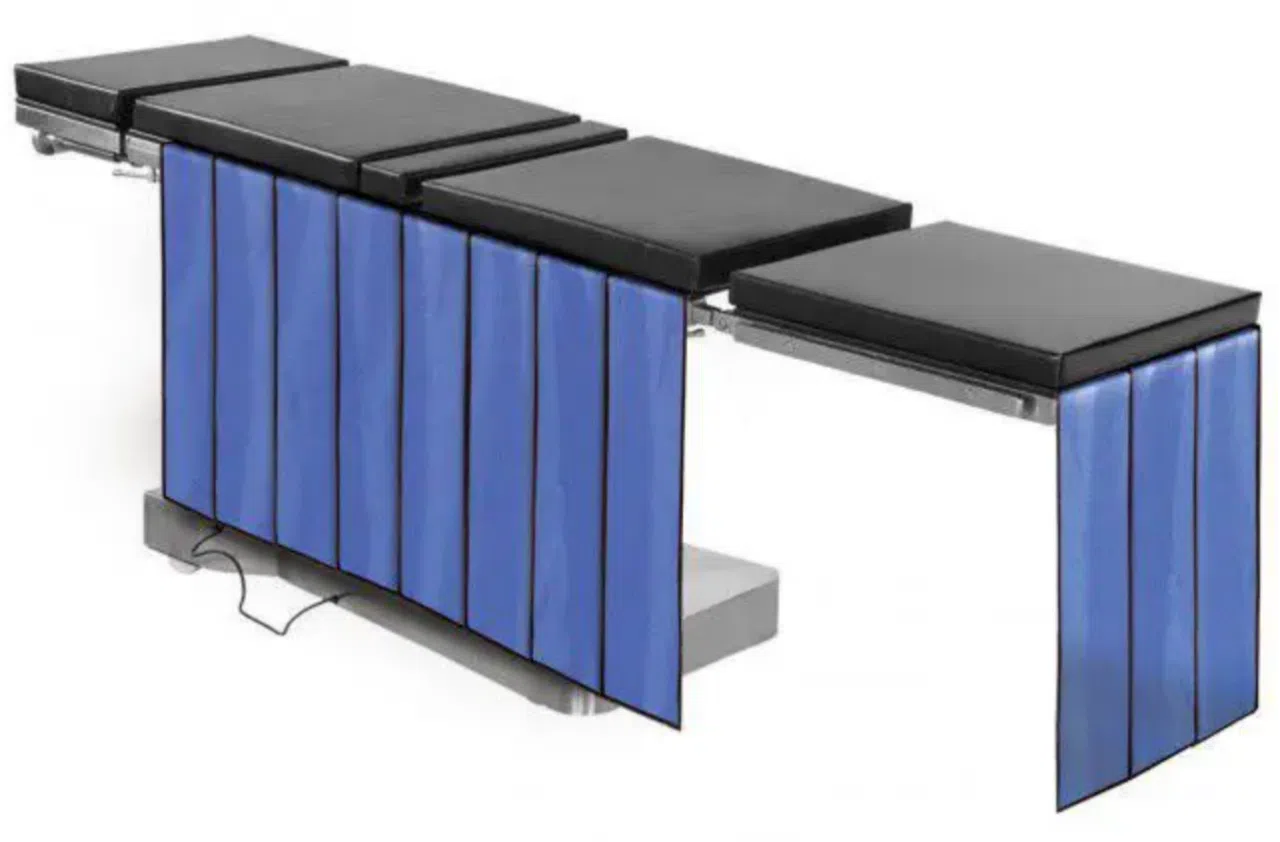
Field and laboratory measurements show why the two are not interchangeable. In a monitoring study of cardiovascular interventional procedures, the bedside lead curtain reduced radiation by approximately 97.0%, the on-table lead screen by 96.0% and the lead apron by 91.1%. A 2022 study in the Journal of Applied Clinical Medical Physics measured a conventional 0.5 mmPb table-side lead curtain at five heights and found median stray-radiation reductions of 95.9%, 95.5%, 83.7%, 26.0% and 19.6% at 80, 100, 120, 140 and 160 cm respectively—excellent protection for the lower torso, but clearly insufficient at head and eye level, which is precisely where ceiling-suspended lead glass screens and lead eyewear must take over; in per-procedure live-dosimetry data, adding a suspended protection system cut operator head dose by roughly 88% in diagnostic angiography and 95% in PCI, with eye-level dose reduced by about 74%. From a workflow standpoint, curtains add very little obstruction and let staff stay close to the patient, but their benefit depends on correct positioning and staff training. Barriers require almost no user interaction once installed, which makes them highly reliable in high-throughput rooms with rotating staff, at the cost of reduced flexibility and possible interference with movement or line of sight.
Installation, maintenance and lifecycle cost follow the same logic. Ceiling-mounted tracks and equipment-mounted frames allow lead curtains to be retrofitted into existing rooms without major structural modification, and they can be relocated or reconfigured as clinical needs evolve; curtains usually involve lower initial investment and faster deployment. They do require periodic inspection for internal cracks in the lead rubber, fabric wear, and mechanical fatigue in tracks and attachment points. Radiation barriers—lead-lined doors, lead-lined wall panels, lead glass assemblies and fixed lead screens—generally require architectural planning for structural support, space allocation and regulatory review, so they are most cost-effective when integrated during new construction rather than added later. Their upfront cost is higher, but their service life is longer and their maintenance requirements are lower, with only shielding continuity and structural integrity needing verification during routine radiation safety audits.
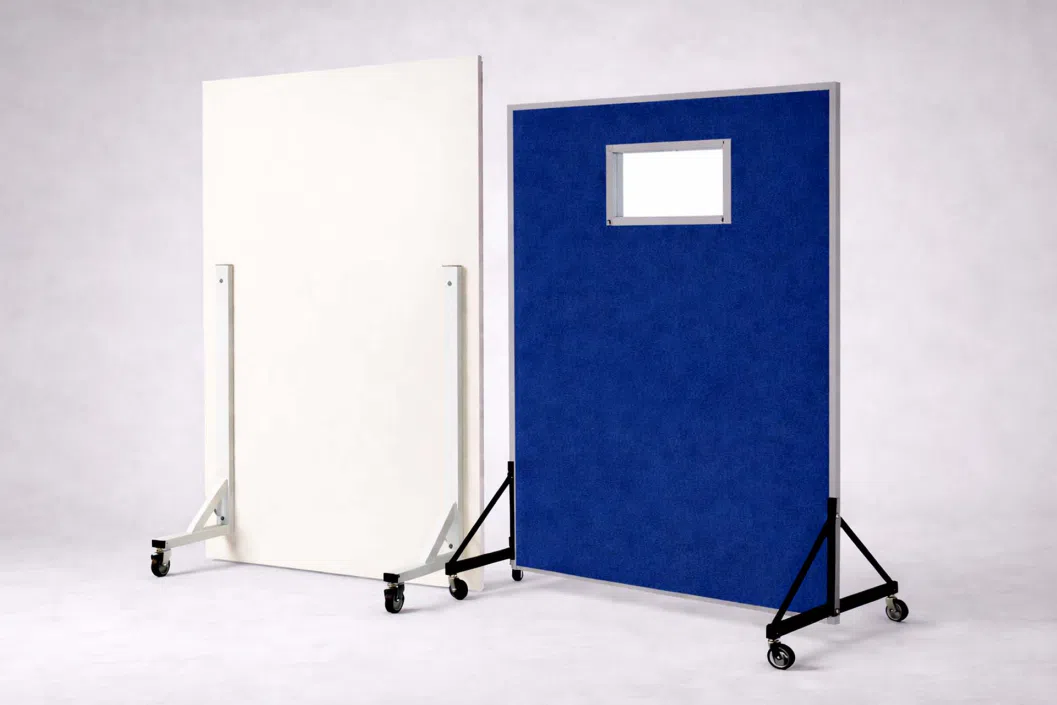
In practice, the two product families are complementary rather than competing. Radiation curtains are generally the better choice when procedures are long and interventional, staff work close to the radiation source, scatter patterns change frequently, or existing rooms need upgrading without reconstruction. Radiation barriers are more appropriate when the operator position is fixed and predictable, high patient throughput is expected, long-term infrastructure investment is planned, or minimal user interaction is preferred. Most modern cath labs and hybrid operating rooms end up specifying both: a bedside multifold lead curtain and a suspended lead glass shield for the operator, a mobile lead screen for the assistant and anaesthesia staff, plus lead-lined doors, lead glass and lead sheet or lead brick shielding as the fixed envelope of the room. The right decision depends on clinical workflow, room layout and long-term operational goals—not simply on lead thickness or unit price. Shenzhou Zhonggong supplies lead sheet, lead bricks, lead-lined doors, lead glass and flexible lead curtains in standard 0.25–1.0 mmPb ratings and higher on request, with custom sizes and lead equivalency matched to the shielding value of the surrounding structure.


