
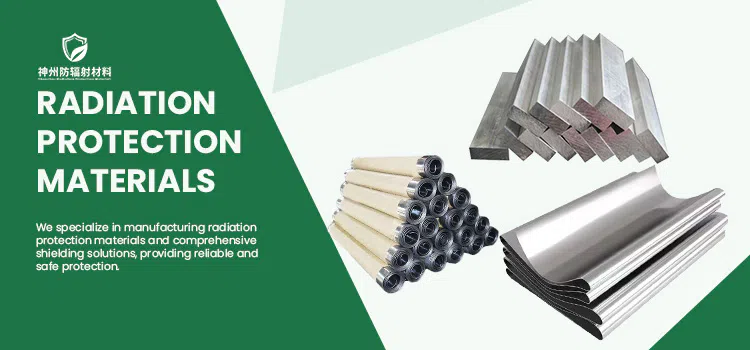
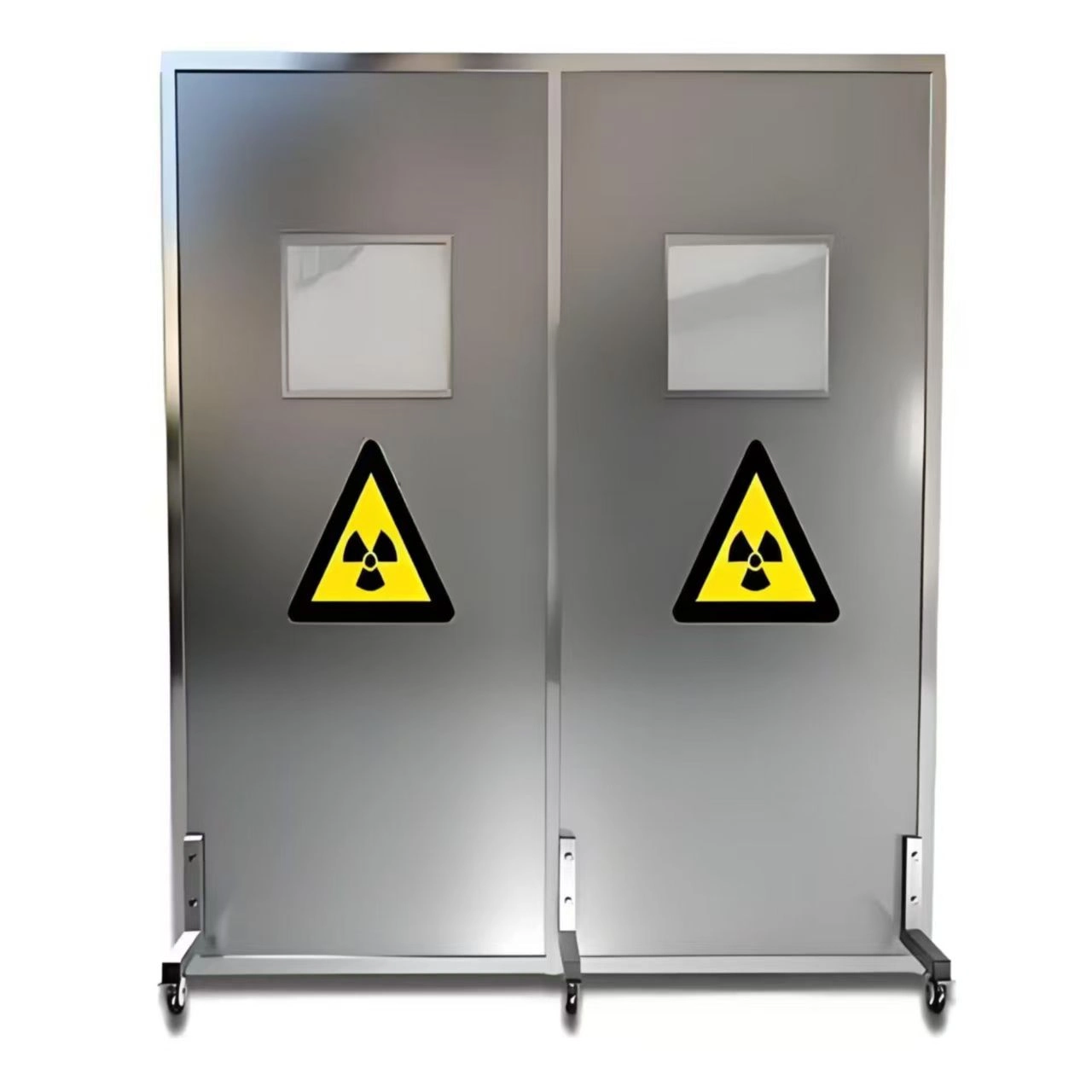
Radiation protective barriers for medical applications are tailor-engineered shielding facilities available in movable and stationary styles. The primary capability of such products lies in efficient weakening and absorption of X-ray emissions, which builds an essential safety defence for clinical personnel, operating workers and adjacent areas. These barriers are adopted primarily to block ionizing radiation released from various X-ray emitting apparatus, including X-ray generators, CT scanning systems, DSA units and industrial non-destructive testing machines, so that exposure levels can be maintained under safe permissible limits.
Core characteristics and raw material composition
High-performance radiation attenuation substrates:
High-purity lead (Pb) or lead blended composite substances including lead rubber and lead plastic panels serve as the inner radiation blocking layer. Owing to lead’s high atomic number and mass density, this substance delivers outstanding ability to capture X-ray photons.
Lead equivalent (Pb eq) acts as the fundamental evaluation parameter. This term describes the thickness of pure lead sheet that offers identical attenuation performance against X-rays with fixed energy. Standard available lead equivalent grades start at 0.5mmPb up to 3.0mmPb and above. Buyers are suggested to select suitable lead equivalent grades based on equipment specifications (tube voltage kVp), operating separation distance and target shielding outcome, and relevant national criteria including GBZ 130 and GB 18871 shall be met.
Structural layout solutions
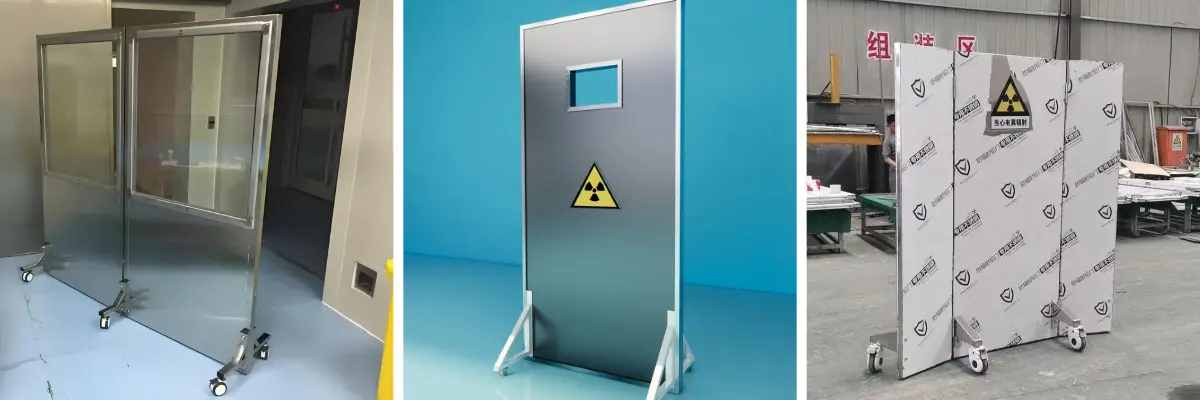
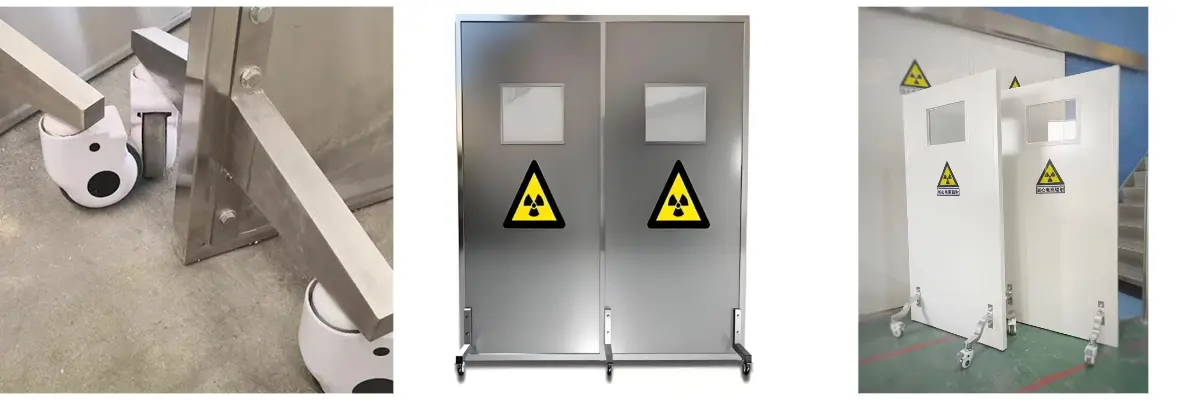
Movable shielding barriers: Robust metal frames made of stainless steel or aluminum alloy are adopted, fitted with lockable swivel casters to support flexible relocation and stable positioning within examination areas. Standard dimensions cover heights ranging from 1.8m to 2.2m and widths from 1.0m to 1.5m, available in single-panel or double-panel combined forms.
Stationary shielding barriers and divider units: They can be installed recessed into walls or erected as standalone dividers to deliver long-term persistent radiation shielding.
Viewing aperture: Built-in lead glass panels feature matching lead equivalent identical to the main shielding body. The frequently adopted 15–20mm thick lead glass carries lead equivalent no less than 0.5mmPb, allowing staff to safely monitor patients and equipment conditions without visual obstruction.
Exterior cladding materials: The external side of lead sheets is wrapped with abrasion-resistant, easily cleaned protective layers including stainless steel panels, fire-retardant boards and antibacterial coated fabrics, bringing excellent appearance, long service life and good sanitary performance.
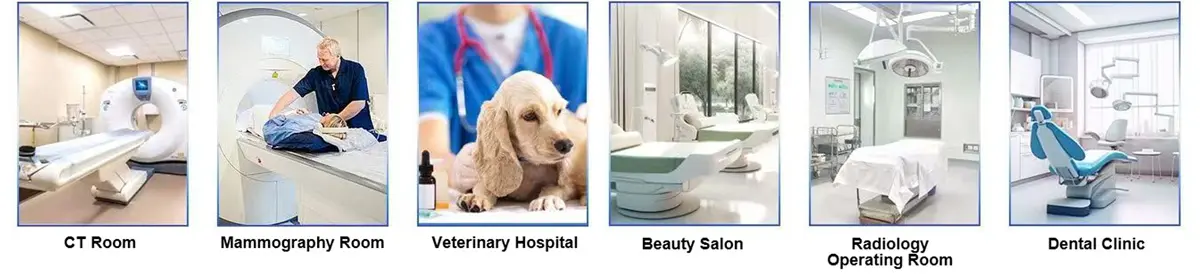
Primary Applicable Occasions
Clinical radiology departments: Radiographic examination suites, DR and CR rooms, control zones of CT scanning facilities, working stations in DSA interventional cath labs and dental X-ray rooms.
Veterinary hospitals: Radiation shielding for animal X-ray examinations.
Industrial non-destructive evaluation: Protected zones for staff working at industrial X-ray and gamma radiography inspection locations.
Public security screening sectors: Shielding arrangement for operators of luggage and freight X-ray scanning devices.
Nuclear-related applications: Labs and working premises that demand localized X-ray attenuation.
Core strengths and practical benefits
Occupational safety assurance: Effectively cut down radiation exposure absorbed by technicians and surrounding staff, avoid hazards caused by deterministic and stochastic radiation effects, and safeguard occupational wellness.
Regulatory conformity: Satisfy domestic and international radiation protection codes including Chinese GB standards, NCRP reports and ICRP guidelines regarding area separation shielding and personal radiation exposure limits.
User-friendly layout: Movable construction enables flexible adaptation to diverse examination demands, and the built-in viewing window maintains clear visibility of ongoing operations.
Stable performance and long service life: Premium raw materials and structural design sustain consistent radiation blocking capability and mechanical robustness over extended service periods.
Indispensable safety facility: Such shielding equipment serves as essential fundamental safety hardware for every workplace producing X-ray ionizing radiation.
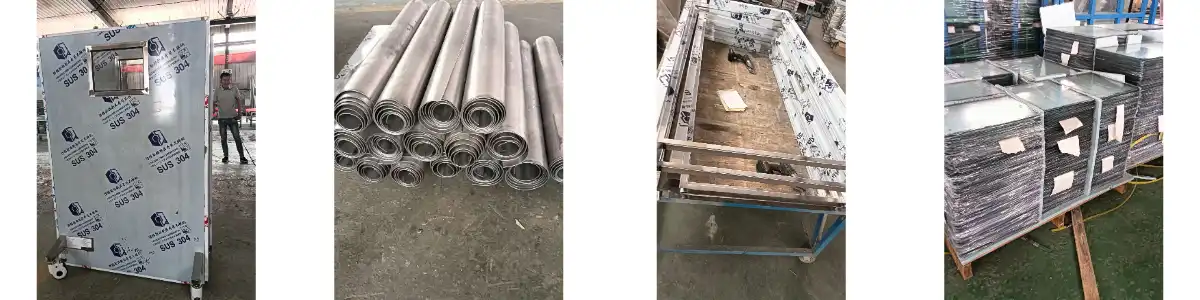
Safety qualification verification
Qualified standard products are required to obtain certifications complying with domestic and overseas safety specifications, covering medical device registration & filing, ISO 9001 quality management system certificate and radiation shielding performance test documentation. These credentials are adopted to verify stable shielding efficiency and trustworthy product quality.
Closing overview: X-ray radiation shielding barriers function as radiation isolating structures. High lead equivalent substances including lead sheets and composite shielding materials serve as the core shielding layer, matched with sturdy supporting frames and lead glass viewing panels. The biggest advantage of such equipment is delivering dependable radiation shielding for staff working within radiation hazardous zones and keeping exposure doses within safe limitation values. This shielding setup acts as a vital safety measure widely applied for medical diagnosis, industrial inspection and many other sectors. Buyers are advised to evaluate lead equivalent grade, overall dimension, moving flexibility and valid compliance certificates during the selection process.


