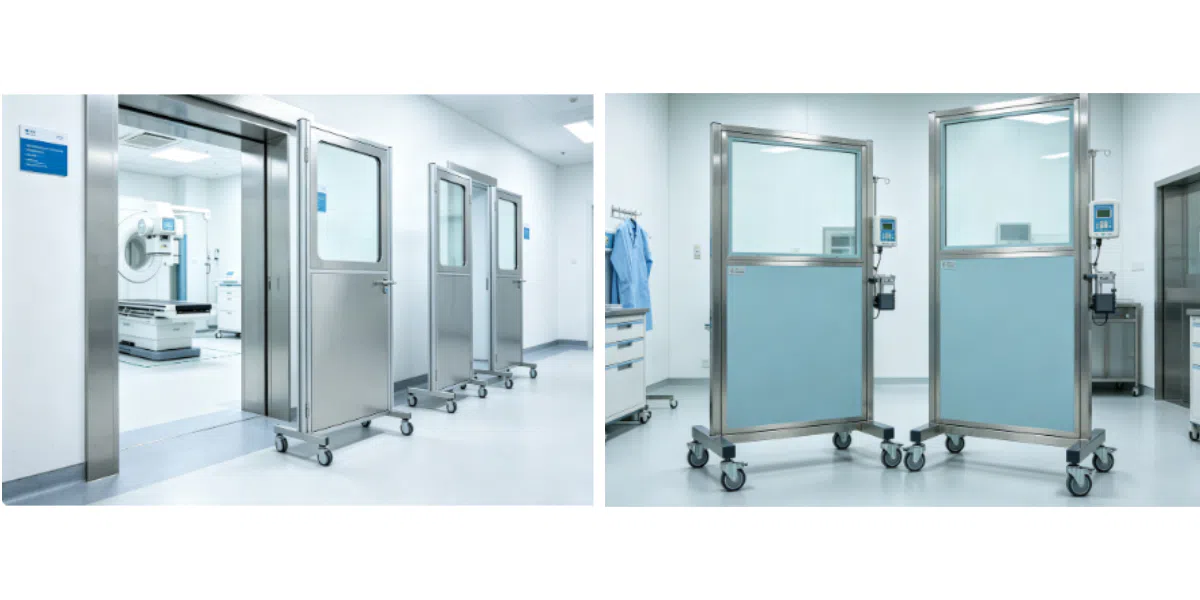
One major advantage of mobile lead barriers lies in their movable radiation-protection solution. Unlike fixed shielding alternatives such as lead-lined doors or lead walls, these barriers can be flexibly relocated between different rooms, clinical workflows and staff positions without construction or permanent installation. For hospitals, clinics and imaging centres requiring radiation protection across multiple spaces, this flexibility delivers practical benefits that fixed shielding cannot provide.
1. Protection Against Scatter Radiation Without Fixed Shielding
Scatter radiation represents the primary source of radiation exposure for personnel working in diagnostic X-ray, fluoroscopy, CT and nuclear-medicine settings. During interventional procedures, doctors, nurses and radiology technicians often stay inside the examination room while equipment is operating. Even if the primary X-ray beam targets the patient’s body, scattered rays will bounce off patients, examination tables and surrounding surfaces, spreading across the whole working area and causing cumulative radiation harm to onsite staff over long-term work. Mobile lead barriers directly address this risk by allowing operators to place shielding panels precisely where protection is needed and reposition them as requirements change.
Since mobile protective barriers are not fastened to walls or floors, medical facilities can deploy them across multiple rooms without purchasing separate shielding units for each space. A single barrier may be moved from a diagnostic X-ray room to an interventional operating room according to workflow demands. It can also be temporarily placed beside bedside X-ray equipment for emergency ward examinations, solving the radiation-protection pain point of mobile bedside imaging. The only practical limitation is that the barrier must fit through doorways. Door dimensions, corridor width and turning radius should therefore be fully considered when planning new imaging-equipment installations, to guarantee smooth transfer and flexible deployment in real clinical scenarios.
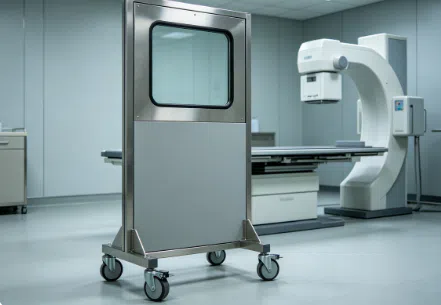
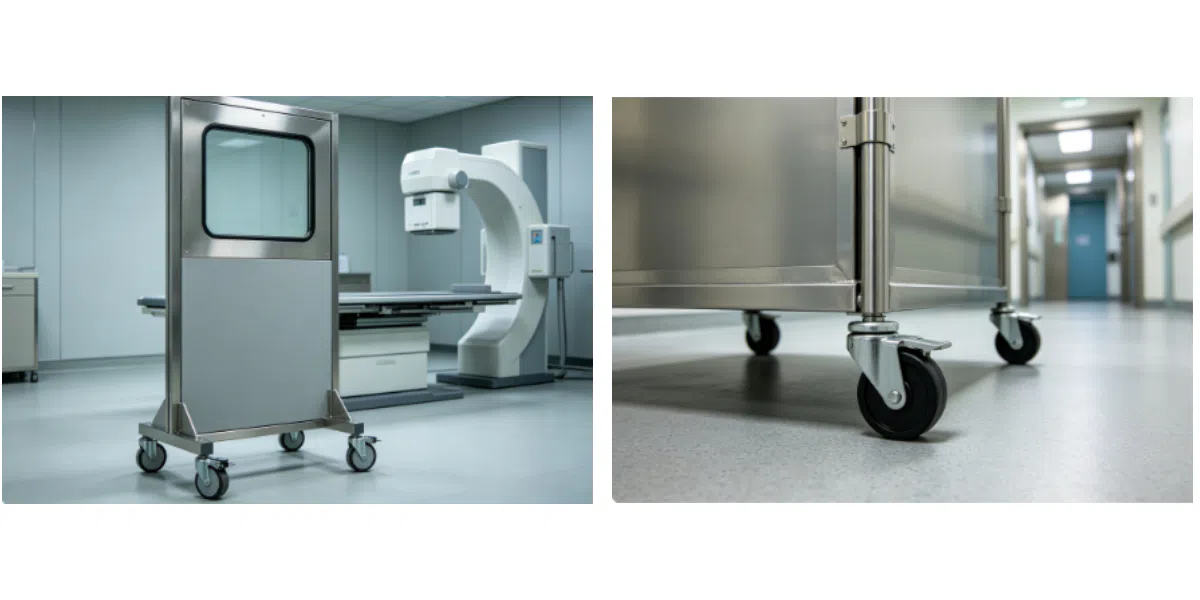
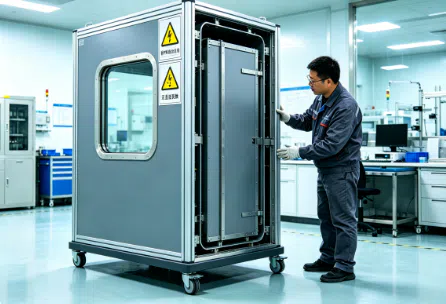
Each protective barrier features an upper lead-safety-glass viewing window, enabling operators to maintain clear visibility during procedures without leaving the protected zone. The viewing glass maintains equivalent lead protection performance while avoiding visual blind spots, so medical teams can observe patient conditions and equipment status in real-time behind the barrier. The lower section consists of opaque lead-lined panels that provide shielding below the viewing area, covering the body and lower-limb protection zone for standing operators. Standard barriers are fitted with 1/16-inch lead shielding for general-purpose imaging applications. Barriers with custom-built lead thickness up to 2 inches are available for higher-level protection requirements, such as high-dose fluoroscopy and special nuclear-medicine operations.
2. Why Lead-Based Shielding Remains More Practical Than Lead-free Alternatives
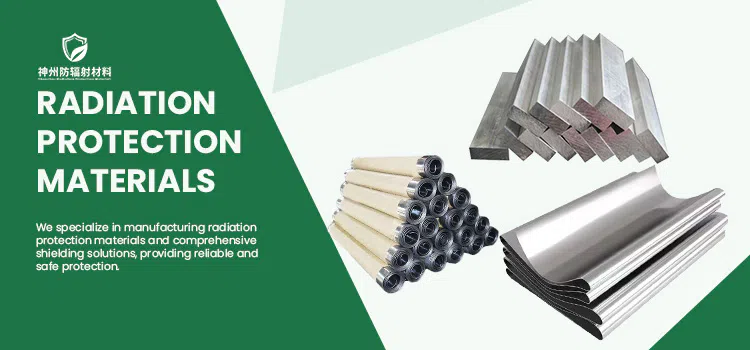
Although lead‑free shielding materials including tungsten, bismuth, antimony and tin are commercially available, they come at substantially higher cost. These materials are less abundant than lead in global mineral reserves and incur greater processing and manufacturing expenses; such raw-material cost differences are ultimately passed on to finished-product pricing. For facilities needing multiple shielding barriers across several rooms, such as large general hospitals with multiple radiology suites and interventional labs, cost gaps add up rapidly during bulk procurement. When calculating the total project budget, the price gap between lead-free and lead-containing solutions may become a heavy financial burden for public medical institutions and private clinics.
As a shielding material, lead offers sufficient density for practical barrier construction with reliable and mature shielding performance. Its excellent radiation-attenuation effect has been widely validated by decades of clinical radiation-protection practice. Moreover, lead-exposure hazards are not a concern in this application. Lead inside mobile barriers is fully enclosed within sealed metal panel assemblies, completely isolated from the external environment. Staff have no direct contact with raw lead material during daily use, movement or routine cleaning, so health risks associated with bare-lead handling, lead dust inhalation or skin contact do not apply in clinical environments.
The only real drawback of lead is its weight. Lead-constructed barriers are heavier than comparable lead-free barriers of equal dimensions. Nevertheless, each unit is equipped with four heavy-duty swivel casters (two locking and two non-locking), which effectively offset this weight disadvantage. One or two personnel can easily move, position and lock the barrier in place. The brake-locking casters hold the barrier firmly on the ground to prevent unintended shifting when radiation-generating equipment is running. While lead’s high density makes it an effective shielding medium, its weight does not create practical handling difficulties during on‑site operation. The solid metal frame also improves overall structural stability and anti-collision performance during daily clinical use.
3. Summary of Mobile Lead-Barrier Advantages
Below is an overview of key benefits offered by mobile lead barriers. They deliver flexible, cost-effective radiation shielding for medical and imaging environments, especially in locations where fixed shielding is impractical or inefficient. Mobile lead barriers protect personnel from scatter radiation; they can be transported easily between rooms by means of heavy-duty casters and deliver dependable shielding performance at lower cost than lead-free substitutes. They constitute a proven, straightforward solution for institutions seeking to balance protection requirements with operational flexibility.