
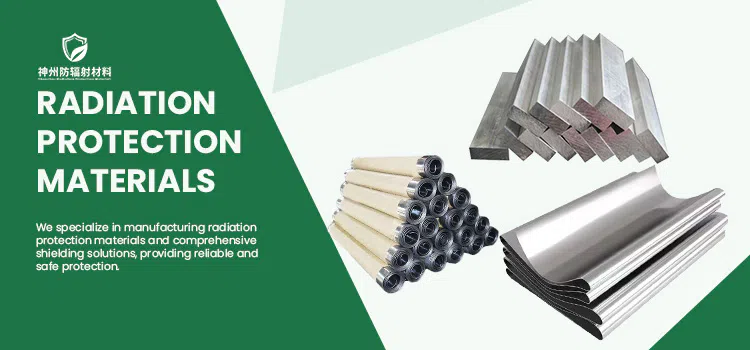
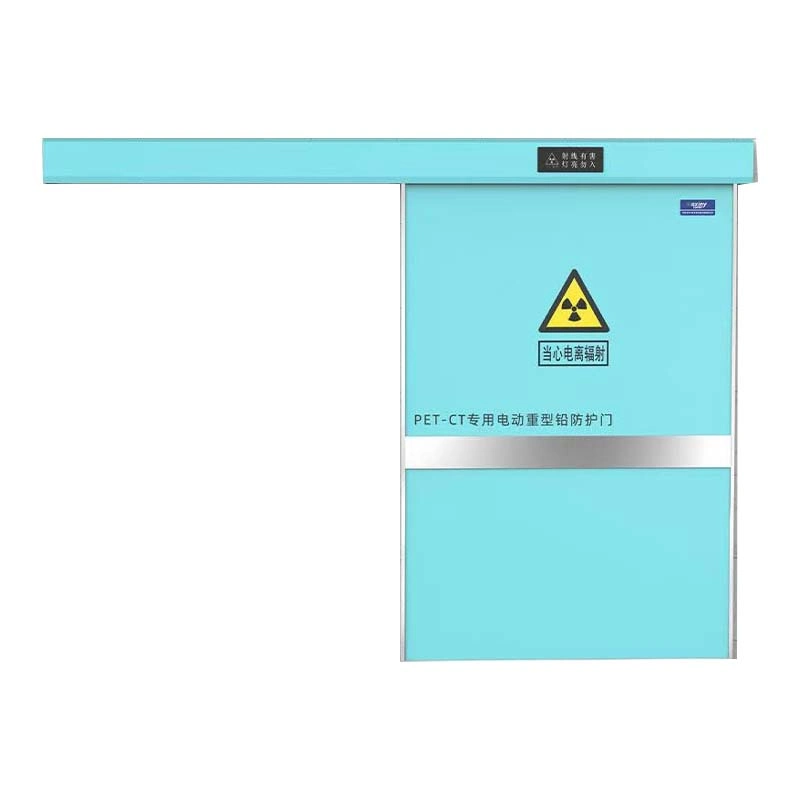
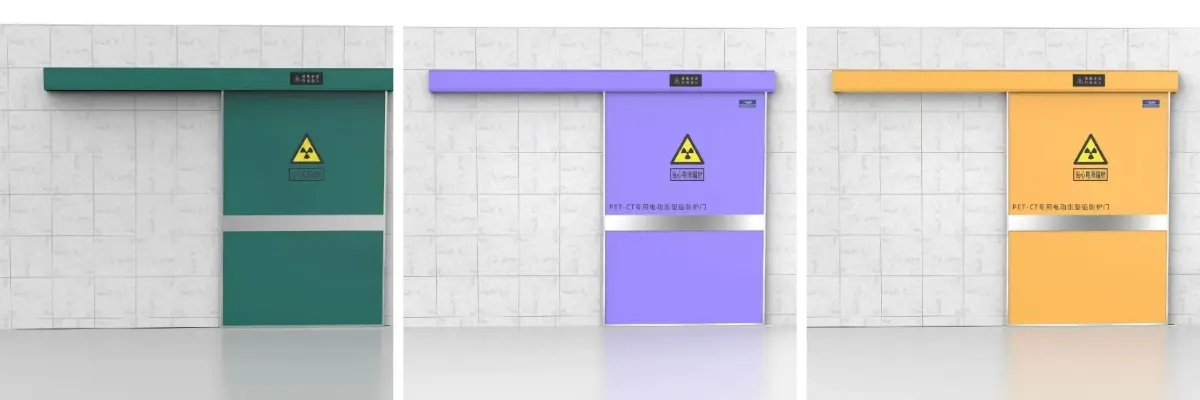
Specially engineered for radiation‑blocking purposes, the main entry door fitted within CT examination rooms caters to the operational demands of clinical radiology divisions, industrial non‑destructive inspection tasks, alongside a broad range of alternative working scenarios. Embedded within the door assembly, high‑purity lead panels function as the key substance for blocking hazardous ray penetration. Equipped with intelligent power‑driven assemblies and diverse safety interlocking mechanisms, this hardware solution is capable of establishing dependable radiation isolation effects, while granting end‑users quiet and seamless passage during daily on‑site operations.
Core performance parameters
Ray‑blocking capability
Lead equivalency rating: Base factory configuration supplies a minimum 2 mmPb rating, whilst bespoke lead equivalency values spanning 1 mmPb up to 6 mmPb can be supplied upon client requests. This hardware delivers shielding effectiveness exceeding 99.9% when facing medical‑grade X‑ray sources operating within 80kV‑150kV range.
Ray spillage containment: Perimeter clearances around the door unit utilize triple‑channel labyrinth layout together with lead silicide sealing gaskets, so that escaped radiation dose rate stays below 0.25μSv/h.
Assembly setup: Main frame components are fabricated out of 1.5 mm cold‑form steel sheet, and 304 stainless‑steel material can be selected as an optional upgrade. Grid‑style stiffener beams are fitted within the inner section of door panel, and outer surfaces are treated with anti‑microbial surface coating capable of resisting over 2000 cycles of alcohol‑based wiping disinfection.
Drive and command processing assembly
Power driving assembly: Utilizing 24‑volt brush‑free DC motor whose rated output power falls in the scope of 0.4kW up to 0.75kW, the noise generated in working status is kept below 45dB(A‑weighted).
Speed adjustment performance: This system enables stepless shifting for door travelling rate between 10cm/s and 20cm/s, meanwhile the cushioning travel while the door carries out opening‑closing actions is limited under 2cm.
Risk‑protection hardware setup
Active anti‑pinch protective system
Eight‑beam infrared photoelectric safety sensors fitted on two lateral sides (detection height stretches from 5cm to 180cm, signal feedback time is shorter than 0.1 seconds)
Flexible pressure‑responsive rubber strip installed at the bottom edge (trigger load ≤5kg; door assembly reverses its moving direction upon touching any barriers)
Reserve emergency‑response setup
Manual release pull force when electric supply cuts off is restricted to maximum 100N, together with factory‑fitted mechanical emergency pull rod as standard fitting.
Built‑in fault diagnostic processor is integrated into the whole system, which allows the LED display screen to show fault serial codes E01 through E20 in real‑time mode.
Custom‑selectable accessory setups

Custom‑selectable accessory setups
Dimension coverage: This hardware unit is compatible with door opening measurements spanning 0.9m×2.1m to 2.4m×2.8m; non‑standard dimensional solutions outside such boundaries can be supplied based on individual client demands.
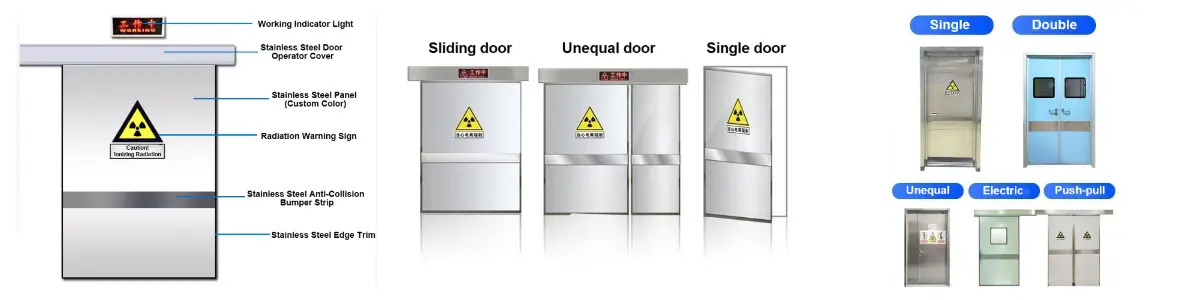
Door movement modes: Side‑sliding variant built around hidden rail layout, alternatively 90‑degree swing installation fitted with air‑tight hinge assemblies.
Auxiliary functional add‑ons: Ray‑shielding lead glass observation panes holding minimum 8mmPb lead equivalency, personnel access control system as well as ultraviolet germicidal units.
Certification credentials & post‑sales servicing
Authorized documentation: Registration certificate for Class II medical devices, CE EN61331‑1 compliance certificate and radioactive protection safety license.
Durability guarantee: Upon finishing 100 000 cycles of opening‑closing durability trials, the shifting value on ray‑attenuating performance of lead shielding layers stays under 3%, meanwhile rail surface wear magnitude is limited to maximum 0.2mm.
Post‑sale service mechanism: Core components are covered under a 3‑year warranty coverage. Quarterly routine radiation dose checking service can be implemented complying with the technical provisions laid down in JJG 774‑2022.
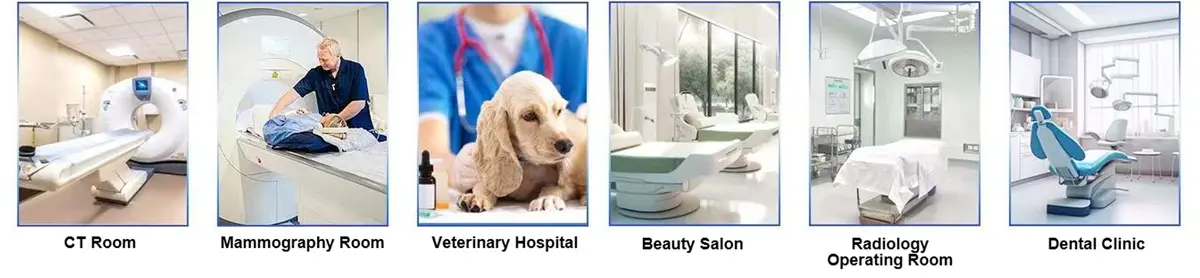
Typical practical application environments
CT scanning chambers and DR diagnostic rooms located inside healthcare facilities, invasive catheter operation suites, dental full‑view radiography premises, alongside work zones dedicated to industrial X‑ray detection tasks.
Custom‑model picking reference:
Clients are required to offer parameters including door opening measurements, tube voltage of relevant apparatus and figures reflecting everyday pedestrian throughput. Specialized technical specialists are able to work out individualized ray‑protection optimization proposals matching on‑site actual conditions.


