
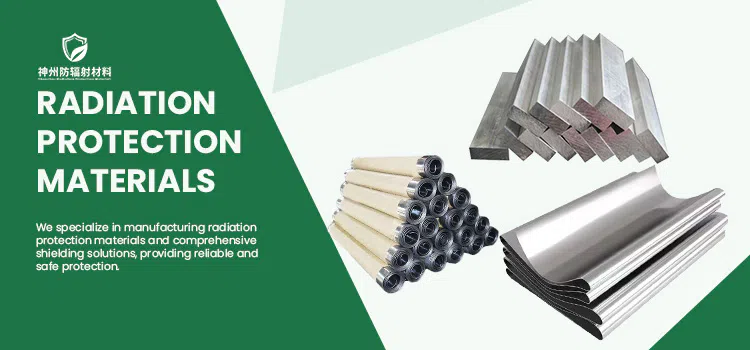
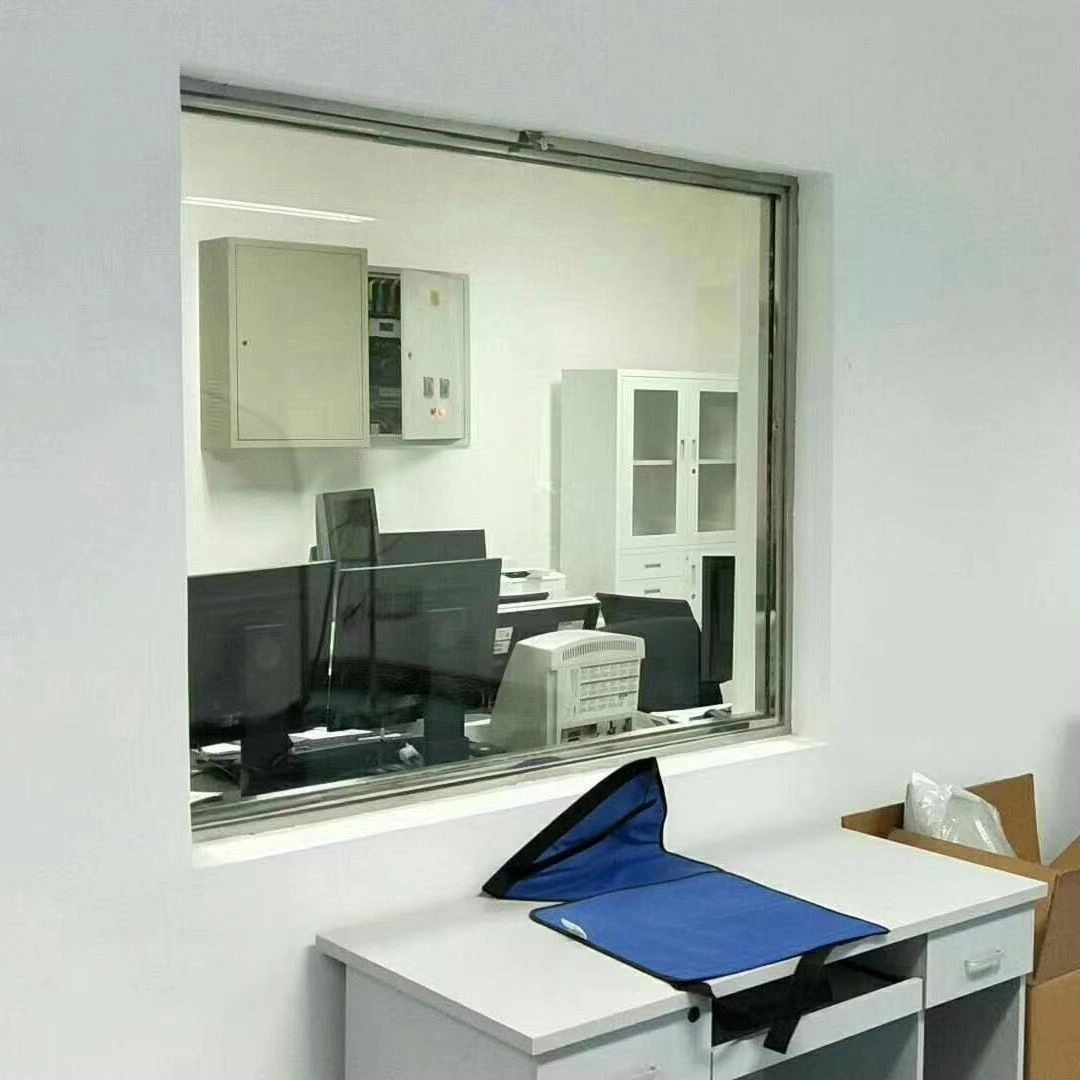
Radiation-attenuating leaded glazing delivers superior containment capability via elevated lead oxide concentration spanning 20 to 70 percent, possessing specific gravity between 4.8 and 6.2 grams per cubic centimeter—roughly double the value of conventional silicate glass. Its attenuation mechanism depends upon photoelectric interaction and Compton dispersion exhibited by lead elemental atoms, with attenuation effectiveness for low-penetration X and gamma beams at or below 100 kilovolts surpassing 90 percent at 5-millimeter panel thickness. Concurrently, it demonstrates remarkable visual characteristics: luminous transmission exceeding 85 percent, visible-ray aberration below 5 percent, plus anti-glare coating may be applied to exterior faces minimizing reflective glare, thereby enabling undistorted live monitoring within high-radiation settings.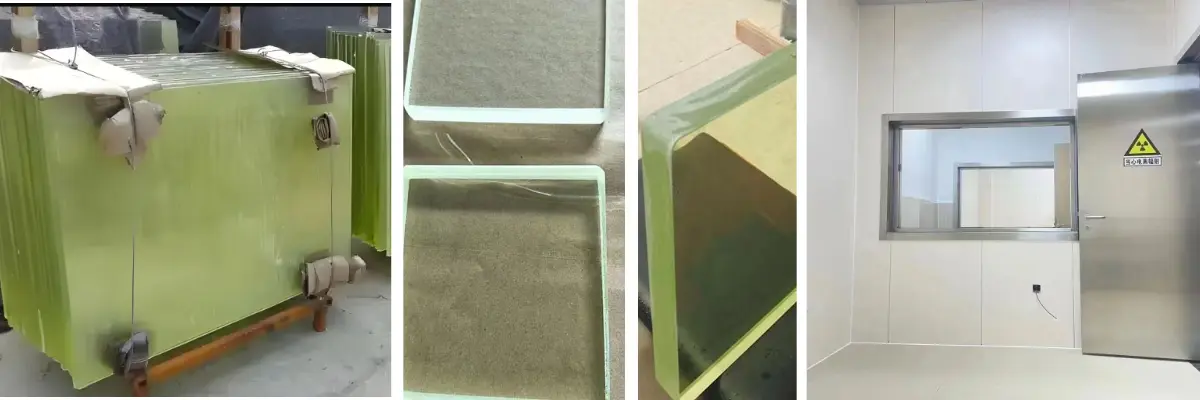
Primary deployment contexts and engineered configurations
Endovascular procedure suite viewing portal: 15 to 20 millimeter flush-mounted leaded glazing panel is implemented, with attenuation performance for 120-kilovolt secondary emissions reaching 99 percent or higher.
Computed tomography and magnetic resonance operator station: contoured leaded glass panel with Pb equivalence rating between 0.5 and 1.0 mmPb, complies with domestic operator station shielding benchmark GBZ 130-2020.
Radiopharmaceutical preparation station: Leaded glass containment enclosure incorporates remote-handler access apertures, maintaining surface exposure reading below 2 microsieverts per hour, substantially blocking beta and gamma emissions.
Digital radiography portable shielding: Height-adjustable leaded glass barrier with conventional dimensions of 60 by 120 centimeters, cuts operator-station exposure by 90 percent.
Veterinary radiation therapy: Multi-ply laminated shatter-resistant leaded glass enclosure entry, balancing live animal activity monitoring with containment safety.
Cutting-edge fabrication methodology
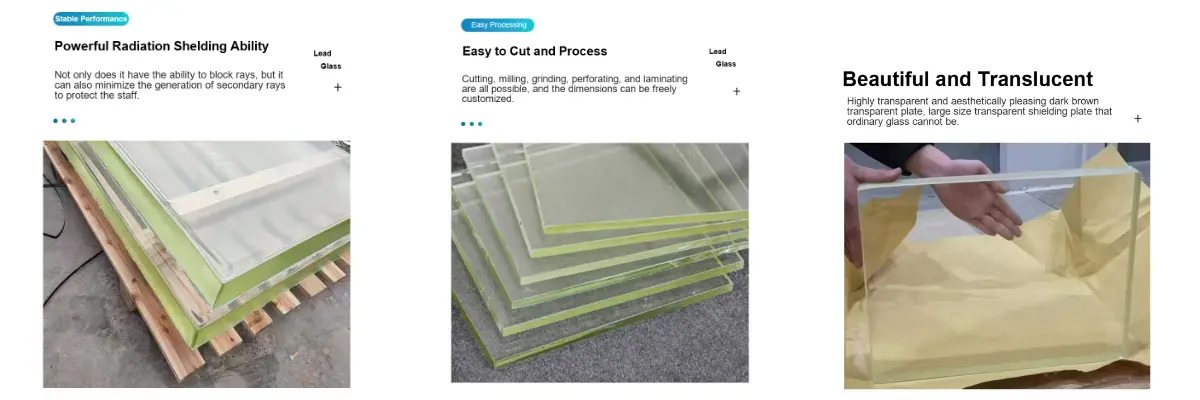
Fusion and molding technique: Lead oxide combined with silicate undergoes fusion under vacuum conditions at 1200 degrees Celsius, removing gaseous inclusions and guaranteeing homogeneous material distribution.
Hardening enhancement: Exterior tempering elevates scratch resistance to Mohs 4.5 rating, plus overlaid polyurethane film further bolsters abrasion resilience.
Hybrid structural engineering:
Layered laminate configuration: Leaded glazing bonded with polyethylene shatter-resistant interlayer, delivering impact tolerance exceeding 50 joules.
Contoured panel formation: Curvature up to 150 degrees is realized via thermal forming technique, accommodating contoured viewing portal requirements in environments like DSA procedure suites.
Benefits over conventional containment materials
Visual access innovation: Addresses the limitation of concrete or lead sheet entirely obstructing sightlines, enabling unobstructed observation of procedural zones.
Footprint optimization: Profile dimension reduced by 60 percent versus concrete barrier at equivalent attenuation level, conserving clinical floor area.
Versatile mounting options: Accommodates flush-mounted, freestanding, and suspended configuration variants, with retrofit simplicity significantly surpassing rigid lead panel systems.
Extended lifecycle value: Operational durability exceeding 20 years with zero upkeep requirements, whereas lead sheet demands periodic oxidation prevention treatment.
Operation and care guidelines
Sanitation protocols: Hydrofluoric acid and highly alkaline cleansing agents are strictly forbidden, preventing degradation of the glass molecular lattice. pH-balanced liquid is advised for surface wiping.
Damage prevention procedures: Timber framing must secure edge corners throughout shipping and installation, avoiding hairline fractures resulting from impact.
Attenuation verification schedule: Assess containment effectiveness and luminous transmission biennially. Replacement is mandated when luminous transmission declines beyond 10 percent.
Concluding overview: Leaded glazing establishes "see-through containment" as its pivotal innovation, profoundly merging attenuation capability with live visual monitoring functionality. Its extensive configurability (profile dimension/contour/hybrid layering), material robustness, and extended operational lifespan render it an indispensable containment element within high-exposure environments, including contemporary radiological diagnostics, therapeutic procedures, and nuclear industrial settings, markedly enhancing procedural safety and workforce productivity.


