
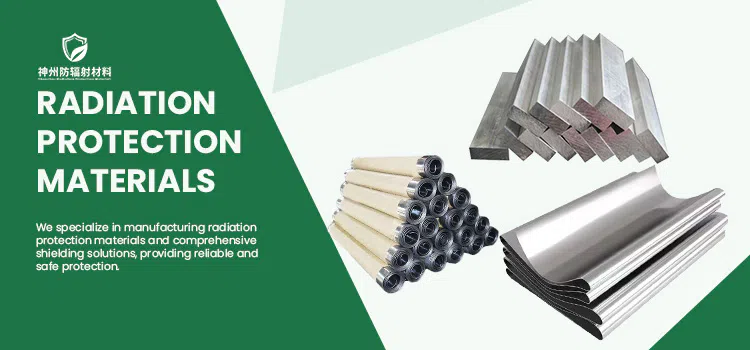
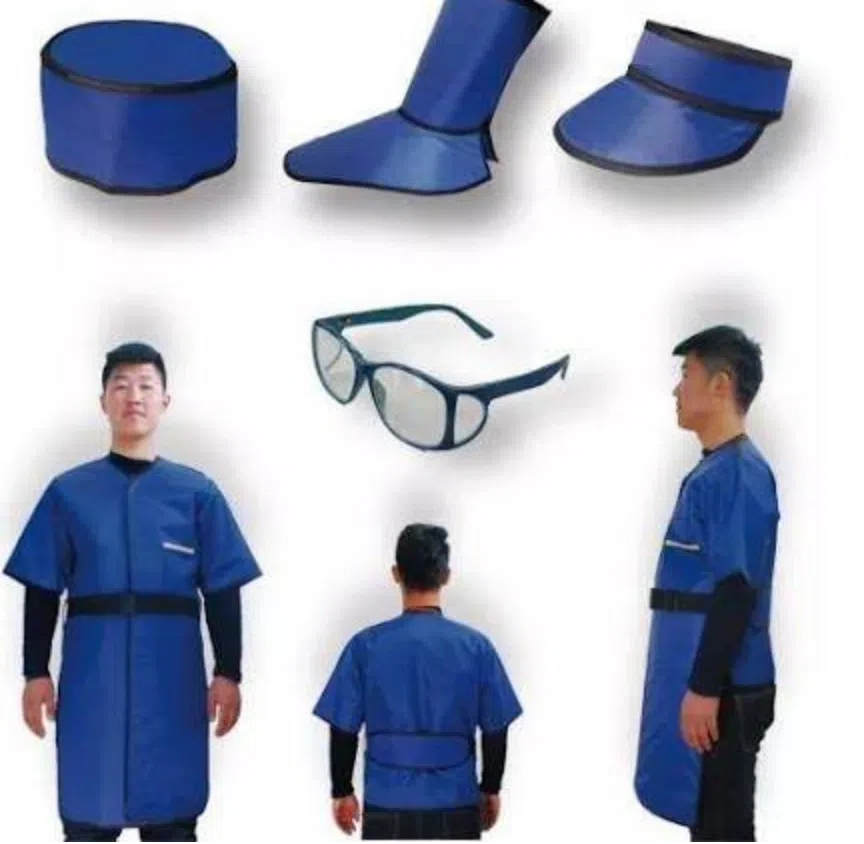
"Can such a heavy lead apron really block radiation?" "Is the lead apron really made entirely of lead?" "Why do doctors only give me a lead apron and not full protective gear when performing CT scans?" Entering the radiology department, the heavy lead aprons, lead caps, lead neck protectors, and other protective equipment always evoke curiosity and questions. As the "first line of defense" against ionizing radiation, lead aprons have long been considered "safety armor" for radiologists and patients. Just how effective are they? What are their protective principles? How should they be selected for different scenarios? This article, combining professional knowledge of radiation protection and clinical practice, comprehensively unveils the "protective code" of lead aprons, allowing you to understand the core value of radiation protection equipment.
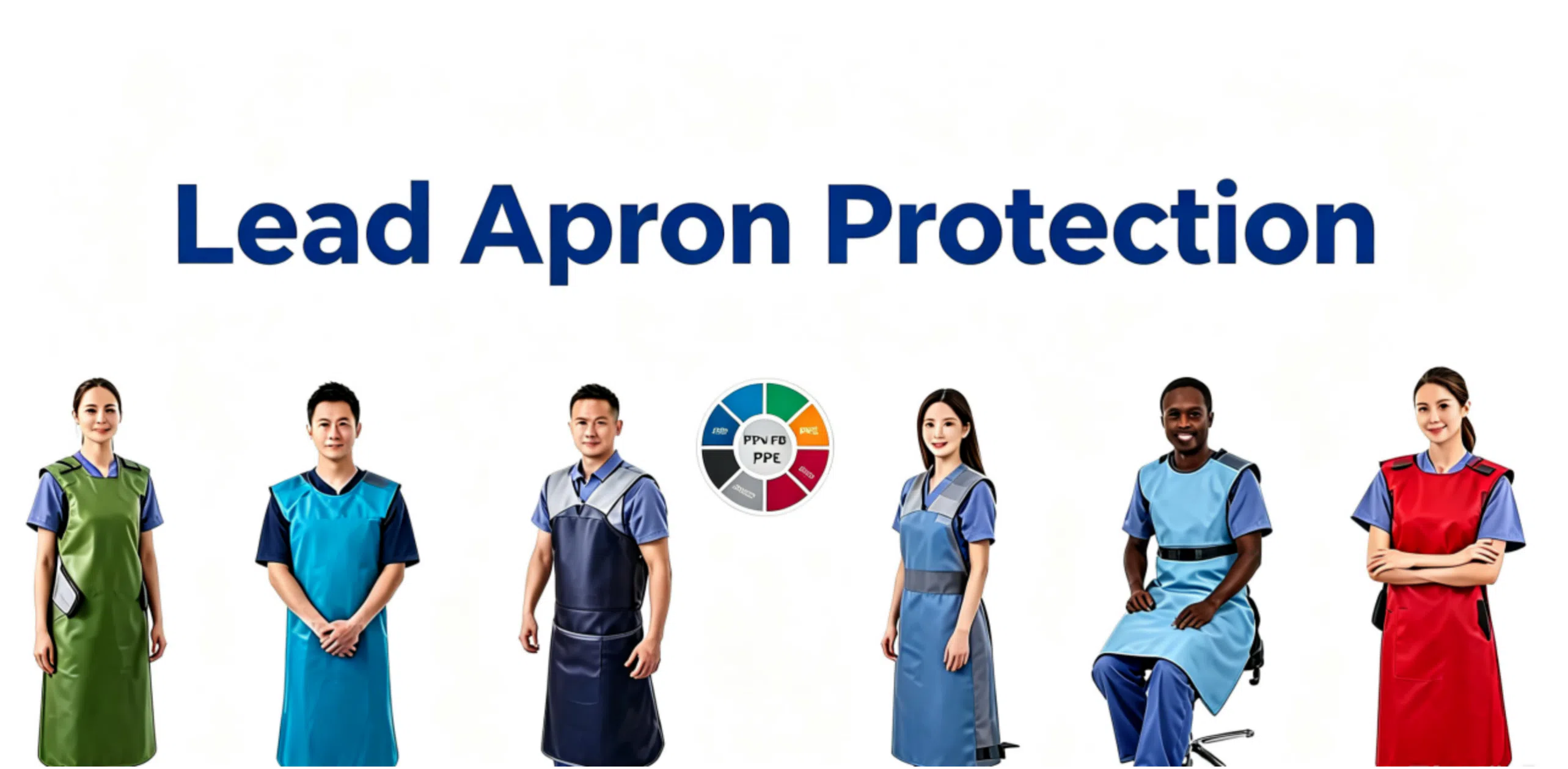
I. Core Principle: Why can lead aprons block radiation?
To understand the protective capabilities of lead aprons, one must first understand the propagation characteristics of ionizing radiation (such as X-rays and CT scans): ionizing radiation is a high-energy electromagnetic wave or particle stream that can penetrate human tissue. However, when it encounters high-density, high-atomic-number materials, it is absorbed and scattered, its energy gradually attenuating until it can no longer penetrate. The core protective function of lead aprons utilizes the physical principle of "high-density materials blocking radiation."
1. The "core material" of lead aprons: not just lead, but also technological upgrades.
Traditional lead aprons are primarily made of lead (Pb), which has an atomic number of 82 and a density of 11.34 g/cm³ (more than 11 times that of water). It possesses an extremely strong ability to absorb ionizing radiation such as X-rays and gamma rays—when radiation passes through the lead layer, it collides with lead atoms, absorbing the energy and preventing further penetration. However, pure lead has drawbacks such as high weight, poor flexibility, and susceptibility to oxidation. Modern lead aprons have undergone material upgrades:
Lead-rubber/lead-vinyl composite material: Made by mixing lead powder with rubber, PVC, and other materials, it retains the protective properties of lead while improving flexibility, making it more comfortable to wear and less prone to cracking and oxidation. Lead-free protective materials: To avoid lead pollution and reduce weight, some high-end lead aprons use heavy metal compounds such as tungsten, bismuth, and barium to replace lead. The protective effect is comparable to lead, but the weight can be reduced by 20%-30%, and it is environmentally friendly and non-toxic, suitable for long-term wear. Multi-layer composite structure: The outer layer is a wear-resistant and waterproof fabric, the middle layer is the core protective layer (lead or lead-free heavy metal layer), and the inner layer is a breathable and skin-friendly fabric, balancing protection, durability, and comfort.
2. The "measuring standard" of protective capability: lead equivalent (mmPb)
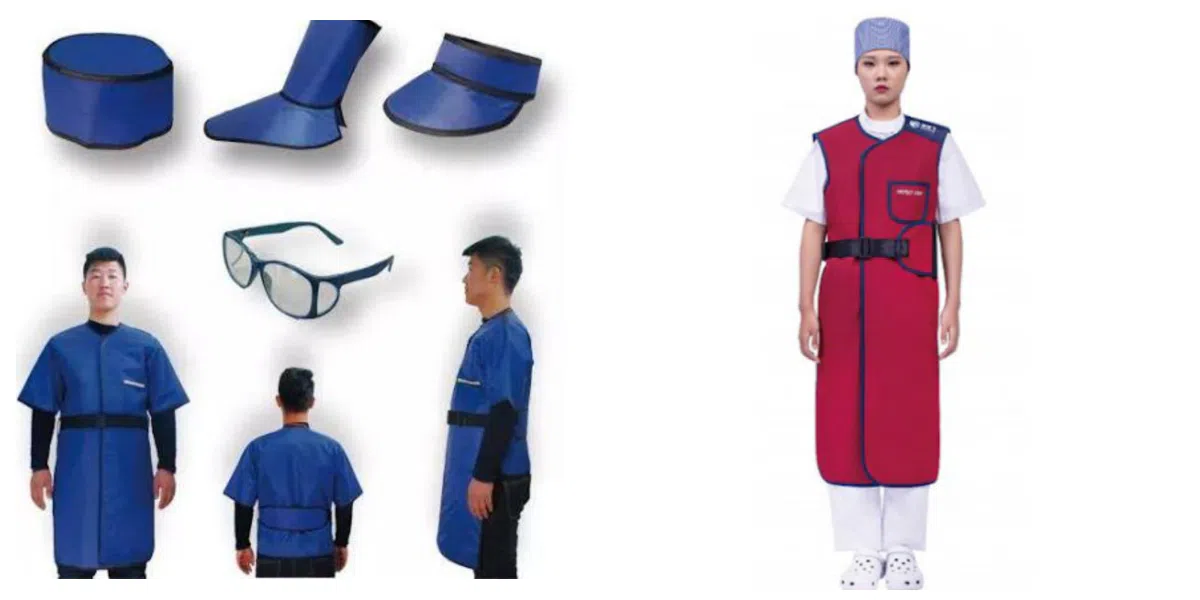
The protective effect of lead aprons is not "the thicker the better," but rather quantified by lead equivalent (unit: millimeters of lead, mmPb). This is an internationally recognized indicator of protective capability, representing the protective effect of the equipment equivalent to how many millimeters of pure lead. Common lead equivalents: Clinically commonly used lead aprons have lead equivalents of 0.3mmPb and 0.5mmPb. For some high-protection scenarios (such as interventional procedures), a thicker version with 1.0mmPb is used. Protective effect: A 0.3mmPb lead apron can absorb approximately 90% of conventional X-rays (energy 80-100kV); a 0.5mmPb lead apron has an absorption efficiency of over 95%, effectively blocking ionizing radiation from medical equipment such as CT scanners and X-ray machines. Key reminder: A higher lead equivalent is not necessarily better. A higher lead equivalent means greater weight, which may increase the burden on the body with long-term wear. The appropriate lead equivalent should be selected based on the radiation intensity.
3. The "protective boundary" of lead aprons: They only protect against ionizing radiation, not non-ionizing radiation.
It is important to note that lead aprons are only effective against ionizing radiation from CT scans, X-rays, and interventional procedures. They offer no protection against the strong magnetic fields of MRI, radiofrequency pulses (non-ionizing radiation), and ultrasound. This is why doctors will not ask you to wear a lead apron during an MRI examination; instead, they will require you to remove all metal objects (including metal parts on the lead apron).
In short, lead aprons, as a core piece of equipment for radiation protection, serve as a "safety barrier" against ionizing radiation due to the physical properties of their high-density material, safeguarding the health of patients and medical staff. Their effectiveness lies not only in reducing radiation dose by over 90%, but also in allowing people undergoing necessary radiological examinations and enabling medical staff to perform diagnostic and treatment work without excessive worry about radiation damage. However, we must understand that lead aprons are "protective tools," not a "panacea"—the core of scientific protection is always "avoiding unnecessary radiation exposure." Both patients and medical staff should use lead aprons and other protective equipment correctly, adhering to the "necessity principle," ensuring radiation protection is both "hardcore" and "scientifically sound." In the future, with continuous technological advancements, lead aprons will become lighter, more intelligent, and more environmentally friendly, further improving both protective effectiveness and user experience. For us, understanding the protective principles and correct usage of lead aprons is crucial to ensuring this "hardcore equipment" truly functions effectively, building an unbreakable "radiation protection wall" on the path to safeguarding health.


